


For those enrolling (or about to enroll) in Medicare, paying for prescription drugs can be an expensive proposition, and as drug costs increase over time, it becomes more and more difficult for individuals to pay for prescriptions they need.
While Medicare Part A and Part B provide coverage for hospital and routine health care services for those 65 and older, as well as certain younger people with medical conditions or disabilities, generally neither Part A nor Part B provide prescription drug coverage.1

Thanks to the Medicare Modernization Act of 2003, retirees can now get help offsetting the high costs associated with prescriptions through Medicare Part D.2 The Inflation Reduction Act of 2022 provides additional relief, with a series of changes that help reduce Medicare drug costs.
If you're about to enroll in Medicare and you're taking prescription drugs, Medicare Part D can help you better handle the cost of those prescriptions. But before you sign up, you need to fully understand:
- What Part D does (and doesn't) provide
- When to sign up
- How to avoid paying unnecessary penalties
3 key things to know about Medicare Part D
- Part D helps you pay for self-administered prescription drugs. You can sign up for Part D when you enroll in Medicare Part A and/or Part B. Alternatively, you could enroll in a Medicare Advantage plan with prescription drug coverage included.
- Part D is optional. While prescription drug coverage through Part D (or Medicare Advantage with drug coverage) isn't mandatory, there are no other options with traditional Medicare for help with prescription drugs after age 65.
- If you don't sign up for a prescription drug plan (PDP) on time, it can cost you. Sign up after your initial enrollment period or after a special enrollment period ends, and you can face a permanent late penalty.
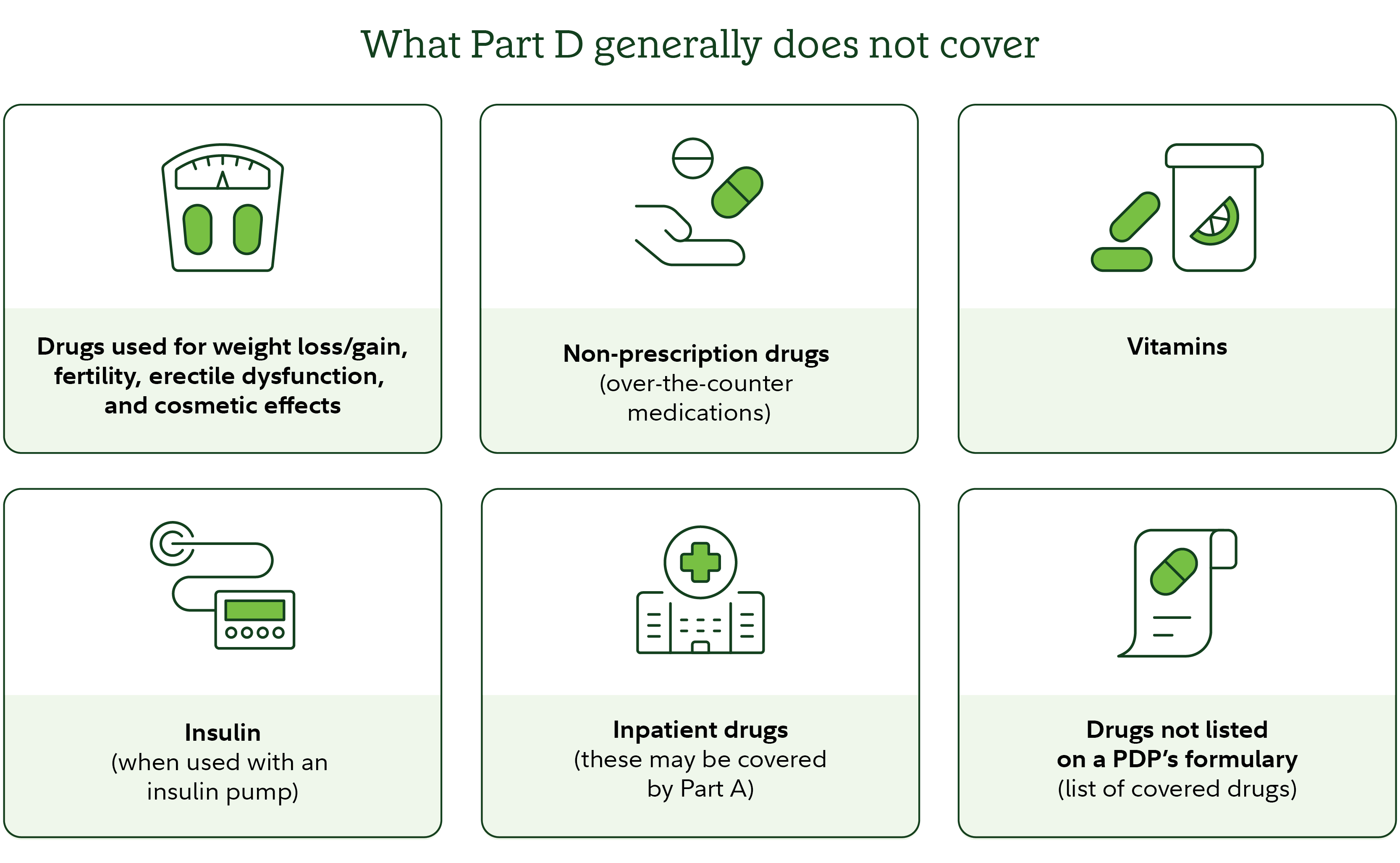
How and when do I sign up for Medicare Part D?
The how is relatively easy: You can sign up for a prescription drug plan with a private health insurance company that offers them through their website, over the phone, or with a licensed agent. When you can sign up is a little more complicated.
Just like Medicare Part A and Part B, you can enroll in Part D during your Initial Enrollment Period (IEP). It lasts for 7 months, starting 3 months before you turn 65, and ending 3 months after the month you turn 65. If your birthday is on the first of the month, it is 4 months before you turn 65, and ending 2 months after you turn 65.3
How to avoid steep Part D penalties
If you sign up for a Part D plan after your IEP or SEP, a permanent penalty—potentially adding up to thousands of dollars over your lifetime—may be added on to your monthly premium. The penalty amount can change each year as well.
You can avoid the penalty if you show proof of creditable drug coverage during the time you were supposed to sign up. Coverage through an employer (yours or your spouse's) may be considered creditable. Confirm with your employer if your employer coverage is considered creditable drug coverage.
If you don't sign up for a prescription drug plan on time, and you don't have proof of creditable drug coverage, you also have to wait until the next open enrollment period (October 15–December 7 each year) to sign up. Your coverage starts shortly after you enroll (on January 1) and may include the Part D late enrollment penalty.
What's a premium?
How Part D penalties are calculated
Medicare doesn't charge a flat rate penalty for enrolling late. Instead, the amount is determined by multiplying the number of months an individual went without a Medicare drug plan (or creditable drug coverage) by 1% of the national base premium, the premium rate Medicare establishes for Part D each year.
For example, if you delayed signing up for Part D for 5 years, you would face a 60% penalty (60 months × 1%). The penalty amount is rounded to the nearest $0.10 and added to your monthly Part D premium.4 There is no cap on the Part D penalty.
Since the national base premium changes every year, so does the Part D penalty. For more about Part D penalties, visit Medicare.gov.
Get ready
Budgeting for Medicare costs is an important part of any retirement plan. Choosing Medicare coverage (including Part D) is a key decision to make as you approach retirement. It's important to map those costs into your overall retirement plan as soon as possible to avoid any potential penalties. Consider working with a Fidelity financial professional to help you determine which retirement income options make sense for you. If you like to plan yourself, visit our Planning & Guidance Center to begin estimating your retirement expenses, including those for prescription drug coverage.