


Within 2 months of the start of the new year, investors hoping for a less turbulent 2026 had their hopes dashed.
Geopolitical conflict intensified, oil prices spiked, inflation remained above central bank targets, and markets wavered, fueling concerns that the long stretch of US economic growth might be coming to an end. Those turbulent headlines drove market volatility, with the S&P 500® Index dropping almost into correction territory in the first quarter of 2026. But before long, stocks rebounded in a V-shaped recovery, with the index hitting new all-time highs in April and moving into solidly positive territory for the year by the end of the month. That remarkable resilience has led many investors to ask: Why, given all the dire headlines, has the market continued to rise?
The answer: It’s the economy. In the first quarter of 2026, the US economy continued to expand, powered by positive consumption and significant spending on artificial intelligence (AI) technologies that kept corporate earnings strong. Manufacturing activity increased, signaling that companies remain confident in the economic outlook and are continuing to ramp up investment spending. And despite some high-profile layoffs at large companies, the job market overall remained steady.
“When I think about conditions that would foreshadow an imminent recession, I’m simply not seeing those things,” says Lars Schuster, institutional portfolio manager with Fidelity’s Strategic Advisers, LLC, the portfolio investment team for many managed account clients at Fidelity.
For investors, however, many points of tension remain. Oil prices remain high and volatile. And elevated energy costs, combined with the lingering effects of tariffs, have kept inflation stubbornly elevated. “There are many factors that can surprise markets,” says Jake Weinstein, a senior vice president on Fidelity’s Asset Allocation Research Team (AART). “But they’re more likely to disrupt the economic cycle if the fundamentals are starting from a point of weakness. As of now, the fundamentals remain robust and support continued expansion.”
To understand the potential direction of the economy and markets, it’s important to go beyond anxiety-provoking headlines. Here are 5 signals that can help explain where the economy stands today and indicate where it may be heading.
5 midyear economic signals
1. Oil isn’t delivering a growth shock (yet)
Markets initially reacted strongly to the start of the conflict in Iran, especially as the price of oil spiked to $120 per barrel following the closing of the Strait of Hormuz. Some investors worried about a repeat of the 1970s oil crisis, when oil prices nearly quadrupled within weeks, delivering a wallop to the economy.
Historically, there is a link between periods of geopolitical unrest and initial market distress, says Schuster. “Yet, markets have eventually recovered, usually within a year from the start of the event. This has been particularly true when the US economy and corporate profits are growing.”
One concern is that energy costs have historically been one of the clearest channels through which geopolitical risk has affected the broader economy. “Anything that’s touched by transportation, those prices go up,” says Anu Gaggar, vice president of capital market strategy with Fidelity Institutional. But compared with prior cycles, today’s households are less sensitive to energy costs, supported by higher incomes, improved energy efficiency, and relatively strong balance sheets.
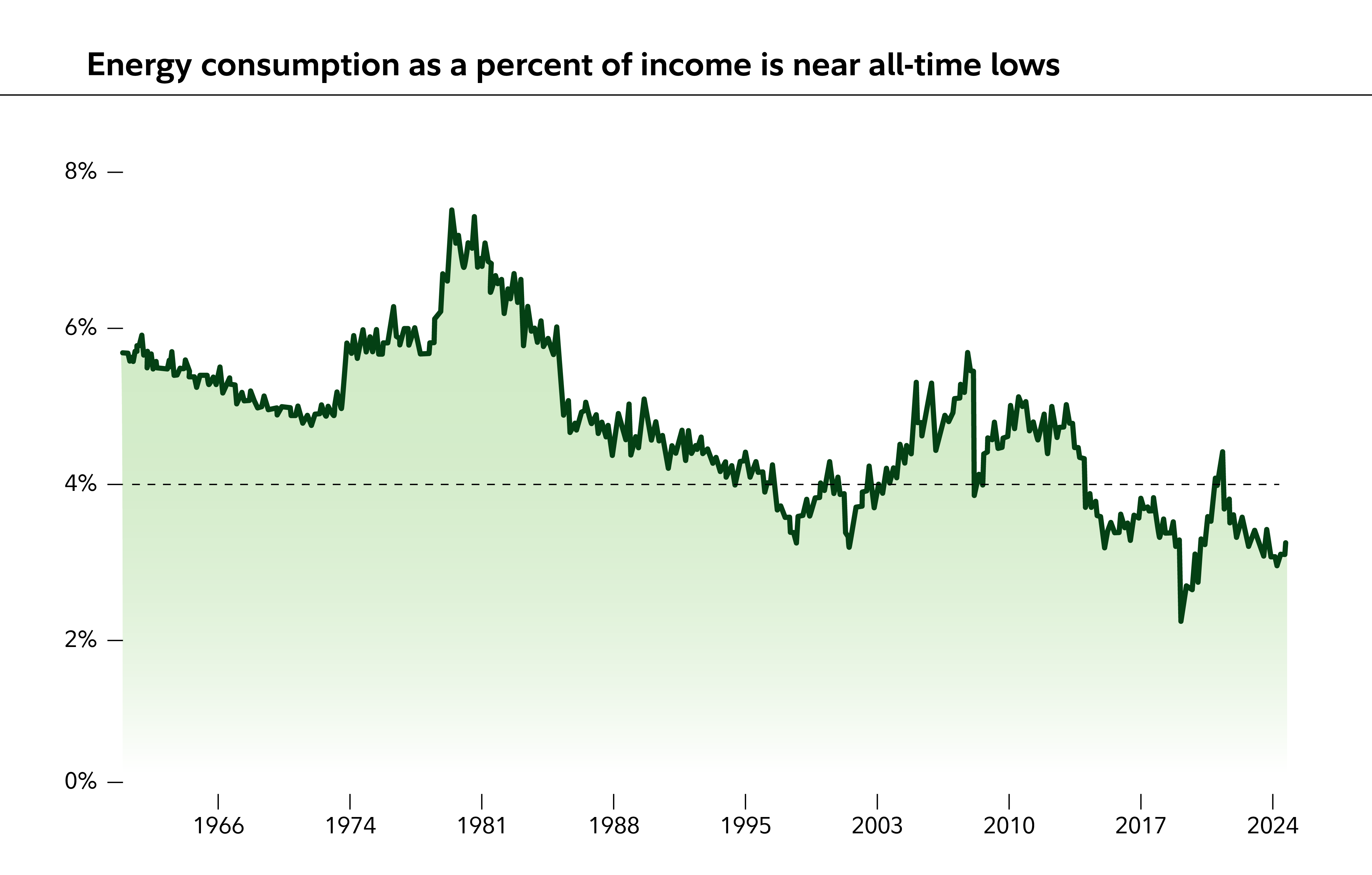
It’s also important to remember that $100 per barrel oil is a psychological, not actual, threshold. “Oil prices are not as high as they seem in inflation-adjusted terms,” says Jurrien Timmer, Fidelity’s director of global macro research. Moreover, oil futures are trending lower, suggesting that markets may expect a relatively contained disruption rather than a prolonged supply shock.
That said, if oil remains at these prices or higher, it will likely translate to broader price increases, dampening spending. “Higher oil prices are always a risk factor, but the duration of higher prices matters. Large global economies may be able to manage through it should we see a near-term resolution,” explains Schuster.
2. Earnings have stayed strong
Are recent market highs a sign that stocks have peaked and that a decline is on the horizon? While valuations are elevated, prices alone don’t necessarily indicate an imminent downturn.
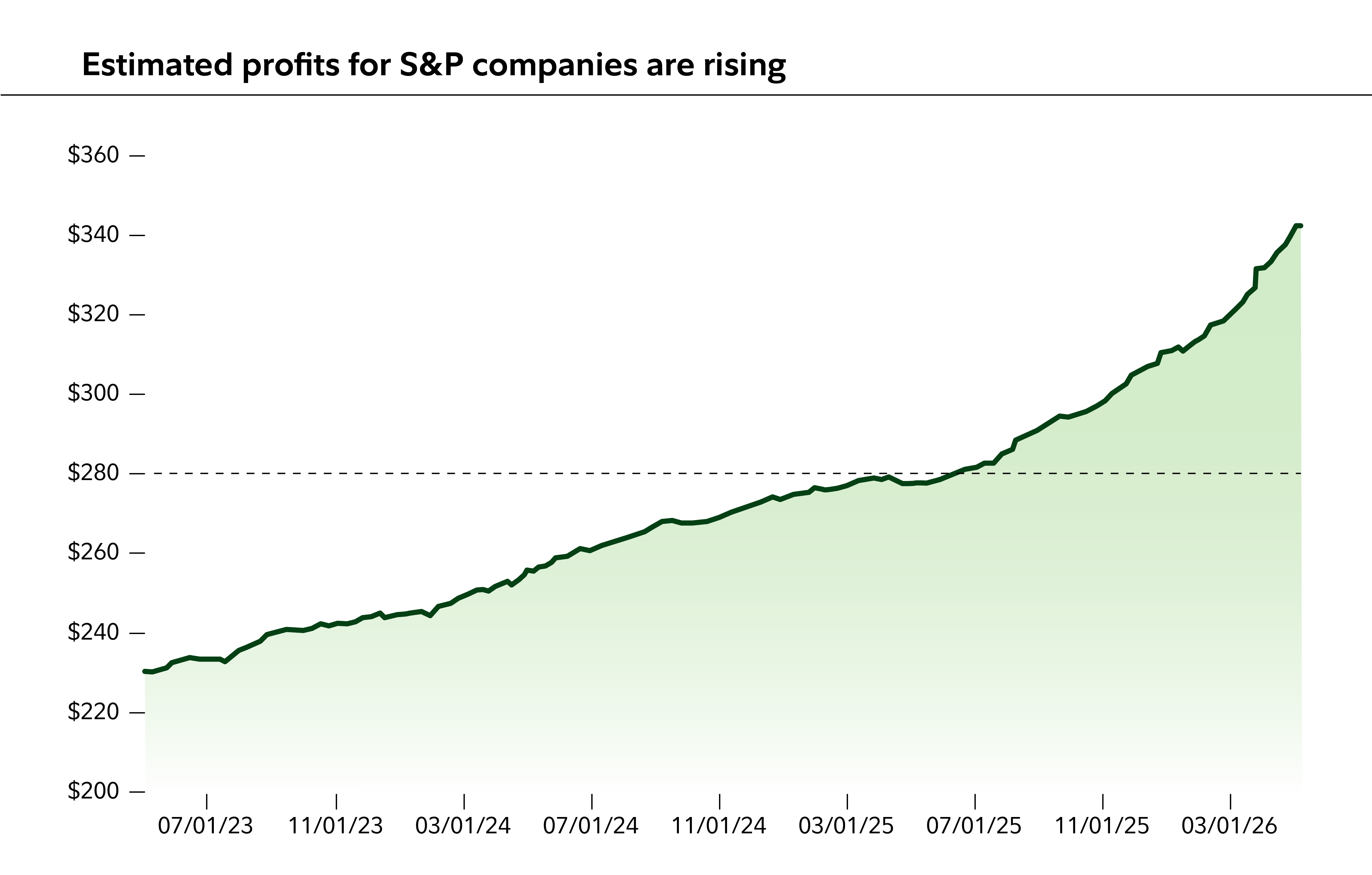
“One of the most important drivers of markets over time is the direction of corporate earnings,” says Schuster. In the first quarter of 2026, emerging markets and the US both achieved double-digit year-over-year earnings growth,1 while non-US developed markets experienced slower, but still positive, profit growth.2 Moreover, over 80% of S&P 500 companies reported positive earnings surprises and revenue growth, along with healthy profits. “It’s very significant that we not only saw revenue growth but that more of that incremental revenue was dropping into operating margins,” says Gaggar.
This momentum is likely to continue in the second half of 2026, with analysts expecting strong potential earnings across various regions.
In the US, consumer spending has remained resilient, supported by positive wage growth, accumulated household wealth, and the tailwind of tax cuts. While the distribution of that strength has become increasingly uneven, with lower income households feeling greater pressure from elevated food and energy costs, consumers on average aren’t overly stretched.
“In general, people aren’t out over their skis,” says Timmer. “Higher prices are a big deal for a large segment of the population, and they’re feeling the pinch, but wages have generally kept up with inflation3 and the amount of debt consumers are carrying is far less than it was during the 2008 financial crisis."4
3. Companies are continuing to invest at a robust pace
Another positive sign: Since the start of the year the Manufacturing Purchasing Managers’ Index, an indicator that measures the current and future business conditions in the manufacturing sector, has moved into expansion territory after a year in contraction, indicating that companies are confident that short-term demand will sustain. Outside of the US, too, the breadth of countries reporting improved manufacturing conditions continued to widen, suggesting a turnaround in global industrial activity may be taking shape after nearly 3 years of sluggishness.
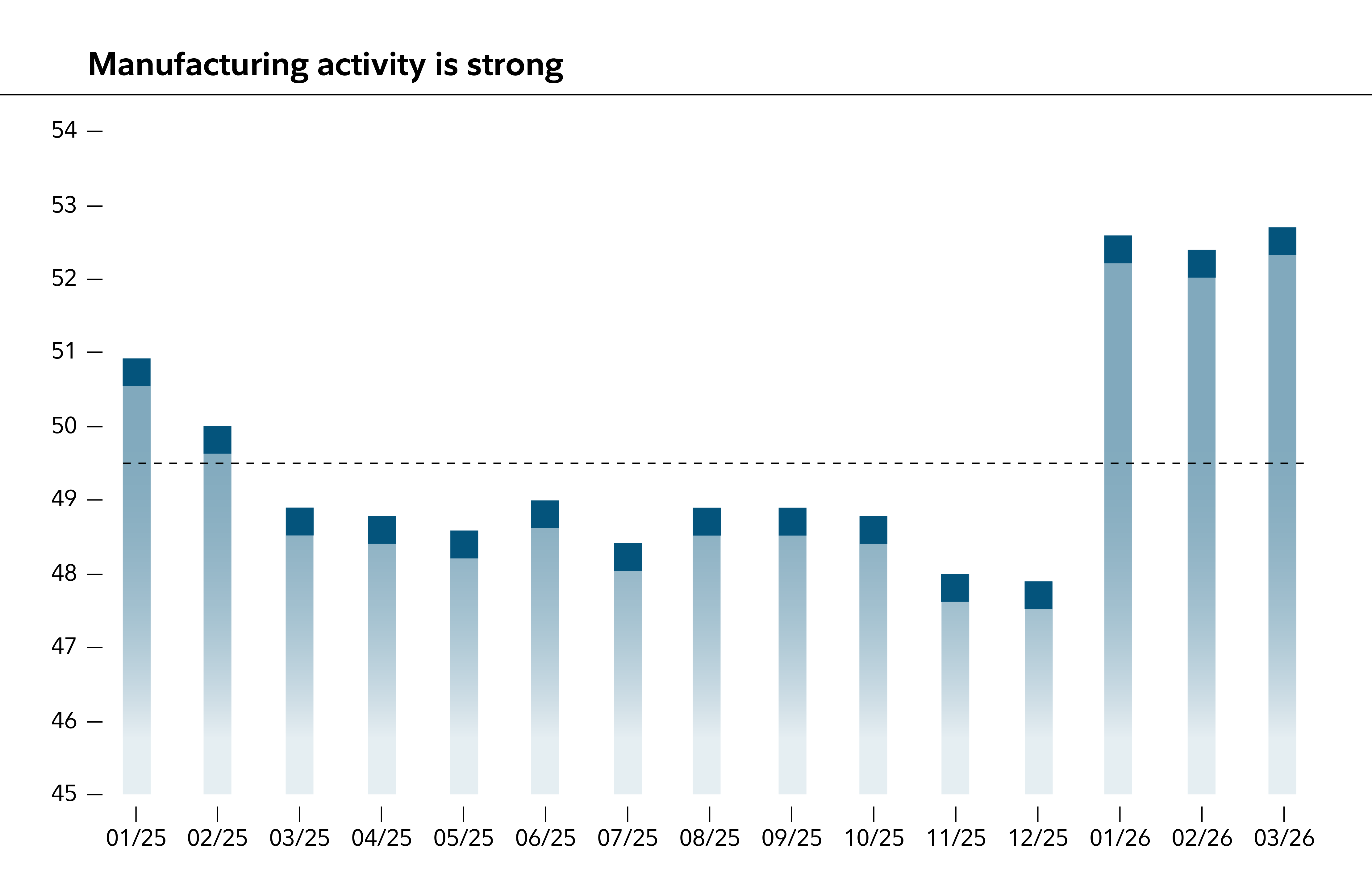
Longer-term, large companies have continued to invest in infrastructure at a breathtaking pace, especially in the AI space: Think data centers, chip solutions, electricity, and more. And outlays of this scale inevitably trickle down to other industries and individuals, explains Schuster. “Maybe you’re a construction firm that just got several contracts to build new data centers, or an electrician who can’t keep up with requests for work,” he says.
4. The job market is softer—but steady
Recently, job growth has been sluggish, heightening fears about the impact of AI on the American workforce. “What’s happening with labor markets is probably the biggest question we’re being asked,” says Weinstein. “The answer is complicated. One thing people often don’t realize is that there are 2 sides of the job market—supply and demand.”
The demand side is a mixed picture, says Weinstein: Job growth has significantly weakened, and wage growth has fallen. But on the supply side, aging demographics and a tighter immigration policy have helped keep the unemployment rate from rising.5 And jobless claims remain relatively low overall, showing little evidence of widespread job losses or a deteriorating labor market.
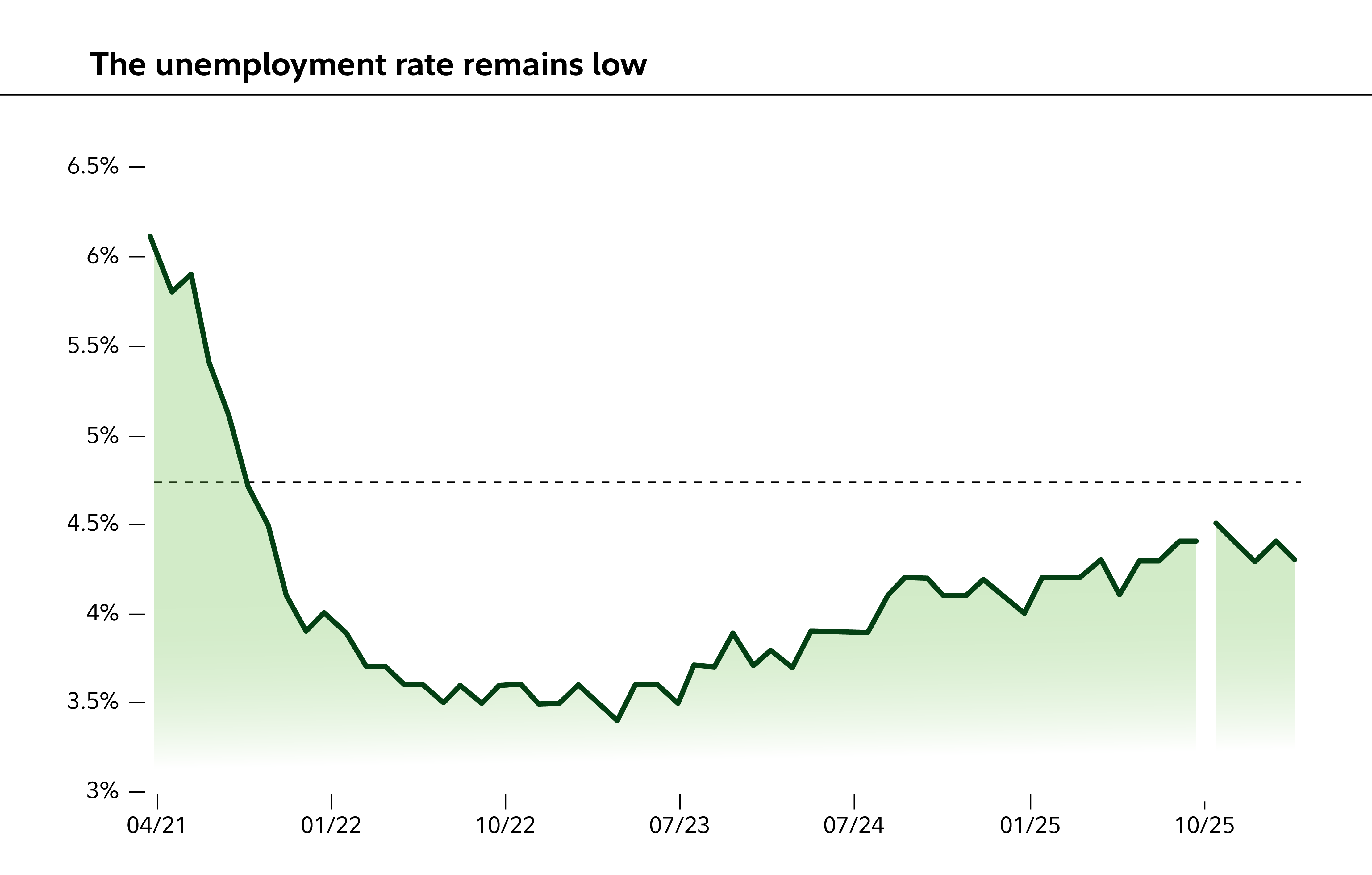
As for AI, “we’re not seeing any significant evidence that there are huge numbers of widespread layoffs directly tied to AI,” says Weinstein. “What we are seeing is that companies are not being aggressive in hiring people, but ultimately, they still need workers to meet demand in a growing economy, suggesting we’re going to see slower—but still positive— job growth.”
5. Sustained inflation could complicate the Fed’s strategy
A potential sour note in the otherwise upbeat tune: the possibility of another spike in inflation. The most recent Personal Consumption Expenditures (PCE) data shows prices of consumer goods, other than energy and food, ticking up to 3%, above the Fed’s long-term target of 2%. Should oil prices stay elevated, it could potentially lead to an increase in core inflation, as businesses may consider raising prices to cover their own loftier costs of production, packaging, and shipping.
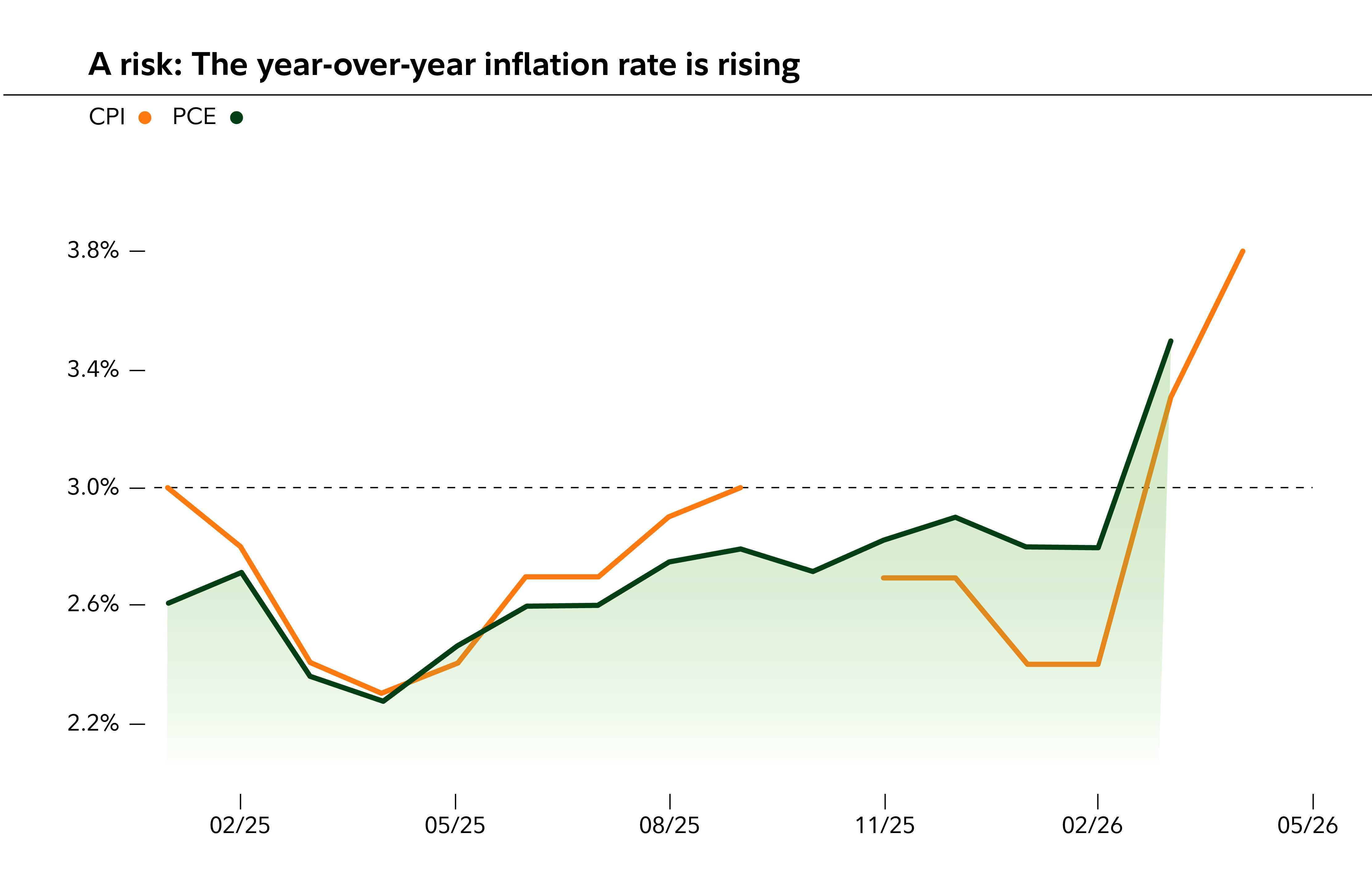
“The major limitation to the Goldilocks scenario is inflation,” says Weinstein. “If the data shows inflation remains elevated, the Fed even under new leadership may consider raising interest rates at some point.” That could pose risks for stocks, since an unexpected increase in interest rates has historically triggered volatile periods for markets.
Investors should also watch signals from the bond market, where concerns around fiscal deficits, long-term yields, and central bank credibility tend to surface first. Rising long-term Treasury yields, especially if they go above 4.5%, could be an early warning sign of rising volatility, says Timmer.
Keeping perspective amid uncertainty
While the economy and corporate earnings appear to be on a solid path, periods of volatility may occur, and some risks, like stubborn inflation, remain. With that in mind, Strategic Advisers has kept modest risk-on positioning across most diversified client accounts. That includes healthy exposures to non-US stocks that they believe may benefit from a softer US dollar, increased overseas spending on defense and infrastructure, and rising commodity prices.
In addition, Strategic Investors has maintained allocations to asset classes that may help enhance portfolio resiliency and help hedge against the impacts of persistent inflation, such as real estate investment trusts (REITs), commodities, and Treasury Inflation-Protected Securities (TIPS).
And investors should keep in mind that market volatility alone does not signal a change in the economy, says Weinstein. The indicators—earnings, labor stability, and investment—suggest a potential for continued expansion, even if geopolitical uncertainties remain.
For investors who can stay focused on fundamentals rather than noise, the environment remains one of challenges but also potential opportunities. If you’re struggling to keep perspective, consider working with investment professionals who can design a diversified portfolio aligned with your goals and risk tolerance.