

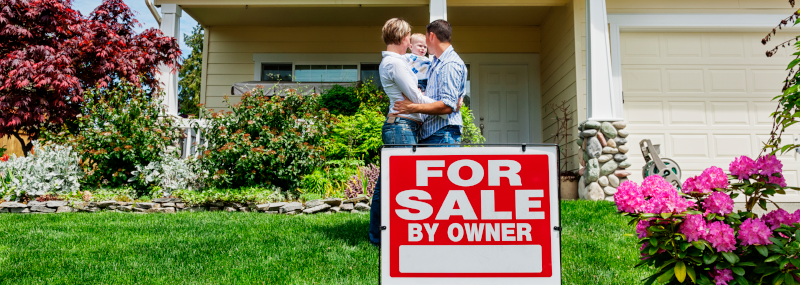
Some homeowners prefer to sell their house on their own, without the help of a real estate agent. This is known as “for sale by owner” (FSBO).
With agent commission fees hovering between 5-6% the savings from selling your house yourself can be significant. But is it worth it? The National Real Estate Association suggests otherwise, reporting that agent-assisted homes usually sell for more than for-sale-by-owner homes1. In some instances though, for-sale-by-owner homes sell more quickly, and one reason could be because homes are sold to someone the seller already knows.
In some cases, FSBO may make sense, like if you already have a buyer lined up or if you truly have the time, resources, and experience to act as your own agent. In addition to pricing your home, marketing it, and negotiating with buyers, you’ll need to learn local real estate laws, which can be complex and confusing. This includes knowing what forms to fill out, who must sign which papers, who can conduct the actual transaction, and what to do when obstacles arise during the sales process.
For sale by owner is not without its risks. Before doing it alone, consider these potential risks:
- Real estate is a full-time job for which you may not have the time or energy.
- You may be exposing yourself to legal risks in terms of disclosures.
- Homeowners are prone to emotionally driven decisions.
- You may overlook your home's flaws which could lead to overpricing.
- Buyers' agents may not show your home to their clients.
If you decide to sell your home on your own, help is available. Try searching for information online, talking to friends with expertise (unless you already happen to be a lawyer or similarly informed professional), or hire a lawyer for a few hours' consultation. Also, many FSBO websites offer tips, documents for download, and other services, such as listing your home on the multiple listing service (MLS) for a fee.
Tips to help price your home
The right price attracts buyers, while a wrong price may result in your home sitting on the market longer. Consider these tips to figure out the best price for your home.
Factor in local features Good location doesn’t mean only the town or city where you live. Consider proximity to places like parks, grocery stores, and restaurants that may make your home more appealing. Easy access to a highway or public transportation can be valuable for commuters. However, being too close to a major road, a fire station, hospital, or shopping centers can negatively impact value because of traffic or noise. Be sure to consider future development planned for the area as well.
Look at comps and competition Research prices of recently sold homes in your immediate area with similar characteristics, such as lot size, square footage, year of construction, and number of rooms. Ideally, only look at homes that have sold within the last six months. You could also look at your competition. The listing prices of other homes for sale in your neighborhood can help you price yours appropriately. This is something a real estate agent generally assists with but if you’re not using an agent, you can search public property records or use the “recently sold filter” on a real estate website.
Consider the condition Your home’s condition has a major impact on its value. Has it been well maintained, or does it need major repairs and updates? Balance your key selling points with the overall shape of the home. For example, does its proximity to the beach outweigh its need for new air conditioning? Recent updates can also be factored into your price, although you likely won’t recoup the full amount you paid for most updates. The home’s condition and updates impact the appraisal value, which is important for buyers seeking to secure a mortgage.
Stay objective Remember to keep personal feelings out of the process. Buyers won’t know, or care, about your home’s history. It may be hard to accept at first, but your home may not be worth what you think. Conversely, the right price may result in a bidding war with offers above your listing. Be sure to set aside any emotional attachments and so it doesn't affect your pricing strategy.
Be smart about the dollar amount Consider that people search online for homes based on price ranges. If you list at $405,000, for example, those searching for properties up to $399,000 may never see your listing. The difference in price may be small, but it could make a difference in how many people find your property through search. If your pricing is on the line between two search ranges, consider rounding down to create more exposure.
Overpricing vs. underpricing If a home is overpriced, it usually won’t sell until the price lowers, closer similar selling homes. Underpricing, on the other hand, can potentially have the opposite effect, as it makes the home stand out and can spark a bidding war that drives the price over what the home is worth. However, many sellers aren’t comfortable with such a risky approach, so consider the pros and cons before intentionally underpricing your home.
Listing your home on MLS
One of the most valuable tools for selling a home is the multiple listing service (MLS), a series of private databases featuring listings of currently available real estate properties. While only agents can create listings on the MLS, some Realtor services will list your home for a flat fee if you choose to sell without an agent. Buyers access MLS listings through their real estate agent or through popular real estate websites.
An MLS listing is like a snapshot that includes asking price, number of bedrooms and bathrooms, photos, tax information, days on market, and other vital information about your property. Key features of listings and tips to keep in mind include:
- The description Be sure to highlight the home’s most appealing features that may not come across in photos, such as upgrades, brand-name appliances, or nearby parks and amenities. Be descriptive and specific. Instead of saying the house has a patio, consider emphasizing the size of the patio, or offering other vividly descriptive details.
- High quality photos Prep for photos by tidying up bookshelves, cleaning light fixtures, dusting, vacuuming, and turning off TVs. Outside: move cars off the driveway and hide trash cans, garden hoses, and kids’ toys. Consider using a professional photographer, they understand angles, lighting, and may offer tips on how to best capture images of your home.
- Video or 3D tour Keep in mind that with more buyers shopping online as their first (and sometimes only) option to see your home, a video or 3D tour is important. Like photography, videography is often better when left to professionals.
- Disclosures Be sure to include disclosures mandated by your state, such as lead paint, asbestos, or other known issues. Typically, real estate agents provide this form to the seller. However, you can also easily find state-specific disclosure forms online. The seller's disclosure is often added to the MLS listing.
Hiring a real estate attorney
Hiring a real estate attorney helps protect you from costly lawsuits or other legal problems that can be triggered by mistakes made during the home selling process. Generally, a real estate agent organizes the deal. However, a real estate attorney reviews the paperwork to make sure your interests are protected along the way.1 A real estate agent can usually recommend an attorney they’ve worked with in the past. However, you may want to find someone on your own to ensure their interests are aligned with yours. Talk to friends and family for referrals or search your local bar associations online. This might especially be of interest if you’re selling your home on your own.
Many states require that an attorney be involved in any real estate transaction, while it’s optional in other states. You can check your local laws or talk to a real estate agent to find out if you’re required to hire one.
A real estate attorney adds an extra level of scrutiny to make sure the deal closes without a problem and that no legal issues surface after the sale. Some of their tasks and responsibilities include:
- Review the listing agreement to make sure terms are fair
- Review offers to find red flags or other considerations
- Draft and review contracts, including the purchase and sale agreement
- Clear the title of liens and judgments
- Review escrow documents for potential red flags
- Check the final breakdown of settlement funds at closing
Real estate agents bill in different ways: hourly, flat fees, contingency fees, retainers, hybrid billing arrangements—clients may also be responsible for reimbursing them for out-of-pocket expenses.1
Use an iBuyer: another way to sell your house
Instant buyers or iBuyers like Opendoor, Simple Sale, Offerpad, and others could offer a simple, hassle-free approach to sell your home, but may come at a significant cost.
iBuyers buy homes directly from sellers, sight unseen, for cash, eliminating most traditional steps involved in selling a home, like making repairs, staging your home, holding open houses, soliciting offers, negotiating with home buyers, and signing a purchase agreement. If you’re looking for a no-nonsense way to sell your home quickly, without hiring a real estate agent, selling to an iBuyer may be worth considering.
Generally, here’s how it works: You go to an iBuyer’s website, enter your home address, and provide a few details. Within about 24 hours, you'll receive a cash offer for your home. Afterwards, the iBuyer conducts an in-person assessment to verify your property meets its standards, and if so, and you accept the offer, you move to close on the home.2 iBuyers are known for their ability to advance you through the selling or buying process quickly with the closing process taking about two to four weeks,2 in comparison to the 30-60 day (or longer in some cases) traditional home sale.
Keep in mind, iBuyers services tend to be more costly than the traditional listing route. The fee for iBuyers varies between 7% and 18% including repairs, closing costs and convenience fees.2 Offers also tend to be lower than you’d receive on the open market with a traditional real estate agent working on your behalf to market your home and negotiate the best price. Also, iBuyer sales are still contingent on a home inspection, flagging potential repairs that could reduce your final price.
Consider using an iBuyer if you want a quick and easy sale without focusing too much on maximizing profits. They can help you sell your home fast and with less hassle. Remember though, iBuying isn't available in all states.