


Self-employment often means income ebbs and flows. Saving money can be challenging, particularly when you’re getting started. Still, consider that short-term savings may help you feel more confident and ensure you’re on track to meet your personal and business goals.
Here's what short-term savings can help you do:
- Manage income instability – Short-term savings can remove the stress of living invoice to invoice. Having savings can empower you to accept the jobs you want and navigate delayed payments in stride.
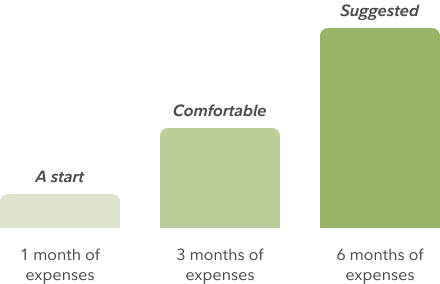
- Prepare for emergencies – An emergency savings is critical to cover those unexpected emergencies that might pop up in your life—car repairs, medical bills, unplanned travel costs, and unexpected business expenses. It’s a good idea to save 15% of your after-tax income, but you may want to start with a goal of $1,000, then aim to save 3 to 6 months' worth of essential expenses.
- Save for goals – With all the tasks that come with running your own business, goals can fall by the wayside. Intentionally setting and saving for short-term priorities like a vacation, a wedding, or an industry conference may help make sure that they happen.
How much should you have in emergency savings?
Strategies to save for short-term goals
Consider stashing your short-term savings in separate high interest cash management accounts or high-yield savings accounts, where you can earn a bit more while still easily accessing your funds.
Not sure how much to save? Consider the 60/30/10+15 Plan Your Pay guideline as an easy way to get started. As a starting point, this guideline suggests allocating no more than 60% of take-home pay to essential expenses, 30% for nice-to haves, and saving 10% for near-term goals and emergency savings. You should also aim to save 15% of pre-tax income for retirement—including any employer match. If this seems like too much to save, putting away a little bit now and gradually ramping up can be extremely worthwhile.
To learn more about how to manage spending and saving, read Fidelity Viewpoints: Fidelity's easy budgeting guideline
Taking paid time off when you’re self-employed
One important part of short-term savings is to consider paid time off (PTO). Even working for yourself, you’ll want to make sure you have time to do what you want, whether that involves taking a vacation, doing some volunteer work, or resting.
Look back at how much time you have typically taken off in the past and think about if you want to maintain, reduce, or increase that time going forward. Calculate how much income you’d expect to earn during that time. If you divide your yearly total by 12, you’ll know how much to set aside monthly.
Think about your PTO savings as your “PTO bank.” If you earn $500 per week and you have $500 in your PTO bank, then you have one week of PTO. Consider opening a separate account for your PTO or keep it in a savings account where it will accrue interest. Just be sure not to mix it with your emergency savings.