Estimate Time3 min

4 steps to picking your investments

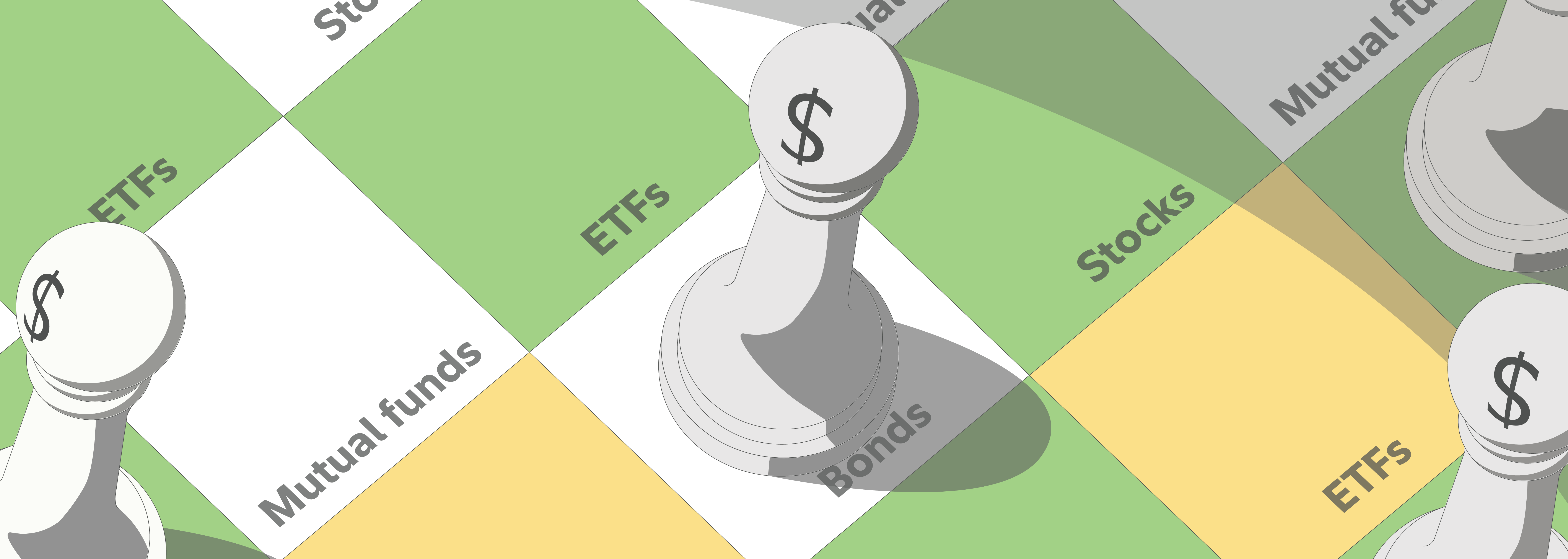
Getting your investment account set up and funded is a solid first move. But don’t forget the next one: picking what to invest in. If you skip it, your money could just sit in cash or a default fund—and miss out on potential growth.

Follow these 4 steps to picking your investments and making sure they work for you over time.

1. Create a game plan

An investor thinking of how to pick his investments. His hand is shown moving the game piece that represents his monetary investment. Text reading "Think ahead" is in the background.

Investing works best with a plan. Begin creating yours by asking yourself 2 questions:

How much risk can I handle?

Risk tolerance is how comfortable you are with market ups and downs. There’s no right answer—knowing your limits helps you stick to your plan and reach your goals.

How long do I plan on staying invested?

This is known as your time horizon—the longer it is, the more growth potential and risk you may be able to take on.

2. Choose your investments

The investor is sitting at the game board considering which investment he would like to select. Text reading "What are your options?" is in the background.

With time horizon and risk tolerance in mind, let's explore investment options. If you're saving for a short-term goal, more conservative and diversified choices may be best. For long-term goals like retirement, you can likely take on more risk for greater growth potential. Aligning investments with your goals can help your money grow while managing risk. 


Here’s more info on a few common investments—stocks, bonds, mutual funds, and ETFs:

3. Buy your investments
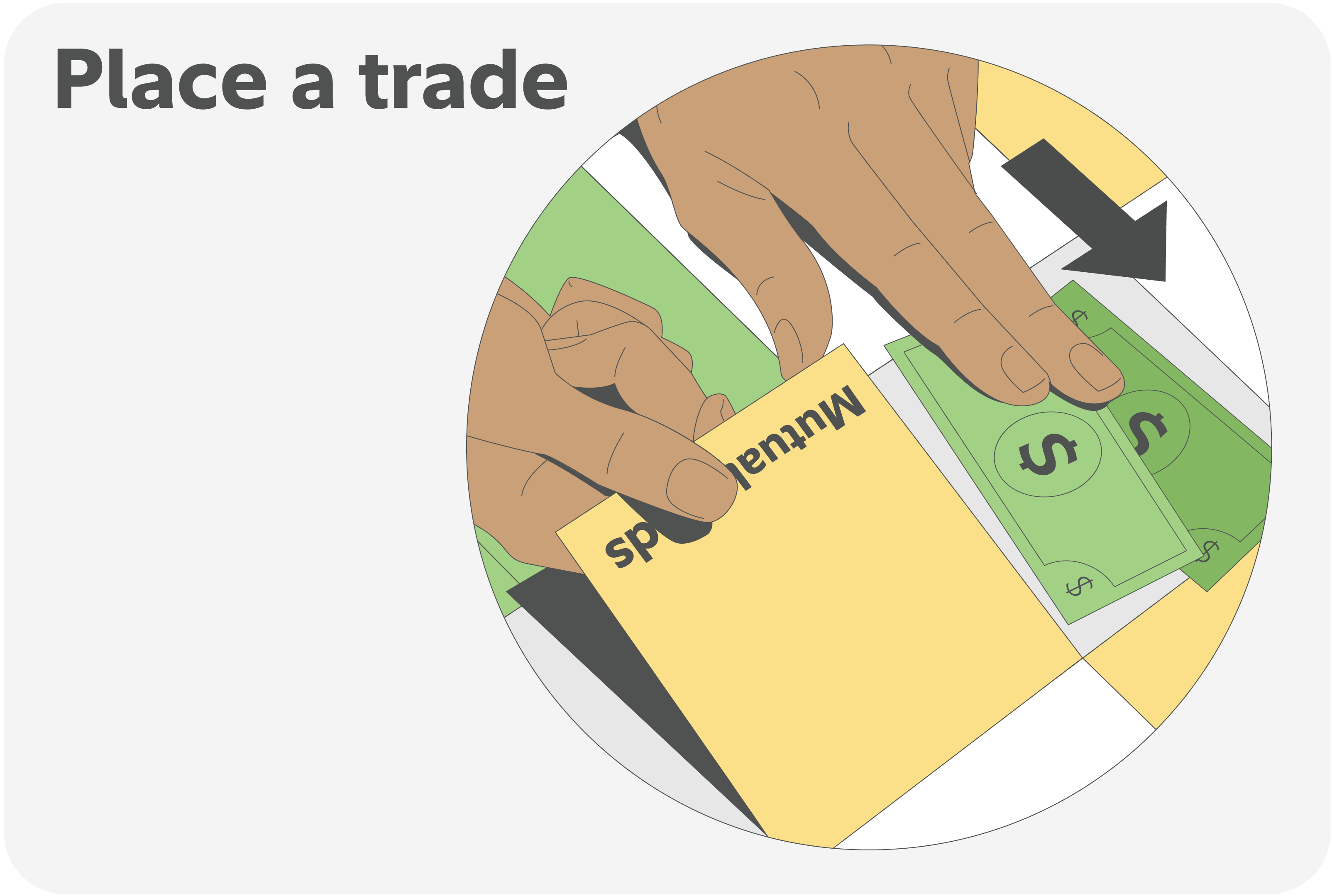
The investor is shown purchasing an investment tile labeled "mutual funds." Text reading "Place a trade" is in the background.

Once you’ve chosen your investments, don’t forget to buy them. Even if you're not a trader, you'll need to place a trade. When placing a trade, the 2 most common order types are market and limit orders. A market order buys the stock right away at the current price, whatever it is at that moment.

A limit order lets you set the maximum price you're willing to pay—your order only goes through if the stock reaches that price or better.

Your cash is used to complete the trade, and once it's done, you'll see the investment in your account. Just keep in mind—some trades may come with fees.

4. Check in

The smiling investor is standing on the game board holding up his monetary investments with confidence. Text reading "Stay on track" is in the background.

As life changes, so can your goals, timeline, and comfort with risk. That’s why it’s smart to revisit your investment plan annually—or after major life events—to make sure it still aligns with what matters most to you.

You may need to rebalance your portfolio, adjusting how much you have in stocks, bonds, or other investments, to help stay on track. No matter what, even if you're investing solo, Fidelity offers tools and support to help you invest with confidence.

Ready to place a trade?

Choose an account. Then enter your order quickly and easily.

More to explore

This information is intended to be educational and is not tailored to the investment needs of any specific investor.

Investing involves risk, including risk of loss.

Diversification and asset allocation do not ensure a profit or guarantee against loss.

Stock markets are volatile and can fluctuate significantly in response to company, industry, political, regulatory, market, or economic developments. Investing in stock involves risks, including the loss of principal.

Exchange-traded products (ETPs) are subject to market volatility and the risks of their underlying securities, which may include the risks associated with investing in smaller companies, foreign securities, commodities, and fixed income investments. Foreign securities are subject to interest rate, currency exchange rate, economic, and political risks, all of which are magnified in emerging markets. ETPs that target a small universe of securities, such as a specific region or market sector, are generally subject to greater market volatility, as well as to the specific risks associated with that sector, region, or other focus. ETPs that use derivatives, leverage, or complex investment strategies are subject to additional risks. The return of an index ETP is usually different from that of the index it tracks because of fees, expenses, and tracking error. An ETP may trade at a premium or discount to its net asset value (NAV) (or indicative value in the case of exchange-traded notes). The degree of liquidity can vary significantly from one ETP to another and losses may be magnified if no liquid market exists for the ETP's shares when attempting to sell them. Each ETP has a unique risk profile, detailed in its prospectus, offering circular, or similar material, which should be considered carefully when making investment decisions.

In general, the bond market is volatile, and fixed income securities carry interest rate risk. (As interest rates rise, bond prices usually fall, and vice versa. This effect is usually more pronounced for longer-term securities). Fixed income securities also carry inflation risk, liquidity risk, call risk and credit and default risks for both issuers and counterparties. Lower-quality fixed income securities involve greater risk of default or price changes due to potential changes in the credit quality of the issuer. Foreign investments involve greater risks than U.S. investments, and can decline significantly in response to adverse issuer, political, regulatory, market, and economic risks. Any fixed-income security sold or redeemed prior to maturity may be subject to loss.

The S&P 500® Index is a market capitalization-weighted index of 500 common stocks chosen for market size, liquidity, and industry group representation to represent US equity performance. Nasdaq Composite Index is a market capitalization–weighted index that is designed to represent the performance of NASDAQ stocks.

Fidelity Brokerage Services LLC, Member NYSE, SIPC, 900 Salem Street, Smithfield, RI 02917

1022705.5.0