


“Final warning.”
“Did you authorize this transaction?”
“Prevent your account from being frozen.”
This is the type of urgent-sounding language that fraudsters may use in text messages to try to trick recipients into clicking on a malicious link. Luring a recipient into clicking on a fraudulent link can give them a hook to then access that person's financial accounts or other personal information.
Such text-based scams are becoming increasingly common. In many cases, fraudsters are targeting the customers of financial institutions by impersonating a bank, credit union, or other financial institution.
The good news is that you can take steps to protect yourself and your money—primarily by staying vigilant against suspicious texts and other vehicles for fraud. Here are 3 steps to help protect yourself against text-based fraud.
Step 1: Recognize the signs of a suspicious text
Any unexpected or unfamiliar-looking text should be considered potentially suspicious. Remember that scammers may use urgent-sounding language to try to get you to click on a link in a text right away—before you have time to think it through.
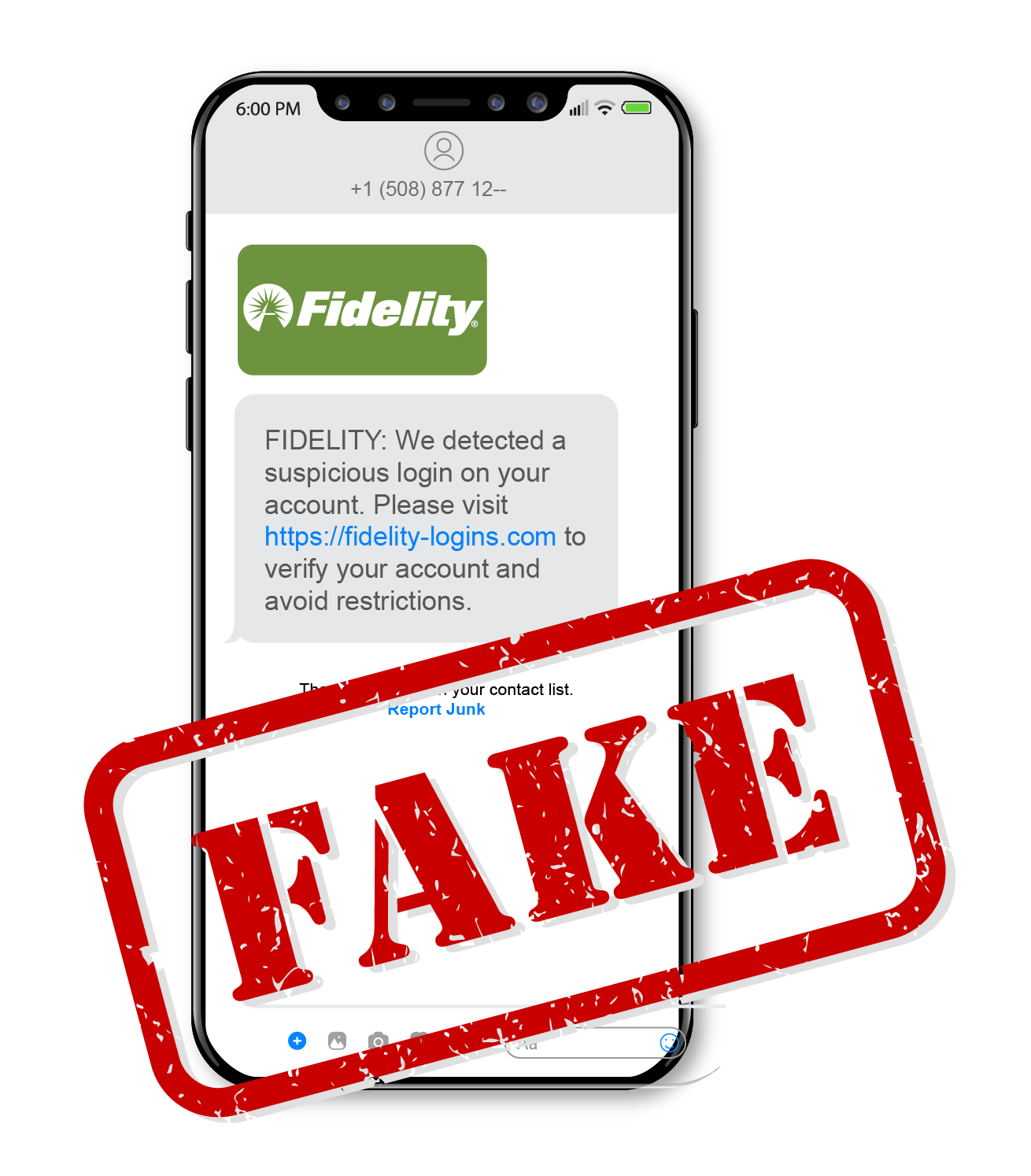
The following clues may help alert you that you've received a fraudulent text:
- Any text that is unexpected
- A text that tries to get you to click on a link or take other action
- Links that look slightly different from a company's official link
- A text asking for personal information or a security code
- A text coming from an unfamiliar number
- A text that promises unrealistic rewards, prizes, or returns, or uses urgent, fear-based language to pressure you into acting quickly
Be aware that seeing a company’s official logo is not a guarantee that a communication is legitimate. Convincing-looking images or text in a communication can be generated with AI, to give a fraudulent communication an appearance of legitimacy.
A legitimate text from Fidelity will only come from one of the official numbers published on Fidelity.com. However, it can even be possible for scammers to impersonate official phone numbers, by texting targets from a group text.
See official Fidelity text numbers
View the official numbers Fidelity may use to contact customers via text. Security-related text messages will only ever come from one of the listed "Security" numbers.
Step 2: Do not engage with the suspicious text
When it comes to text-based scams, not engaging can be your most powerful line of defense.
These scammers are often trying to lure people into disclosing their personal information—such as login credentials or security codes—potentially by tricking them into entering this information on a malicious website. By not clicking and not engaging, you can stop a potentially devastating fraud in its tracks.
Remember that the more urgent a text sounds, the more suspicious it may be, so always take the time to assess the situation.
Finally, never reply to suspicious texts—not even with "STOP" or any other message. Doing so could confirm to the fraudsters that your phone number is active and valid, and potentially expose you to further fraud attempts.
Step 3: When in doubt, contact your institution via its official phone number
If you believe the text message may be legitimate, contact the company through an official channel and explain the communication you just received. Do not respond to the suspicious text message, click on any of its links, or call the phone number in the text.
When calling your institution, do not rely on a phone number provided by search-engine results. Instead, go to the institution’s official website to locate an official phone number. (Make sure you have the correct Fidelity phone numbers.)
In conclusion
While text-based fraud has been seeing an uptick, it certainly isn’t the only avenue fraudsters are employing and won’t be the last. Stay vigilant in your online and offline life, and remember that if a communication seems fishy, it probably is.
Learn more about protecting yourself against scammers and ID thieves and about other common types of scams. Finally, get more resources on identifying phishing, fraud, and other scams, and how to report suspicious activity to Fidelity.