


You’ve probably heard of stocks and bonds, but you might not know exactly what they are. Understanding their features, benefits, and drawbacks is essential for building an investment portfolio that aligns with your financial goals.
Most portfolios are built to include a mix of both stocks and bonds, so it’s not a question of whether you have one or the other, but rather how much you have of each. Here's what you need to know about stocks and bonds.
What are stocks?
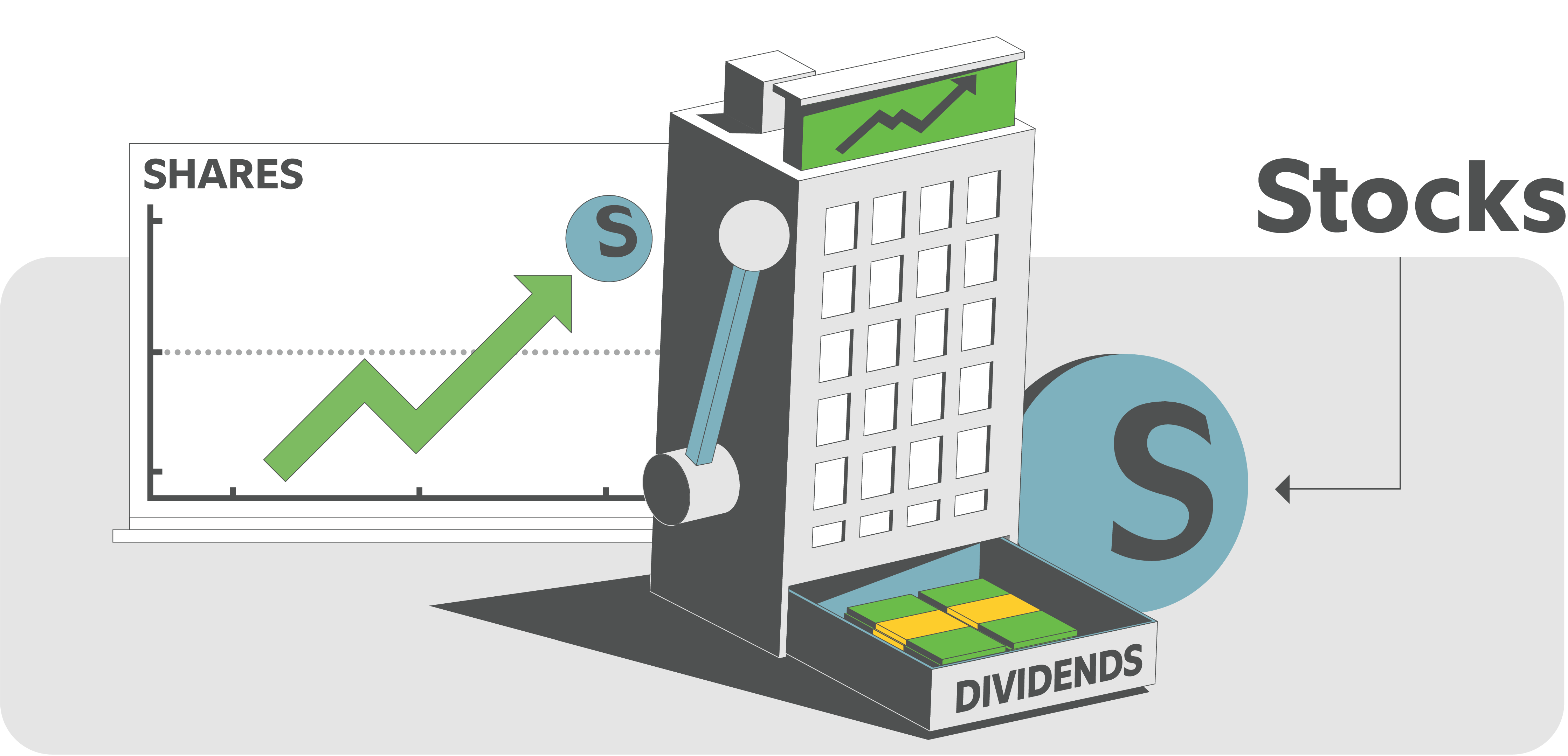
Stocks are ownership shares in publicly traded, for-profit companies. These companies sell shares to investors to raise money and continue growing and expanding operations.
Stocks let you buy a piece of a company you believe has the potential to grow in the future.
When you buy a company’s stock, you own part of the company. This may give you a share of its future profits if the firm is profitable and chooses to pay a dividend. You could also earn voting rights on big decisions such as choosing the Board of Directors, though some companies issue non-voting shares to let their founders retain more control of the company. The more shares you have, the more votes you get.
Stocks may earn money in two ways: through dividends, which are cash payments from company profits, or through price gains when shares rise in value, which could result in selling at a profit.
Pros
- Bigger potential for growth.
- Stock indexes—which are made up of a group of individual stocks—historically, on average, seek to keep pace with inflation.
- Easy to sell and turn into cash.
Cons
- Prices can swing up and down.
- Higher risk of losing money relative to bonds.
- Generally, requires more attention than most bonds and may require more research.
What are bonds?
Bonds are loans you give to companies, governments, or other organizations. In return, they pay you interest for borrowing your money.
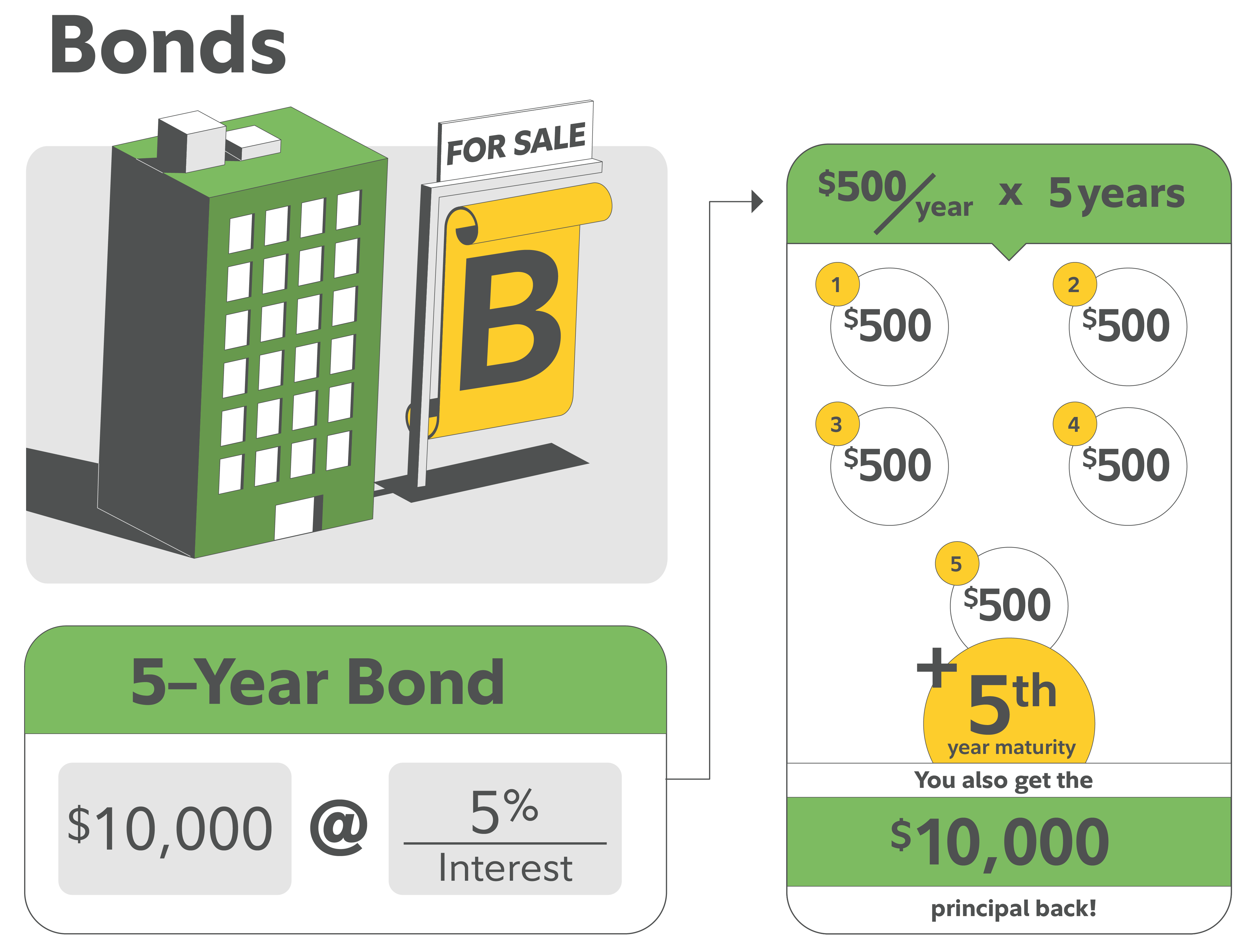
When an organization announces it is selling bonds, it sets a term and names an interest rate. For example, if you buy a 5-year bond for $10,000 at 5% interest, you’ll get $500 each year for five years—and at the end, you’ll get your original $10,000 back, if the company or issuer doesn’t default.
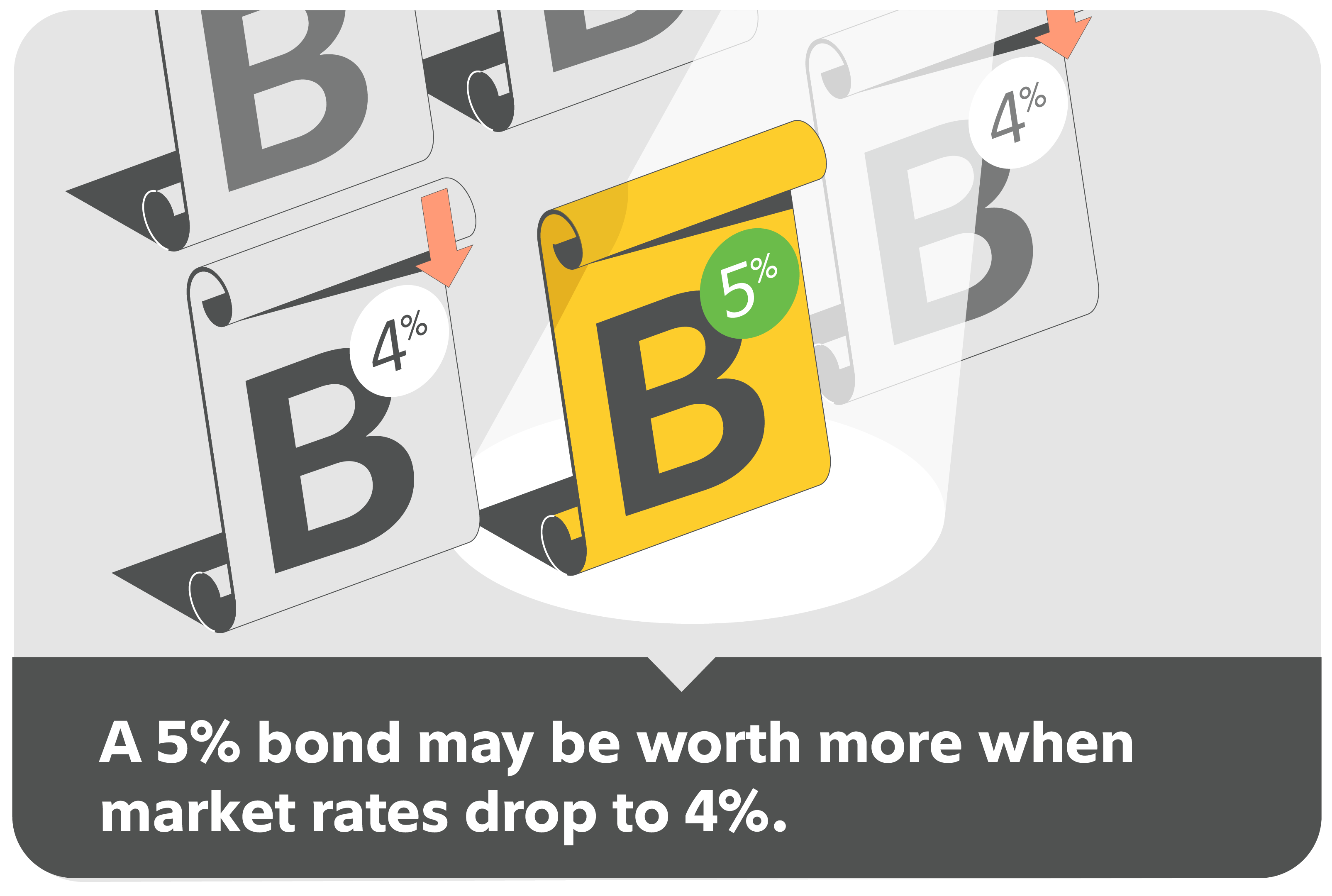
Investors typically earn from bonds through interest payments, but sometimes they can also profit by selling early. For instance, if you hold a bond paying 5% and market rates drop to 4%, other investors may pay more than its face value because your bond offers a higher coupon payment. Conversely, if rates rise, selling early could mean taking a loss.
Pros
- Generally, provide steady, predictable income.
- Typically, less volatile than stocks during market swings.
- Some bonds (like municipal bonds) can offer income that is federally tax exempt.
Cons
- Lower growth potential compared to stocks.
- You can still lose money in certain situations.
- Harder to sell quickly, and selling early might mean taking a loss.
Similarities between bonds and stocks
Can deliver higher returns than cash
Over time, stocks and many bonds have earned more than money sitting in a bank account. Both can help your money grow and seek to keep pace with inflation and rising prices.
Can be bought and sold in financial markets
You can buy both stocks and bonds through a broker, which is a company that manages investment accounts.
Secured by an organization’s assets
If a company goes bankrupt, both bondholders and stockholders have legal claims against the organization’s remaining assets to partially recover their investments. Bondholders are typically first in line to claim payment, while common equity shareholders are last.
Some level of risk with each
It’s possible to lose money with both stocks and bonds. While bonds offer greater safety, most are still not considered guaranteed, entirely safe places to invest your money compared to cash in an FDIC-insured bank account.
Differences between bonds and stocks
Potential return
Historically, the stock market has delivered a higher average long-term return than bonds. For example, the S&P 500, an index of the 500 largest companies in the United States, has posted an average return of roughly 10% a year since its launch in 1957.
Historical bond returns can vary a lot depending on the type of bonds and the time period you look at. A common benchmark for US investors is the Bloomberg US Aggregate Bond Index, which tracks a broad mix of high-quality, intermediate-term US bonds. From 1977 to 2025, this index earned an average return of about 6.6% per year. But over the past decade, the average was much lower—around 2% per year—because interest rates were very low in the 2010s and then rose sharply in 2022 and 2023.
Level of risk
Stocks carry more risk than bonds for 2 main reasons: First, you don't know what kind of return you'll receive on a stock the same way you may with bonds. Second, while most bonds do not guarantee return of principal invested, bondholders are typically paid first if a company goes bankrupt. Stockholders only receive what’s left, which may be nothing since even the bondholders are unlikely to receive 100% of the bond’s face value.
Voting rights
Another difference between stocks and bonds is that stockholders may be able to vote on company matters, while bondholders cannot. Bondholders are creditors, not owners of the company.
Expiration date
Bonds are repaid at a set maturity date. After that, investors need to purchase new bonds in an effort to keep their money growing. However, many bonds may be callable, meaning the issuer can redeem them before the maturity date.
Stocks, on the other hand, don’t have a fixed payout date. You can hold them for as long as you choose.
How to decide whether to buy stocks, bonds, or both
Whether you should buy stocks, bonds, or both depends on your personal goals, risk tolerance, and financial plan. Most investment portfolios combine both stocks and bonds, and investors adjust this mix over time in an effort to make the most of each based on their goals and timeline.
Regardless of asset class, investors should try to understand what they are buying. Be sure to research before you invest.
These factors can help you choose your mix of stock and bond investments.
Time horizon for needing the money
Bonds may make more sense if you need money sooner, like within a few years for a house down payment. With bonds, you know how much money you are expected to get back and when.
Stocks tend to be better for long-term goals because you have time to stay invested through times of volatility and benefit from the potential for higher long-term return. Many investors start with more stocks when they’re younger and gradually shift to more bonds as they get closer to retirement and need their investments to generate a more predictable income.
Income needs
Bonds are often purchased for steady income. Dividend stocks, on the other hand, may be better for long-term growth rather than quick payouts.
Liquidity
Stocks tend to be easier to sell and cash out when you need the money. While bonds are technically liquid, you might find that cashing out before the maturity date can lead to a significant loss, especially if interest rates have gone up since your purchase.
How to buy stocks
Open a brokerage account
You need a brokerage account to buy and sell stocks. You can open an account within minutes with Fidelity. As part of the opening process, you may need to link a bank account. You’ll use that money to buy stocks.
You don’t need a brokerage account to invest in bonds such as savings bonds, Treasury Inflation-Protected Securities (TIPS), and Treasurys, which can be purchased online directly from the government.
Decide on your investment strategy
Before investing, start by defining your overall investment strategy. Identify companies with strong prospects for the future and consider sectors where you have some expertise.
Develop a plan for how to manage potential losses. One effective approach is diversification—buying a broad mix of companies across different industries rather than concentrating on just 1 or 2 stocks. In other words, avoid putting all your eggs in one basket.
Research for specific stock picks
Once you figure out the general strategy, you can start analyzing the stock picks. There are many ways to do your stock research. You can review each company’s financial statements and other materials to understand how they are performing.
You can check research from trusted resources or use tools from your broker, like stock screeners, which help you filter stocks based on your criteria, plus other evaluation resources. These resources make it easier to find investments that fit your goals and portfolio.
Place your order
Once you’ve chosen the stocks you want, it’s time to place your trade. Start by searching for the company at your brokerage site to find its ticker and current price. Next, choose how many shares or dollars you want based on your budget. After you confirm and your broker processes the trade, you’ll see your cash turn into stock shares in your portfolio.
How to buy bonds
Open a brokerage account
Like with stocks, you can use a brokerage account to invest in most areas of the bond market. Open your account with a platform like Fidelity and deposit the money you’ll use to buy bonds.
Search through bond options
Your broker will likely have tools on their website to help you filter bonds by things like maturity date and interest rate. You’ll also see if the bond is a new issue, meaning you’re signing up for the full term, or a secondary market purchase from another investor. In that case, you take over their bond and pay either more or less than the original price, depending on how its interest rate compares to current market rates.
Check credit ratings
You should also check a bond issuer’s credit rating according to three main rating agencies: Moody's, Standard & Poor's, and Fitch. They give each bond issuer a letter grade denoting a bond’s credit quality, ranging from AAA at the top and falling to C or lower.
Bonds with a higher rating are rated more financially stable by the agencies and more likely to make their scheduled payments. Lower-rated bonds are considered riskier and more likely to miss payments or even fail to return your original investment. In exchange, they usually pay a higher interest rate.
Place your order
- Once you decide on a bond to buy, you can set up the trade through your broker.
- Check the bond’s price and yield for the quantity you want to buy by reviewing dealer quotes that are listed on platforms like Fidelity.
- Look at the bond’s Depth of Book (how many dealers are quoting the same CUSIP) to gauge pricing and availability.
- Compare with recent trades for that CUSIP to confirm the price is in line with recent market activity.
- Enter your order and review the Trade Preview, including price × quantity, accrued interest owed to the seller, and any broker markups.
- Confirm and execute the trade by selecting Trade once everything looks correct.
- Stocks and bonds serve different roles in investing, but a balanced portfolio including both can help you manage risk and reward and provide the possibility of growth potential.