


Financial indicators are essential for understanding market trends and making informed investment decisions. They help investors forecast price movements and manage risk with confidence. Keep reading to learn more about what financial indicators are, how they work, and a few considerations to build a solid trading and investing toolkit.
What is an indicator?
An indicator is a measurable data point that turns complex market information into clear, actionable insights like forecasting price trends or gauging economic health. Think of financial indicators as signals that can help investors navigate the stock market. By using indicators, investors can build strategies based on past performance rather than guesswork.
Why are indicators important?
Financial indicators can help give investors a clearer picture of what’s happening in the market. They may strengthen investment decisions by measuring risk, forecasting price movements, and tracking performance. Investors often rely on financial indicators as a way to strengthen their investment decisions.
Financial indicators can be categorized as either economic or technical indicators. Economic indicators can help measure the growth or contraction in the economy as well as inflation, while technical indicators help anticipate changes in stock, bond, or yield prices.
When it comes to picking stocks, economic indicators are widely used in fundamental analysis, which assesses earnings, revenue, cash flow, and other data to evaluate a company’s value. Technical indicators are used with technical analysis, the study of stock price and volume data. Using both types are helpful in getting a complete view of the market.
Types of indicators
Financial indicators use historical and current data to spot patterns and can help spot potential opportunities as to what might happen next. They generally fall into 3 categories that are based on timing: leading, lagging, and coincident indicators. Each category serves a different purpose:
- Leading indicators forecast future trends and often change before the economy does. For example, jobless claims reflect the number of people filing new or continuing claims for unemployment insurance. The data is reported weekly and considered to be a signal of potential future unemployment trends.
- Lagging indicators confirm economic trends after they’ve started. The unemployment rate is a common example: it usually rises after the economy slows because companies reduce hiring or lay off workers. It tends to fall as growth resumes, and firms expand their payrolls.
- Coincident indicators move in line with current economic conditions. Personal income is one example: it’s the total household income from all sources. Personal income tends to rise when the economy strengthens and wages and employment increase, and decline when economic activity weakens.
Economic indicators help signal the health of the economy at large. Some examples include:
The Gross Domestic Product (GDP) measures the total value of all goods and services a country produces. If GDP grows, it usually means businesses are producing more, hiring more, and the market is strengthening. When GDP declines, it can signal economic trouble or a potential recession.
The inflation rate tracks how quickly prices for everyday goods and services rise over time. Some inflation is normal, but persistently high inflation reduces people’s purchasing power, meaning their money doesn’t go as far, and can lead to higher interest rates.
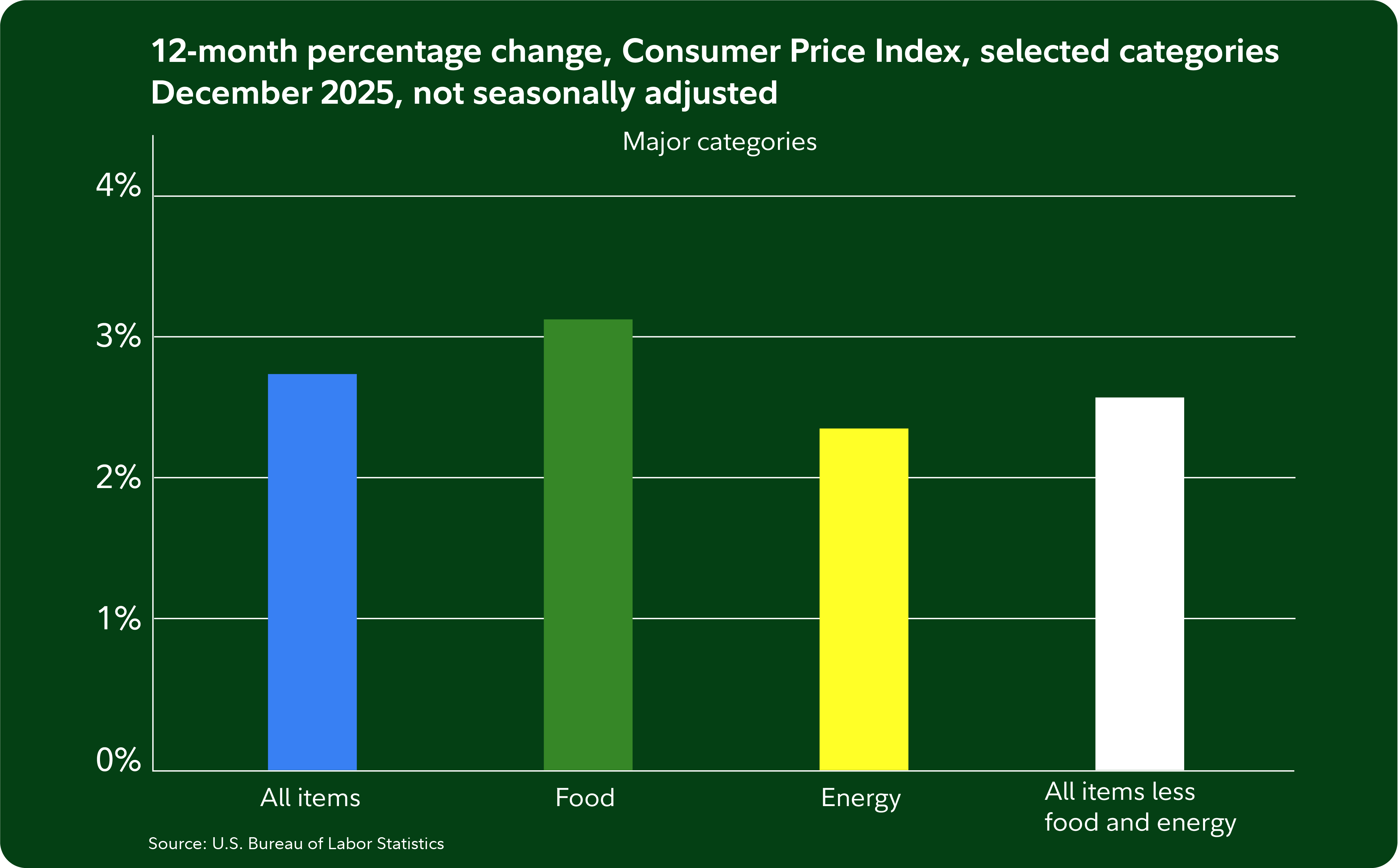
The Consumer Price Index (CPI) measures the average change in prices for a "basket" of everyday goods and services (things like groceries, gas, and clothing), combined into one number. It’s weighted, meaning some items count more than others depending on how much people typically spend on them. When the CPI rises or falls, it helps show whether overall prices are rising (inflation) or falling (deflation).
Technical indicators use price and trading volume data to help identify trends and momentum in the market. 3 common examples include:
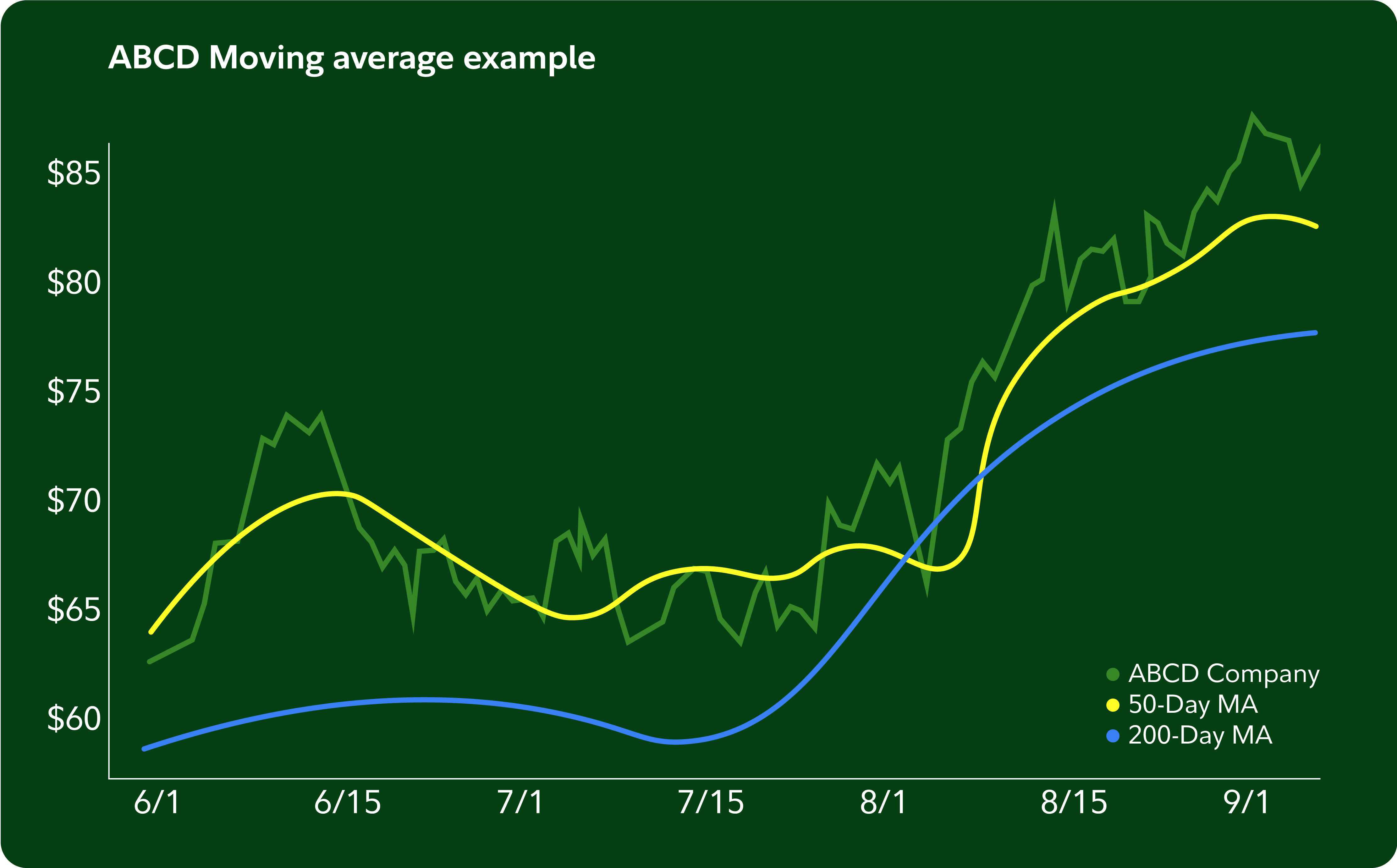
Moving averages show a stock’s average price over a set number of days—often 50 or 200. It smooths out the daily ups and downs so investors can see the overall trend. When a stock’s price is above its moving average, it often signals strength (a bullish sign). When it’s below, it can signal weakness (a bearish sign). The moving averages chart below for the fictional ABCD company shows the 200-day and 50-day moving averages.
Relative strength index (RSI) measures how quickly and how much a stock’s price has changed. RSI gives a score from 0 to 100: a high score (usually above 70) means the stock may be “overbought” or expensive, and a low score (usually below 30) means it may be “oversold” or cheap.
Bollinger Bands show how volatile a stock is. It commonly consists of 3 lines: a moving average in the middle and an upper and lower band around it. When the price reaches the upper band, it may indicate the stock is expensive; when it hits the lower band, it may indicate the stock is inexpensive.
The bottom line on indicators
Financial indicators aren’t just numbers; they’re tools that can help investors make more-informed investing decisions. By understanding both economic and technical indicators, investors can better spot market trends, manage risk, and build stronger strategies. Understanding how indicators work can be a key step toward investing with confidence.
Ready to dive deeper? Explore more indicators and start applying them to your strategy today.