


Bonds are a way for investors to earn interest by lending money to companies, governments, and other organizations. Bond markets exist to connect borrowers and investors for these transactions, and they function differently from stock markets. If you’re curious about what the bond market is and how it works, here’s an overview.
What is the bond market?
The bond market is a global network that facilitates transactions between organizations seeking to borrow money by selling bonds and investors looking to purchase those bonds. It also provides a platform for investors to trade existing bonds with one another.
How does the bond market work?
To truly understand how the bond market works, you need to know a few key concepts about bonds in general.
Bonds are sold by organizations called issuers that need to borrow money for a specific period. When you buy a bond, you’re lending them that money.
In return, they agree to pay you regular interest based on the amount you lent, which is called the principal, and give back your original amount when the loan period ends, which is called reaching maturity.
There are 2 main parts of the bond market:
Primary bond markets are where organizations sell new bonds directly to investors. The issuer sets the terms, and investors decide if they want to buy them. For example, a company might offer a 10-year bond that pays 5% interest and costs $10,000. If you bought the bond, you’d pay $10,000 and expect to receive $500 in interest each year, plus your original $10,000 back at the end of the 10‑year term.
Secondary bond markets allow investors to sell bonds they have already purchased to other investors. For example, if you bought a 10-year bond and then decided a year later you needed cash, you could look to sell it on the secondary market.
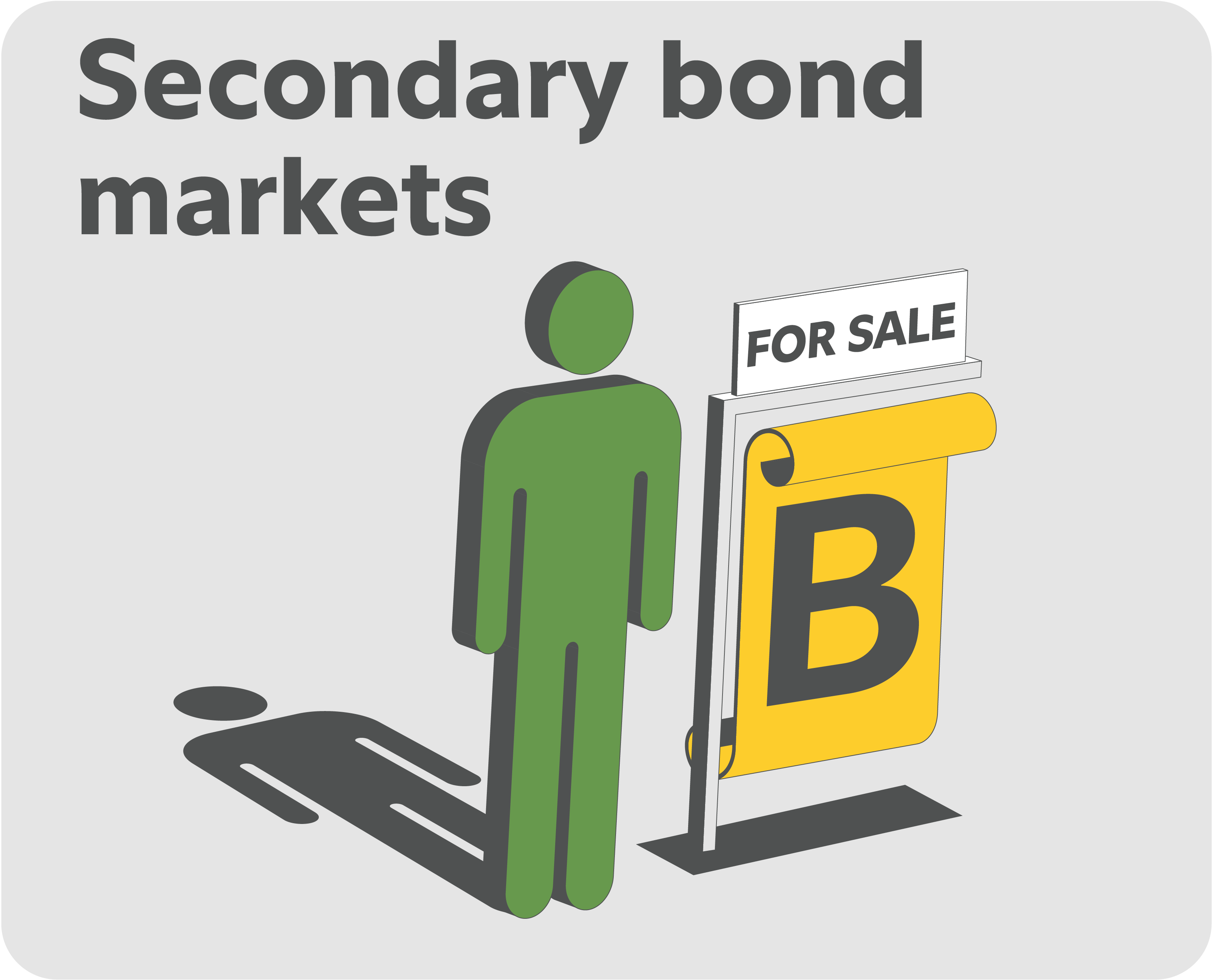
The price you receive might not be the $10,000 you originally paid. If interest rates have risen since your purchase, you might receive less, because investors can now earn more by buying new bonds. If interest rates have fallen, you might be able to sell the bond for a profit because investors now cannot purchase a bond for a similar amount and receive the same interest rate.
What are some factors that impact the bond market?
Several factors influence the bond market, both for the terms issuers must offer on new bonds and for the prices investors receive when selling bonds they already own.
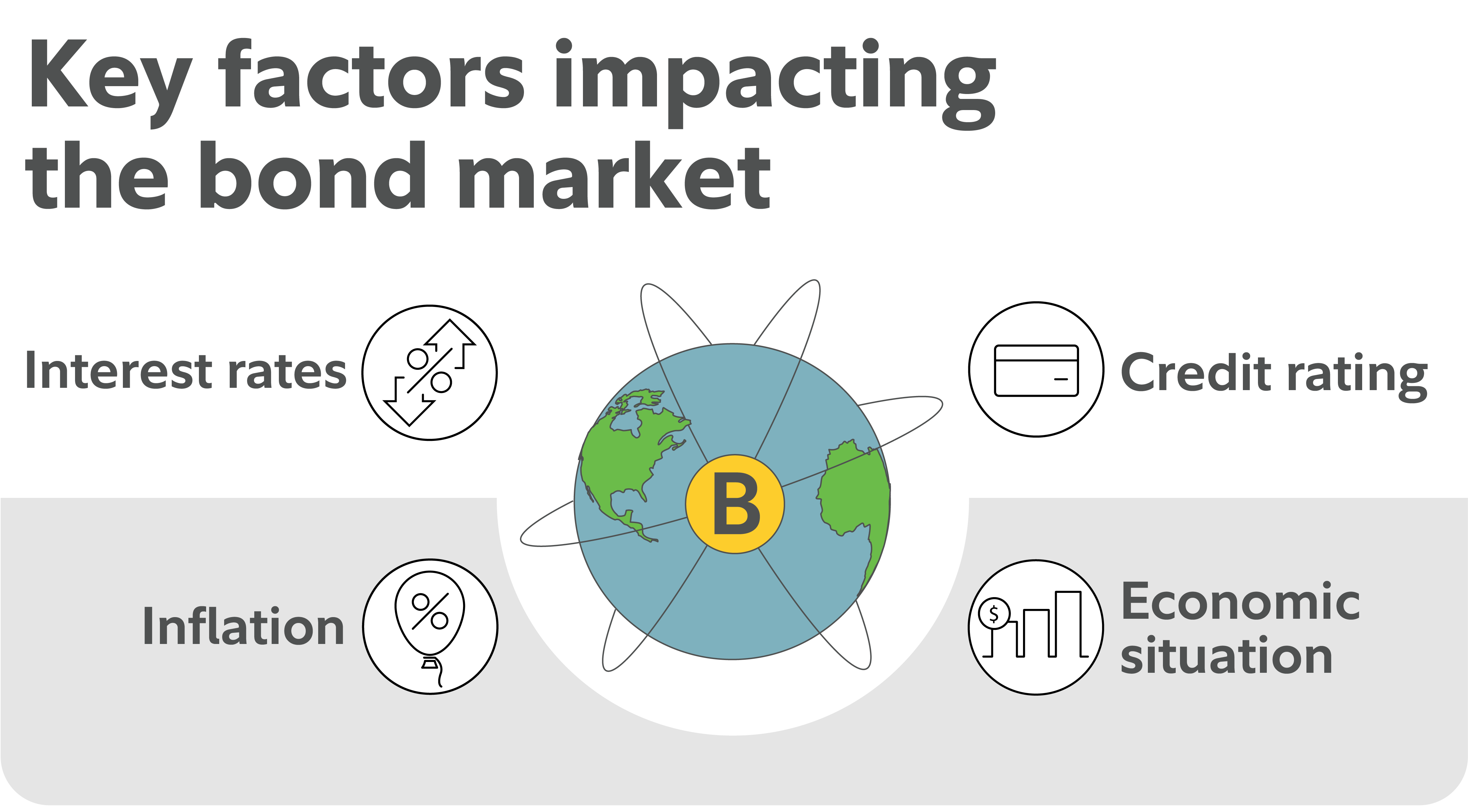
Interest rates
Bond returns (or yields) are closely tied to overall interest rate trends, which are influenced by central banks such as the Federal Reserve. When interest rates rise, issuers typically offer higher yields on new bonds to remain competitive. At the same time, prices of existing bonds often decline because investors can access better rates on new issues.
When interest rates fall, issuers can borrow at lower costs through new bonds. Investors holding older bonds with higher yields may find opportunities to sell them at a premium.
Inflation
Inflation, which drives prices higher over time, can diminish the purchasing power of a bond’s fixed interest payments. During periods of high inflation, issuers often need to offer higher yields to attract investors, and existing bonds with lower fixed rates may decline in price because their payments are worth less in real terms.
When inflation is low, issuers can offer lower rates, and existing bonds generally maintain their value more effectively.
Credit rating
There's always some risk that a bond issuer could experience financial difficulties and fail to make scheduled interest payments or repay the principal. To help assess this risk, bond rating agencies assign letter grades based on an issuer’s creditworthiness. For example, Standard & Poor’s uses AAA for the highest rating and D for the lowest.
Bonds with higher ratings are generally considered safer and tend to offer lower yields. Conversely, lower-rated bonds typically provide higher yields to compensate investors for the additional risk.
Economic situation
Economic conditions also influence the bond market. When the economy is strong, investors often favor stocks and other assets with higher growth potential. To remain competitive, bond yields may increase to attract investments.
During periods of economic weakness or uncertainty, investors tend to seek the relative stability of bonds, particularly highly secure options like US Treasurys. This increased demand for security can drive up the prices for existing high-quality bonds and lower the yields on previously issued ones. However, be aware that riskier bonds are likely to behave more like equities. This means that during times of economic or market stress the prices of risky bonds are likely to fall, and their yields rise, reflecting the market's assessment of their increased risk.
Why is the bond market important?
Understanding the bond market is useful because it plays a significant role for both individual investors and the broader economy.
Can offer portfolio stability and reliable income
Bonds are designed to provide investors with fixed interest payments and generally experience less price volatility than stocks. Stocks can change in value quickly because they’re affected by things like company performance, news, and market trends. While bonds are not risk-free, they generally involve lower risk, which is why many diversified portfolios include both stocks for growth potential and bonds for stability and income. The bond market offers a structured way for investors to access these securities.
Allows organizations to raise funding
Bonds are an important way for many organizations to raise money. For-profit companies can choose to issue bonds rather than new stock to avoid diluting existing ownership. Ownership dilution happens when a company issues more shares of stock, which makes existing shares smaller pieces of the company.
Governments and nonprofits also rely on the bond market, since they cannot issue stock. They may use bond proceeds to fund projects and support operations beyond their existing resources.
Can support economic stability
Central banks, such as the Federal Reserve, use the government bond market as one of their primary tools for influencing short-term interest rates and overall financial conditions.
When the economy is strong and inflation is a concern, the Federal Reserve may sell short-term government bonds. Selling bonds increases their supply, which pushes their prices down and, in turn, raises interest rates. Higher rates make borrowing more expensive, helping to slow demand and cool the economy. On the other hand, when the economy is weak, the Fed may buy government bonds. Buying bonds reduces supply, driving their prices up, and lowering interest rates. Lower rates make borrowing cheaper, which can encourage spending and investment.
When does the bond market open and close?
US bond markets are typically open from 8 a.m. ET to 5 p.m. ET and close outside these hours, as well as on major holidays like New Year's Day, Independence Day, and Christmas Day. Bond markets in other countries follow their own schedules. In general, bond markets are open at the same time as major stock markets.
Bond market vs. stock market
Both the bond and stock markets can help investors grow their savings while allowing organizations to raise capital, but they work in different ways and play different roles in a portfolio. Here are some key similarities and differences.
Similarities
Raises money for issuers: Companies use both the stock and bond markets to get funds beyond what they currently have.
Large, active markets: Investors can buy and sell many different stocks and bonds on organized markets with transparent pricing.
Shaped by economic and financial trends: Changes in overall interest rates, inflation, and economic conditions can move both stock and bond market prices. A company’s financial stability and credit risk can also impact stock and bond prices.
Differences
Ownership vs. lending: Stock markets allow investors to become partial owners of a company, while bond markets enable investors to lend money in exchange for scheduled interest payments.
Issuing organizations: Only publicly traded, for-profit companies sell shares on the stock market. Bond markets are more diverse, with bonds available from governments, privately held companies, and other organizations.
Price drivers: Bond prices and markets move mainly with overall interest rates and the credit risk from issuing organizations. Stock prices depend more on company earnings, growth prospects, and investor sentiment about the broader stock market and the economy.
How to invest in the bond market
If you’d like to invest in the bond market, follow these steps.
Choose your target bond types
Start by thinking about what kinds of bonds you want. Each has different features. For example, US Treasury bonds are generally considered to be low risk. Corporate bonds carry a little more risk, but in exchange, generally pay higher interest rates. Municipal bonds may offer interest that is exempt from certain taxes.
You need to decide what type of bonds you want first, because this can impact how you’ll invest in the bond market.
Open and fund a brokerage account
You can invest in most parts of the bond market through a brokerage investment account. It only takes a few minutes to open one with Fidelity and fund your account. You can then use that money to buy most bond types on the primary and secondary markets.
There are exceptions. For example, certain US savings bonds can be purchased only directly from the government through a TreasuryDirect.gov account. In most cases, though, a brokerage account is the main way to access the bond market.
Decide between individual bonds or funds
Next, decide whether you’d like to buy your own bonds or invest through a bond mutual fund or exchange-traded fund (ETF). Funds manage a diversified portfolio of bonds and handle the research and administration for you. You pick the type of bonds you want to invest in, and the fund charges an annual expense ratio. This includes the management fee, plus any other operating costs the fund may have.
If you buy individual bonds, you won’t pay an expense ratio, but you’ll need to research issuers, choose bonds yourself, and reinvest when they mature. There may also be markups, markdowns, or commissions when you buy or sell.
Research options on your platform
Your brokerage platform will likely provide tools for researching both bond funds and individual bonds. You can search for funds by strategy.
For individual bonds, you can typically filter by issuer, credit rating, time to maturity, and yield to find investments that match your needs.
Place your bond investment
Once you choose the bond investment you want, the buying process depends on the type.
- Bond mutual funds: You enter the dollar amount or number of shares you want to buy, and the trade completes at the end‑of‑day price (the fund’s NAV, or net asset value).
- Bond ETFs: You place a trade in dollars or shares, and it executes at the current market price during regular trading hours.
- Individual bonds: Different dealers may offer the same bond at different prices. One bond represents $1,000 of principal, so enter your order size accordingly. Before you confirm, review the trade ticket to see any markups or commissions and how they affect your yield.
Learn more about buying bonds and the types of accounts you can use to buy bonds.
The bond market serves as a vital link between borrowers and investors, helping organizations raise capital and providing individuals with opportunities for income and diversification. By understanding how it works and the factors that influence it, investors can make more-informed decisions about incorporating bonds into their overall strategy.