Keep in mind that investing involves risk. The value of your investment will fluctuate over time, and you may gain or lose money.
Be sure to consider all your available options and the applicable fees and features of each before moving your retirement assets.
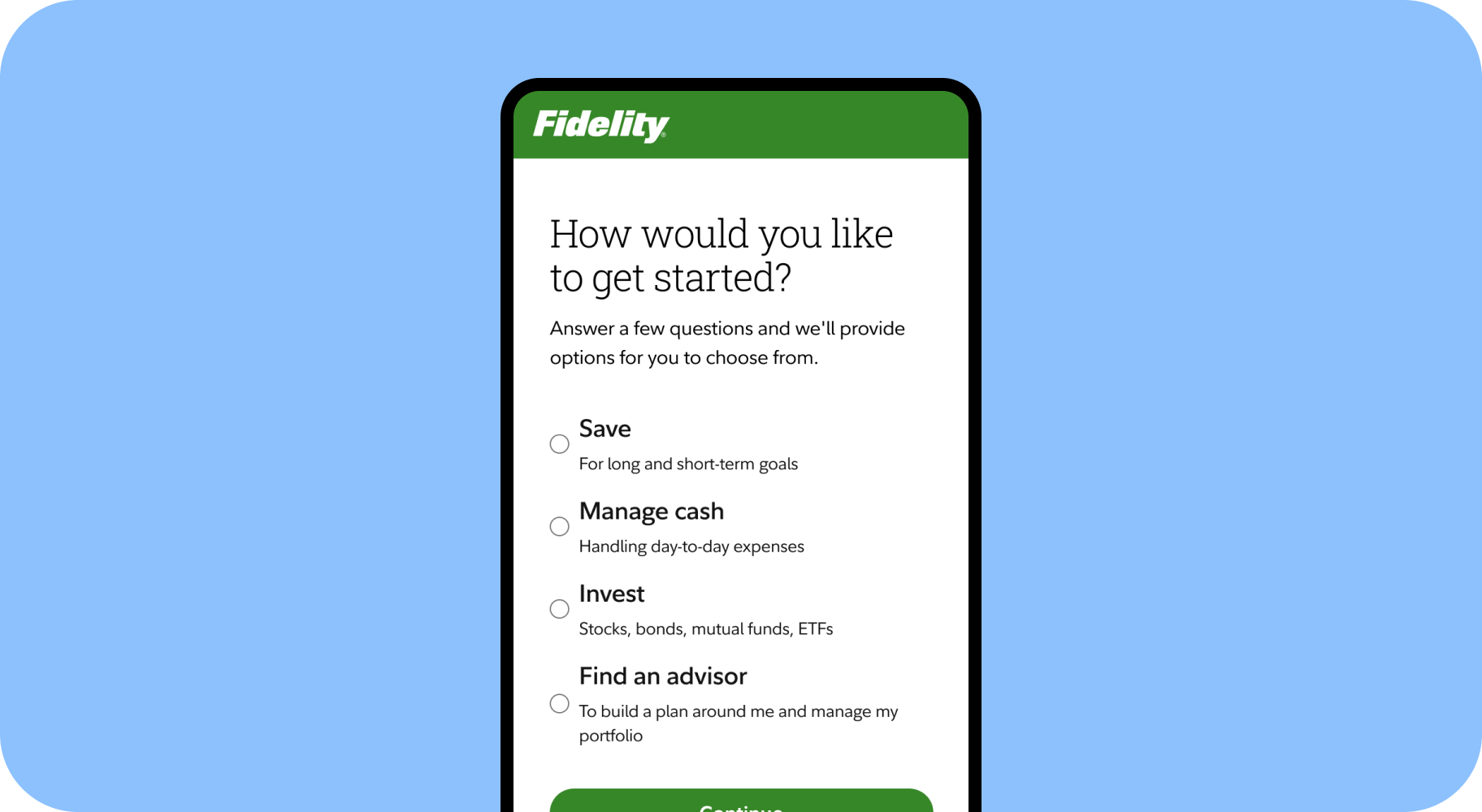
Screenshots are for illustrative purposes only.
Fidelity Crypto® for IRAs is offered by Fidelity Digital Assets® Investing involves risk, including risk of total loss. Crypto as an asset class is highly volatile, can become illiquid at any time, and is for investors with a high risk tolerance. Crypto may also be more susceptible to market manipulation than securities. Crypto is not insured by the Federal Deposit Insurance Corporation, the Securities Investor Protection Corporation, or any other government agency, and is not an obligation of any bank. Investors in crypto do not benefit from the same regulatory protections applicable to registered securities. Fidelity Crypto® accounts and custody and trading of crypto in such accounts are provided by Fidelity Digital Assets, National Association, which is a national trust bank. Brokerage services in support of securities trading are provided by Fidelity Brokerage Services LLC (“FBS”), and related custody services are provided by National Financial Services LLC (“NFS”), each a registered broker-dealer and member NYSE and SIPC. Neither FBS nor NFS offer crypto as a direct investment nor provide trading or custody services for such assets. Fidelity Crypto and Fidelity Digital Assets are registered service marks of FMR LLC.
Target date funds are an asset mix of stocks, bonds, and other investments that automatically become more conservative as the fund approaches its target retirement date and beyond. Principal invested is not guaranteed.
A Fidelity rollover coordinator can help guide you through the process of rolling from your former plan to an IRA with Fidelity. Their assistance includes help with new account opening, if needed to receive your rollover deposit, contacting your former 401(k) provider, to initiate your rollover, including providing helpful questions to ask your former plan provider when speaking with them or making the call to your former plan with you, education on options for depositing your rollover into your IRA with Fidelity, and help learning which investment options are available for your rollover once it arrives in your IRA.
1. Generally, there are no tax implications if you complete a direct rollover and the assets go directly from your employer-sponsored plan into a rollover, traditional or Roth IRA (as applicable) via a trustee-to-trustee transfer.
2. A distribution from a Traditional IRA is penalty-free provided certain conditions or circumstances are applicable: age 59 1/2; qualified first-time homebuyer (up to $10,000); birth or adoption expense (up to $5,000 per child); emergency expense (up to $1,000 per calendar year); qualified higher education expenses; death, terminal illness or disability; health insurance premiums (if you are unemployed); some unreimbursed medical expenses; domestic abuse (up to $10,000); substantially equal period payments; Qualified Federally Declared Disaster Distributions or tax levy.
3. No account fees or minimums to open Fidelity retail IRA accounts. Expenses charged by investments (e.g., funds, managed accounts, and certain HSAs), and commissions, interest charges, and other expenses for transactions, may still apply. See Fidelity.com/commissions for further details.
4. The new employer may impose a waiting period.
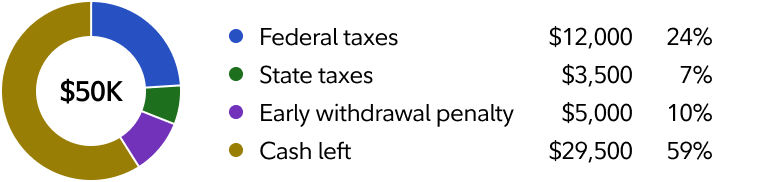
5. The taxable portion of your withdrawal that is eligible for rollover into an individual retirement account (IRA) or another employer's retirement plan is subject to 20% mandatory federal income tax withholding, unless it is directly rolled over to an IRA or another employer plan. (You may owe more or less when you file your income taxes.) If you are under age 59½, the taxable portion of your withdrawal may also be subject to a 10% early withdrawal penalty, unless you qualify for an exception to this rule. Be sure you understand the tax consequences and your plan’s rules for distributions before you initiate a distribution. You may want to consult your tax advisor about your situation.
6. Fidelity's Planning and Guidance center allows you to create and monitor multiple independent financial goals. While there is no fee to generate a plan, expenses charged by your investments and other fees associated with trading or transacting in your account would still apply. You are responsible for determining whether and how to implement any financial planning considerations presented, including asset allocation suggestions, and for paying applicable fees. Financial planning does not constitute an offer to sell, a solicitation of any offer to buy, or a recommendation of any security by Fidelity Investments or any third party.
7. There is no minimum amount required to open a Fidelity Go account. However, in order for us to invest your money according to the investment strategy you've chosen, your account balance must be at least $10. The Fidelity Go program advisory fee is calculated and charged at the account level.
Fidelity Go® provides discretionary investment management, and in certain circumstances, nondiscretionary financial planning, for a fee. Advisory services offered by Strategic Advisers LLC (Strategic Advisers), a registered investment adviser. Brokerage services provided by Fidelity Brokerage Services LLC (FBS), and custodial and related services provided by National Financial Services LLC (NFS), each a member NYSE and SIPC. Strategic Advisers, FBS and NFS are Fidelity Investments companies.
Fidelity does not provide legal or tax advice. The information herein is general in nature and should not be considered legal or tax advice. Consult an attorney or tax professional regarding your specific situation.
Before investing, consider the funds' investment objectives, risks, charges, and expenses. Contact Fidelity for a prospectus or, if available, a summary prospectus containing this information. Read it carefully.
Fidelity Brokerage Services LLC, Member NYSE, SIPC, 900 Salem Street, Smithfield, RI 02917
1226770.4.0













 Article
  5 min
5 min