


Perhaps you want to invest but you're not up to the task of choosing which particular stock, or piece of a company, to buy. That's where a mutual fund, which invests in multiple different securities, can come in. Luckily, investing in mutual funds is a pretty straightforward process.
What is a mutual fund?
A mutual fund pools together money from many investors to purchase a collection of stocks, bonds, or other securities.
That's where "mutual" comes in, because the investing is being done with other people. Investors don't own the securities in the fund but rather shares of the fund, the price of which is determined by the total value of the fund's securities minus fund expenses divided by the number of its outstanding shares.
If the goal of the fund is to track a specific index, a group of different investments often bundled together because they have something in common, the fund is considered passively managed. Changes to the fund's composition generally only happen when the index itself changes. These passively managed funds, also known as index funds, usually have lower costs than actively managed funds. That's because actively managed funds, which have a portfolio manager or team regularly making investment decisions attempting to outperform a chosen index, typically require more work on the fund managers' part.
Related: Active mutual fund vs. index fund: How they compare
Advantages to investing in a mutual fund
Investing in a mutual fund comes with several potential benefits:
- Built-in diversification, because mutual funds spread out their risk across many investments instead of putting all their eggs in one basket.
- Easy-to-reinvest dividends, payments made by companies that make up the fund, which are passed along to fund shareholders, typically from profits or retained earnings. You could reinvest those dividends to buy more shares of the mutual fund.
- Liquidity. Mutual funds are relatively easy to sell if you want to.
- An actively managed fund could outperform the benchmark it's trying to beat.
- Some mutual funds have $0 minimum initial investment.
Drawbacks to investing in a mutual fund
Despite the many positives, there are negatives to consider too:
- As with all investments, there is risk of loss.
- Mutual funds, unlike the money in certain bank accounts, don't have Federal Deposit Insurance Corporation protection. You could lose your entire investment without recourse.
- Fees can be high, especially with actively managed funds.
- Mutual funds can be tax-inefficient. When a mutual fund manager sells shares and makes gains, unless you hold the mutual fund in a tax-advantaged account, like a 401(k) or individual retirement account (IRA), you, the mutual fund investor, owe taxes on those gains—even if you, personally, haven't sold your shares. Note that you will still owe taxes investing in a tax-advantaged account, as you have to pay taxes on gains as ordinary income when you withdraw assets.
- Mutual funds trade only once a day, after the stock market closes at 4 p.m. (ET).
- There's no guarantee an actively managed fund will outperform its benchmark. It may underperform, perhaps significantly, its stated benchmark, or the market as a whole. Even a passively managed fund might not perform as well as the index it's tracking. Because a mutual fund's performance is reduced by fees, an index fund will generally not perform as well as the stated index.
How to invest in mutual funds
If you decide you'd like to invest in mutual funds, here are the steps to follow:
1. Choose how you'd like to invest
There are a few different options, depending on how involved you'd like to be.
- Through a financial advisor: If you prefer to be hands-off, a financial advisor can help design and manage your investment portfolio. They'll handle the research, trades, investing strategy, and portfolio maintenance for you. The fee for this varies according to factors like the level and type of service and the value of assets under management.
- Through a robo advisor: A robo advisor is an affordable digital financial service that uses technology to help automate investing based on information investors provide about themselves and their financial situation. "Robo" refers to these services being almost completely digital. "Advisor" speaks to the digital advice and account management services, often for a lower fee than traditional investment advisory services.
- On your own: Self-directed, aka DIY investors, don't pay for professional guidance, so it's on you to research, trade, and track investments to ensure they align with your goals.
2. Research mutual funds to invest in
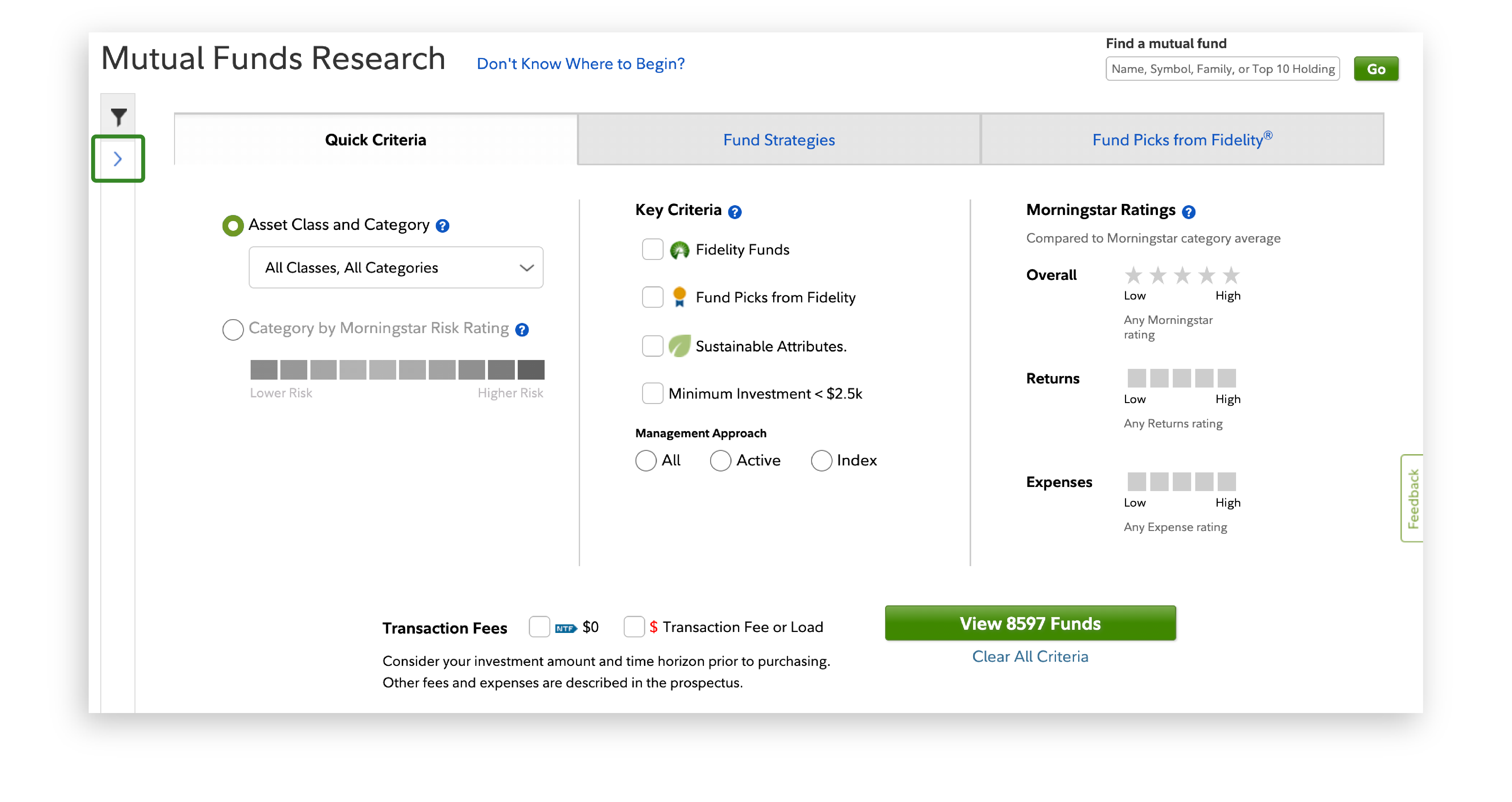
If you're getting pro help, you can skip this step. If you're going the DIY route, you can research and compare funds with Fidelity's mutual fund evaluator tool. To do so:
- Expand the search criteria on the left side by clicking the right-facing arrow.
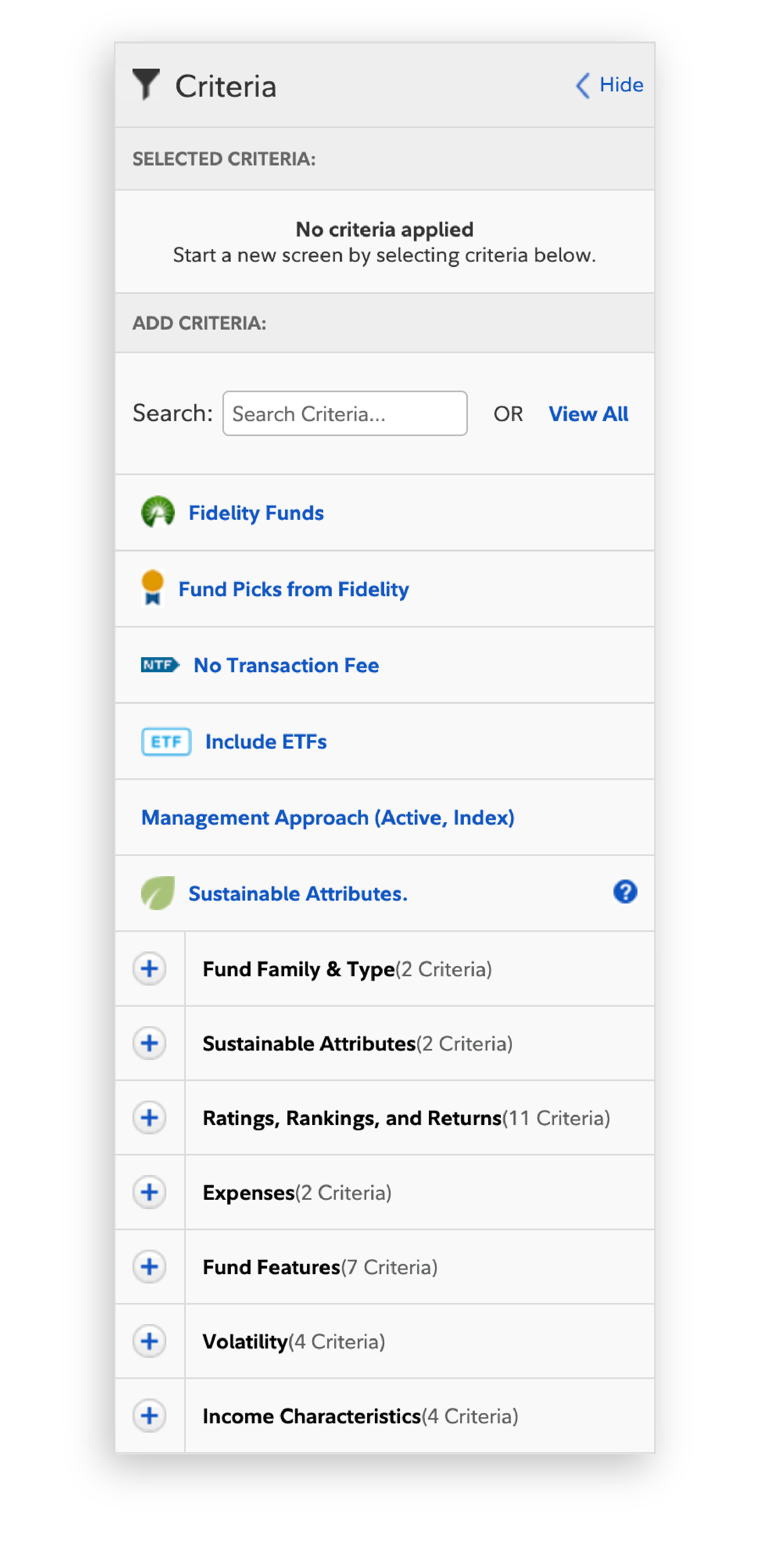
- Choose from the criteria listed or click "View All."
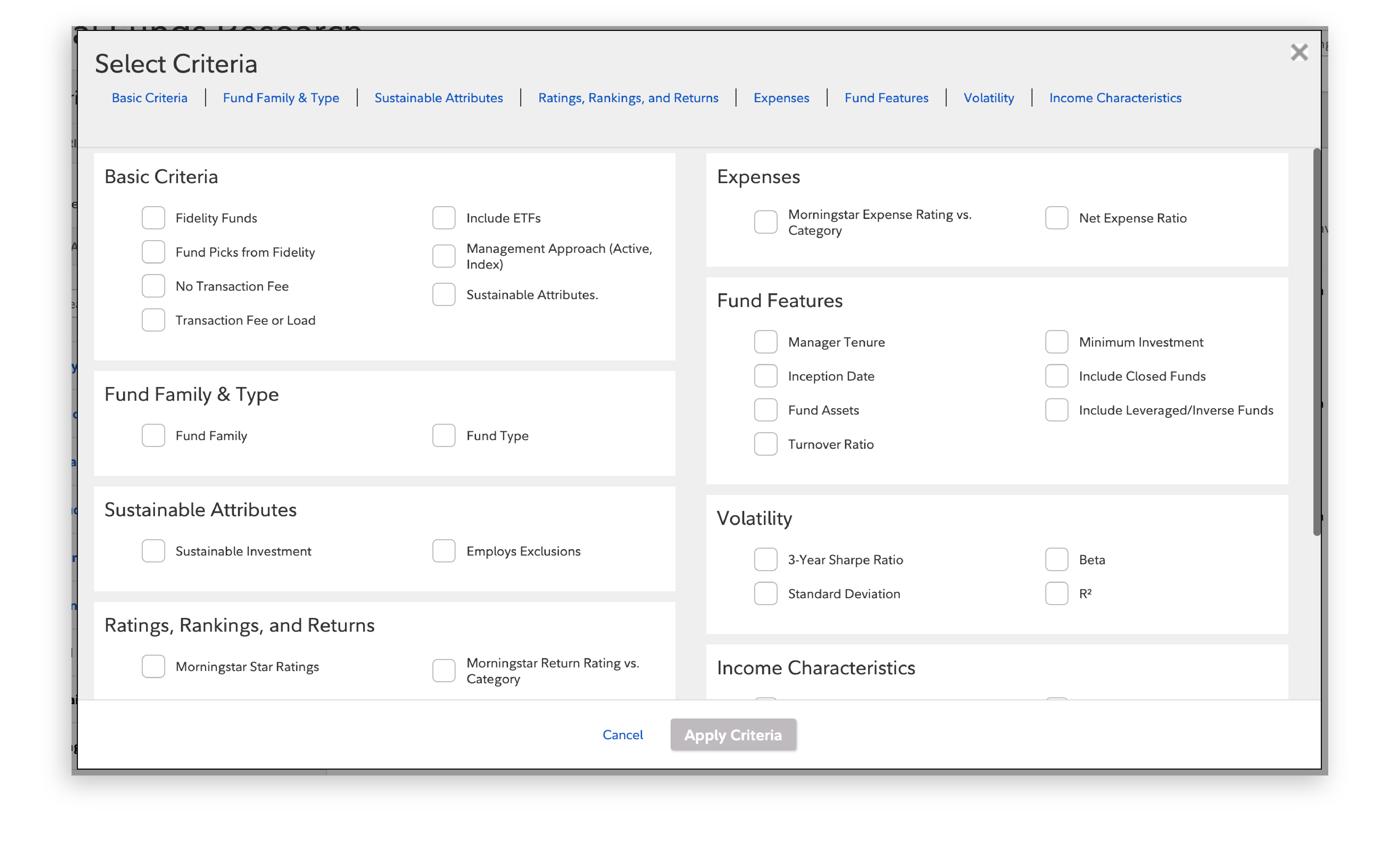
- Select criteria such as volatility, returns, and expenses.
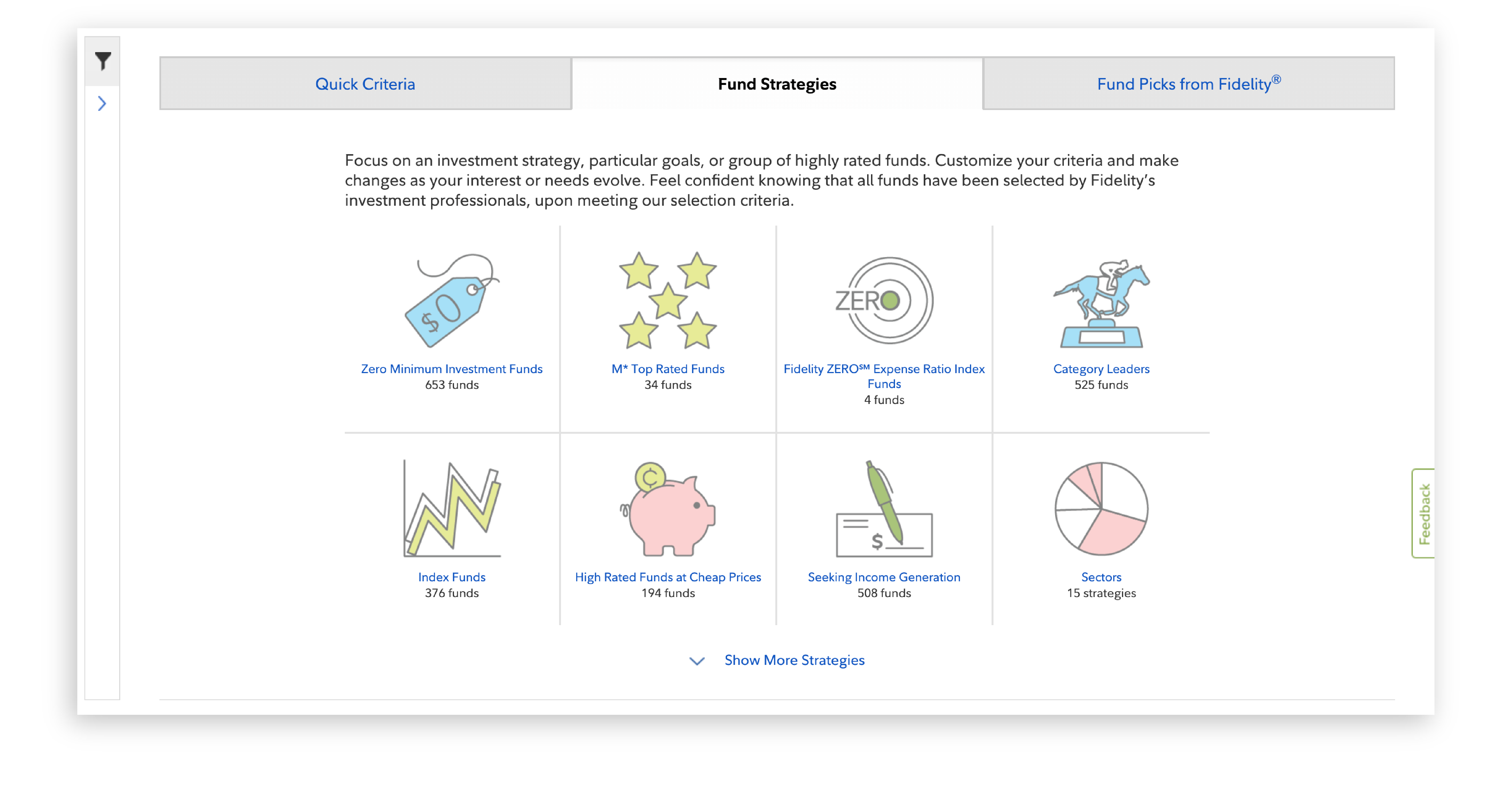
- Select Apply Criteria—or click Fund Strategies to search for mutual funds based on strategies like zero minimum investment, income generation, or fighting inflation.
Related: How to pick a mutual fund
3. Compare mutual funds
Consider these factors when measuring up mutual funds:
- Fees. Some examples of possible fees on mutual funds, which may eat into your investment returns:
- Load: transaction fees for buying or selling shares. (Psst … all Fidelity funds can be bought or sold with no transaction fees when you buy them through Fidelity.)
- Redemption: could be charged if you sell shares you've owned for a short time.
- Expense ratio: ongoing fee covering the costs of operating and managing the fund. As a point of reference, the average expense ratio for equity mutual funds was 0.40% in 2025 and 0.36% for bond mutual funds.1 (Fidelity offers some zero expense ratio mutual funds.)
Minimums
Some funds require a minimum initial investment, $2,500 for example. (Fidelity offers some zero minimum investment funds.)
Taxes
The fund's securities may pay dividends or interest, and the fund manager may sell securities that have increased in value—both of which generate income paid out to investors as periodic distributions. Investors who own shares in the mutual fund are generally responsible for taxes on that income.
Related: Mutual funds and Taxes
4. Choose where to buy mutual funds
- If you're buying through a workplace retirement account, you don't get to pick the brokerage firm to buy mutual funds from because your company has already chosen a custodian. If you'd like to buy through some other account, you might consider a brokerage firm where you already hold accounts if you want to keep all of them in one place.
- Choose the account type through which you want to buy mutual funds. You may buy through:
- a brokerage account. There are no contribution limits, but realized gains and income are taxable in the year they are realized or received, even if the money stays in the account.
- a 401(k), 403(b), or 457(b) plan if your plan administrator offers them. These are employer-sponsored retirement plans with contribution limits but also tax advantages.
- an IRA, which also has contribution limits and tax advantages—no employer sponsor needed.
- a health savings account (HSA) if your plan administrator offers them. You'll need an eligible high-deductible health plan, but an HSA allows for tax-deductible contributions, tax-deferred (or even tax-free) growth, and tax-free withdrawals for qualified medical expenses, a tax-saving trifecta.1
- a 529 if your plan administrator offers them. This higher education account does not offer a federal tax deduction but there could be a state tax deduction, depending on your plan and state of residence. Withdrawals are tax-free if used for qualified education expenses.
5. Buy your mutual funds
Make sure your account has enough money in it to cover the purchase and you invest the minimum dollar amount, if required. Then place your trade on your mutual fund provider's website or app.
Related: Understanding how mutual funds, ETFs, and stocks trade
How to invest in mutual funds at Fidelity
If you decide to buy mutual funds through Fidelity, take these steps.
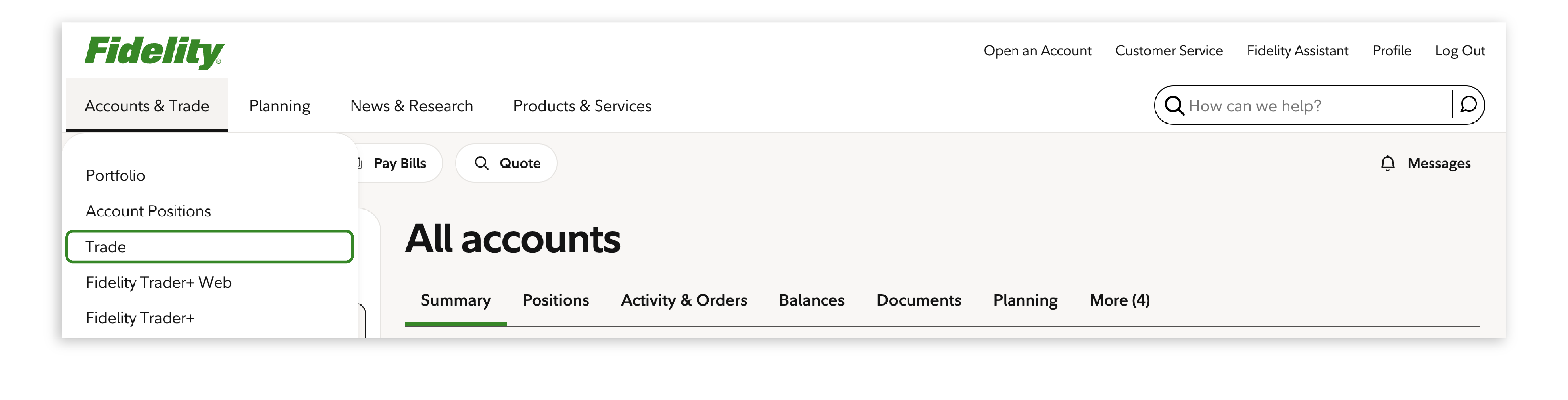
1. Log in to your Fidelity account. Select Trade from the top navigation bar under Accounts & Trade.
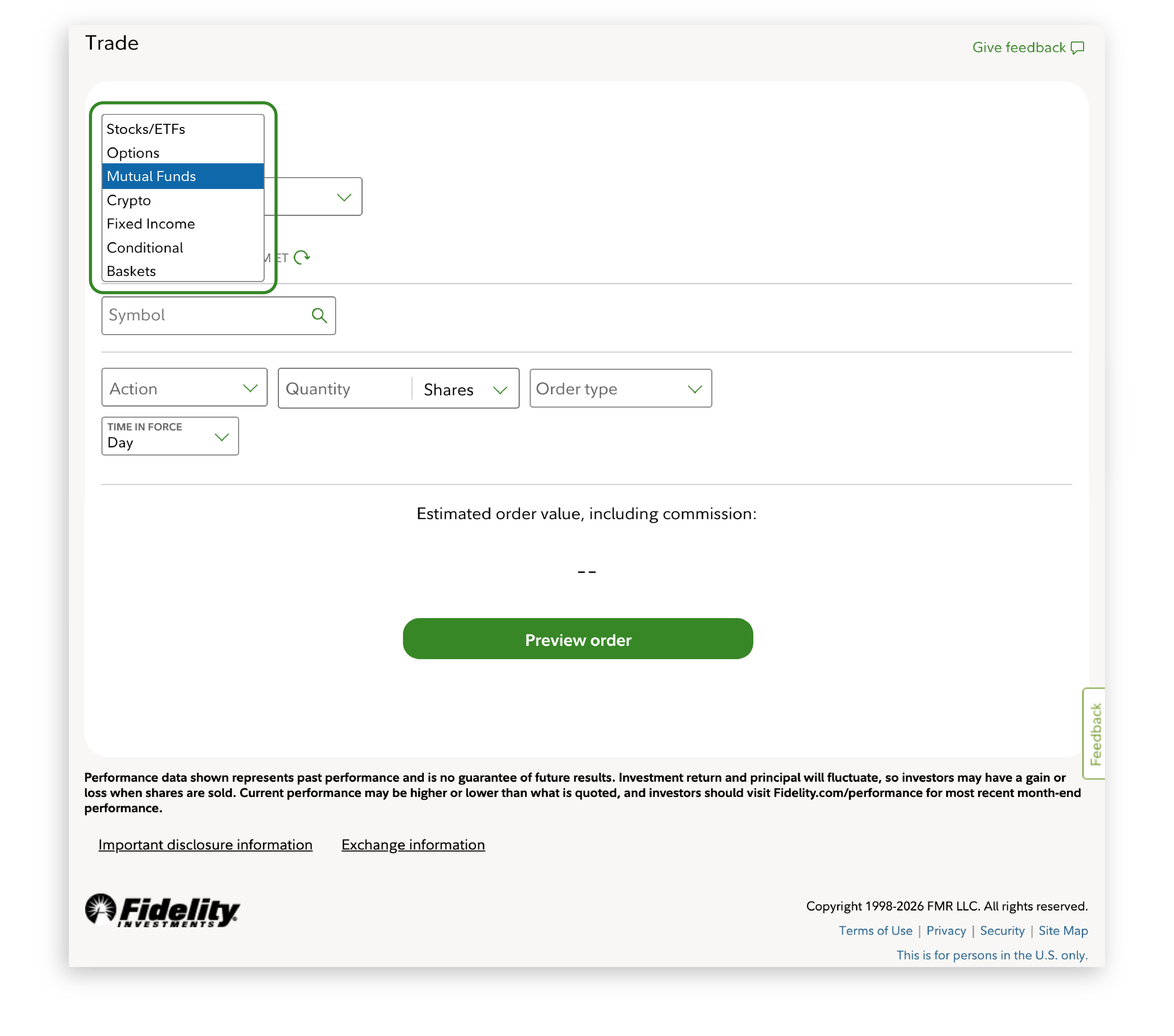
2. Select Mutual Funds from the dropdown menu under Trade.
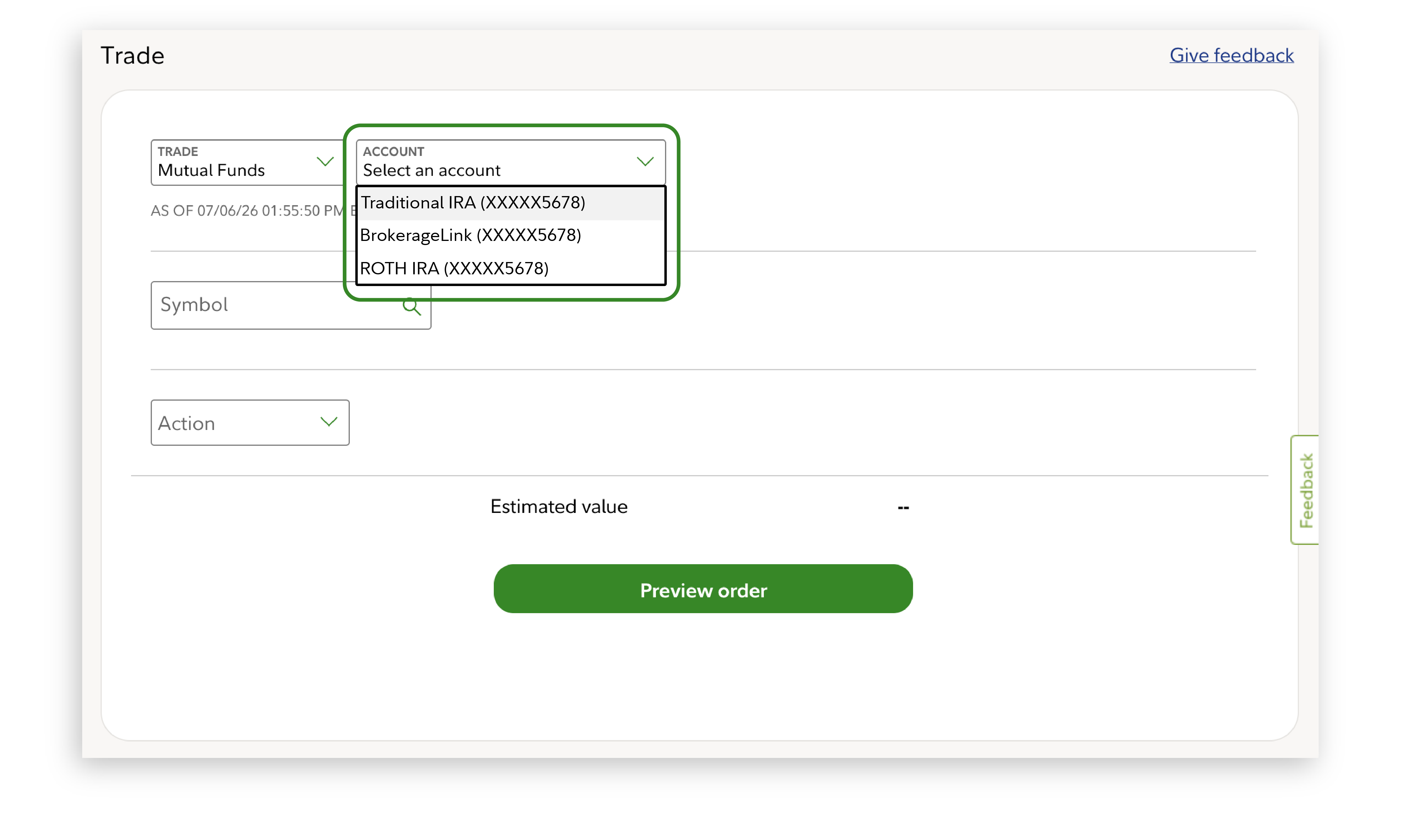
3. Select the account you want to trade in.
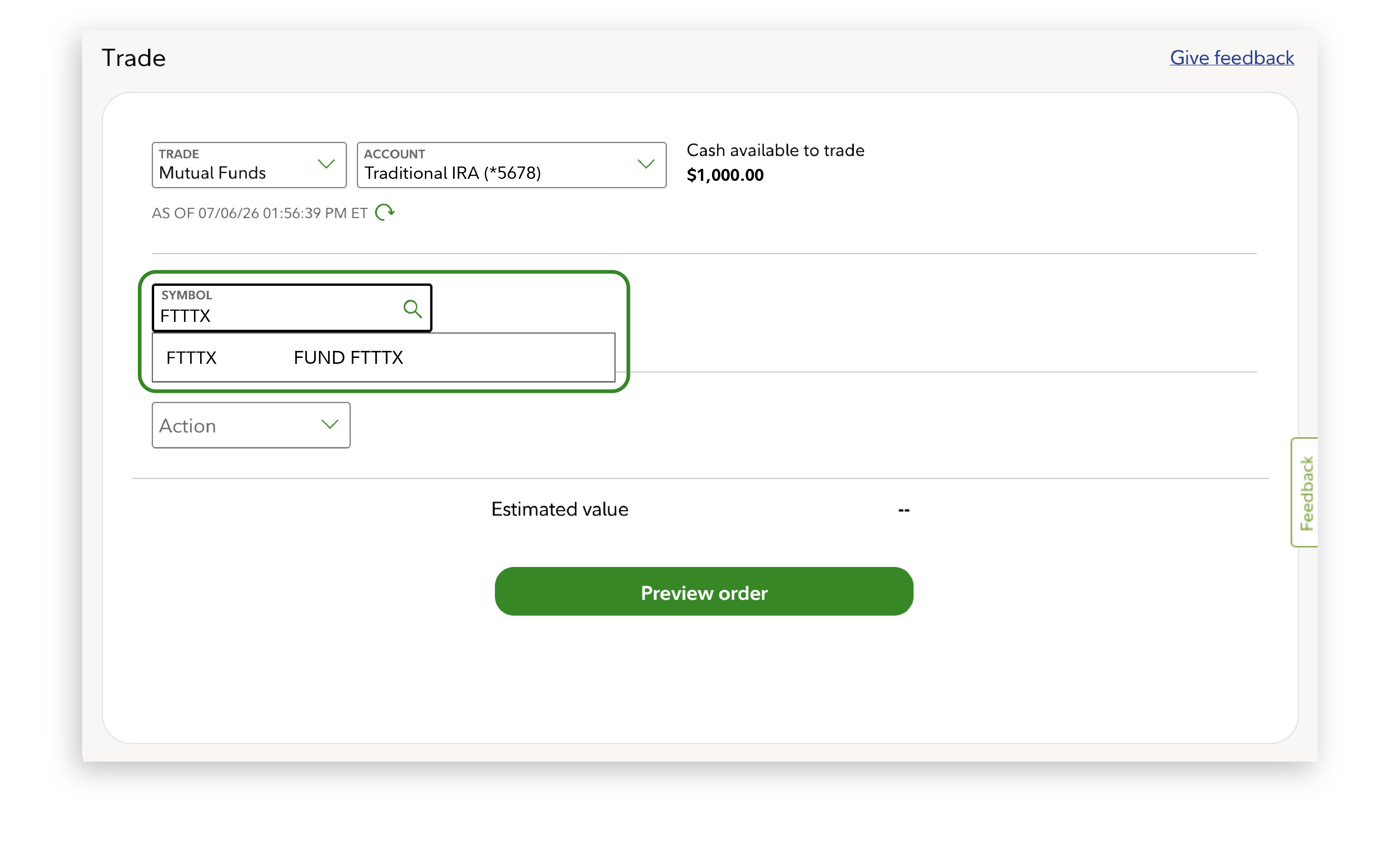
4. Look up the symbol (the set of a few letters that represent the fund) for the mutual fund you'd like to buy.
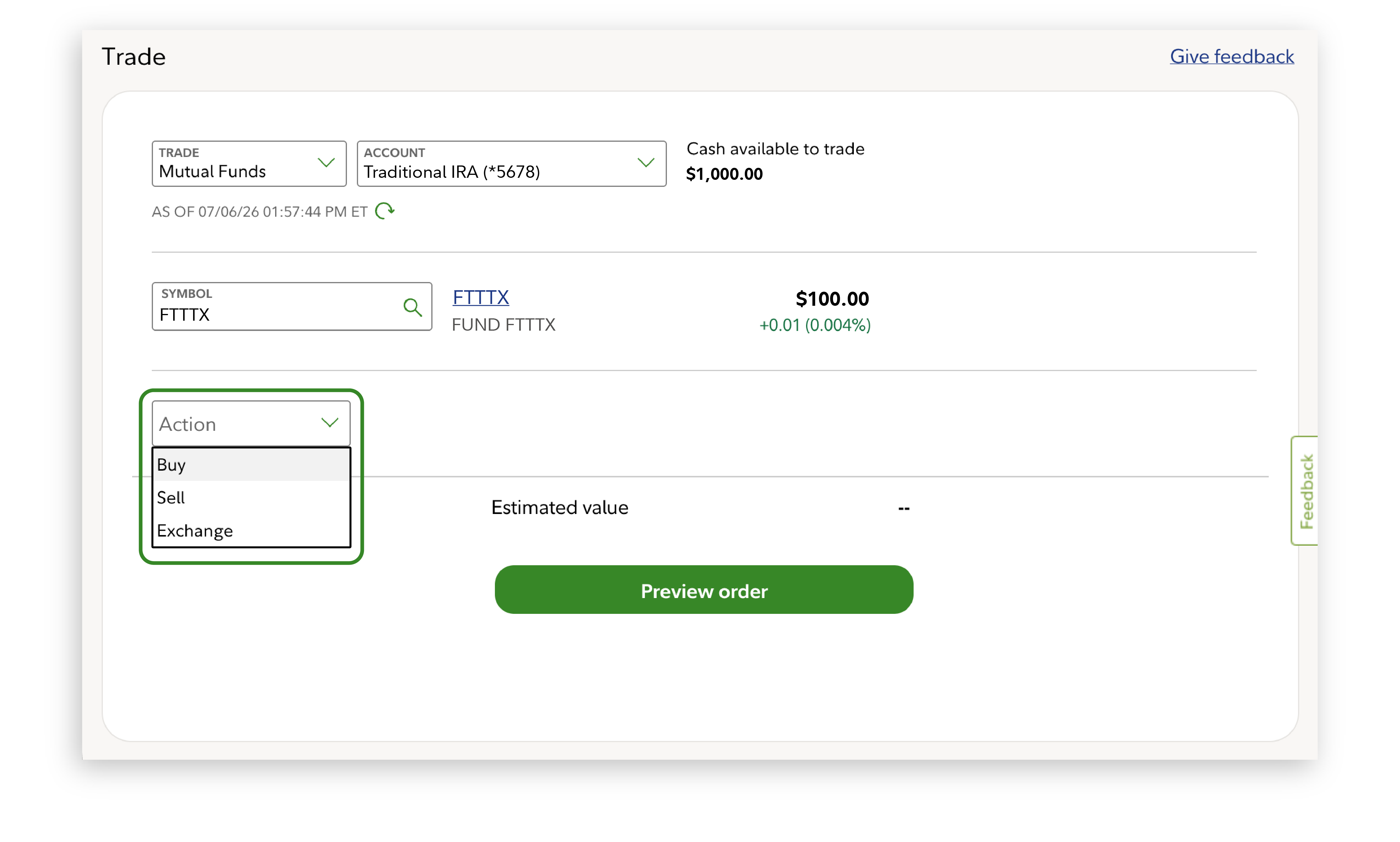
5. Select the Action (Buy).
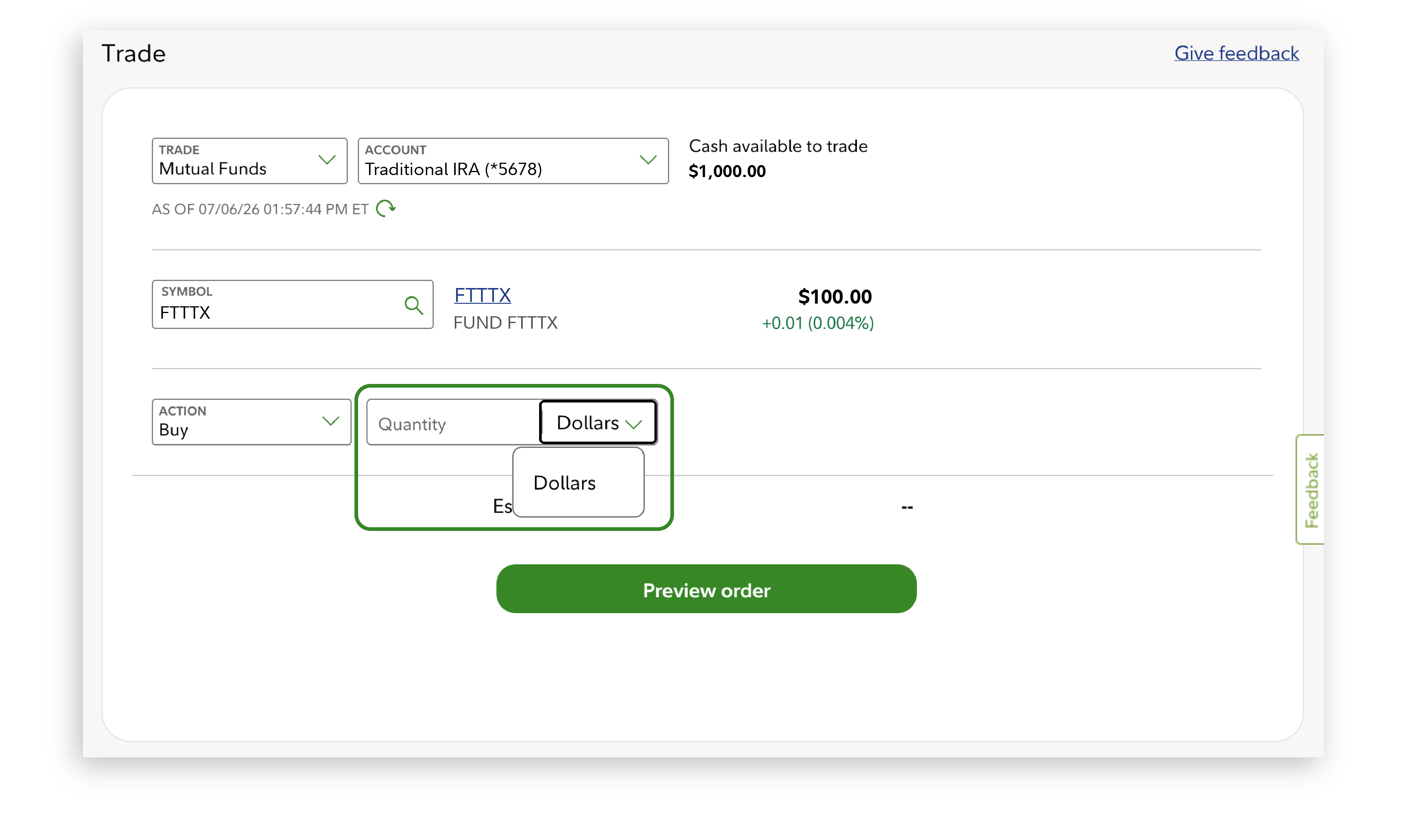
6. Choose the Quantity (in dollars or number of shares).
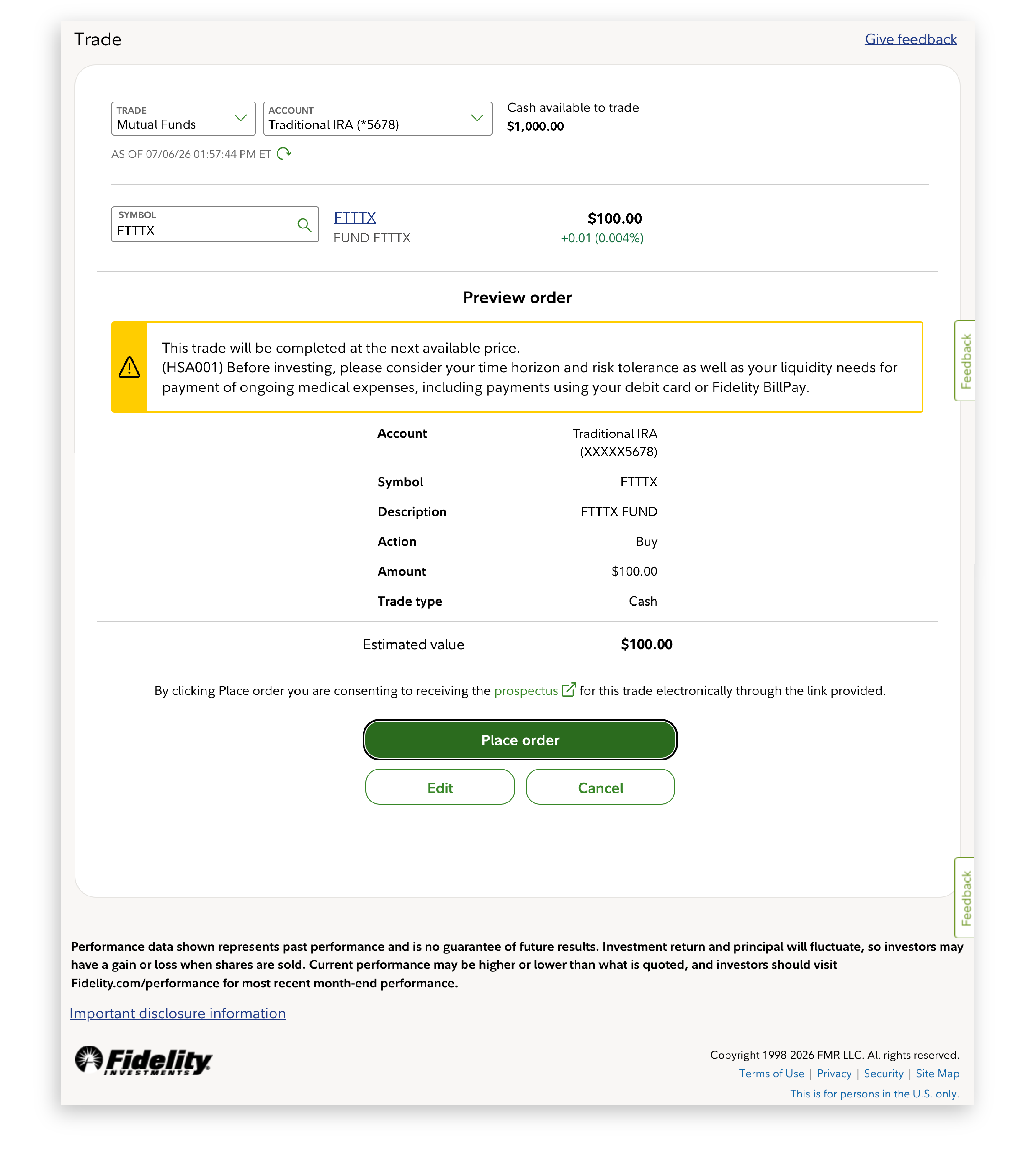
7. Select Preview order and if all looks good, select Place order.
8. Check in on your mutual funds from time to time.
Periodically monitor your investments, at least annually, and when you experience a big life event such as marriage, divorce, or welcoming a new child. Doing so allows you to check that you're invested in accounts, amounts, and asset mixes that align with your goals and financial situation.