


Getting your first $100,000 invested can feel like a grind. You may be saving consistently and doing everything “right”—but the progress can still seem slow.
That’s because early on, most of your growth comes from what you contribute, not from potential market returns.
Over time, that can begin to shift. If your balance grows, your investments may start pulling more weight, so you may hit your next milestones faster. That helps explain why many investors find the climb to $100,000 is the toughest stretch—even more than reaching $1 million.
Why saving your first $100,000 can feel so difficult
Saving $100,000 takes time—and with smaller balances, even strong market returns often translate into modest dollar gains. That can make investing feel underwhelming at first.
It’s also the stage when many investors are balancing competing priorities, like paying down debt, covering everyday expenses, or building an emergency fund. That can make it harder to contribute consistently—or feel like you’re making real progress.
Market downturns can add to the challenge. When progress already feels slow, losses can feel even more discouraging.
Taken together, this is the phase where investing can feel least rewarding: You’re putting in consistent effort, but your money isn’t doing much of the work yet.
Even so, this stage is important. While results may not look dramatic, it’s where the foundation gets built—setting up a point where both your savings and potential market returns can start to have a bigger impact.
How to save and invest your first $100,000
The main drivers are straightforward: Save consistently, invest for growth potential, and give your money time to work. The challenge is applying them in a way that steadily builds momentum early on.
- Start early—and stay consistent. Regular contributions, even in smaller amounts, can add up over time and help establish investing as a habit.
- Use tax-advantaged accounts when possible. Workplace retirement accounts like 401(k)s or 403(b)s, health savings accounts, and IRAs can help reduce taxable income today while allowing your investments to potentially grow tax-deferred or tax-free. Read Viewpoints: How to maximize tax-advantaged savings
- Capture employer match first. If your workplace plan offers a match, contributing enough to receive the full amount is essentially additional compensation—and can provide a significant boost early on.
- Balance debt vs. investing. Pay down high-interest debt before investing for longer-term goals. Fidelity suggests prioritizing debt with interest rates of 6% or higher before increasing investments. But there are some nuances. Read Viewpoints: Should you pay down debt or invest? and How to balance debt, saving, and investing
- Automate contributions. Setting up recurring contributions or investments can help build up balances without relying on timing decisions or thinking too much about it.
- Increase contributions over time. If your income rises, consider increasing how much you save.
- Invest for long-term growth potential. For investors with longer time horizons, portfolios that include stocks may offer greater growth potential, along with periods of volatility.
- Aim to keep costs low. Fees, excessive trading, or keeping too much in cash for your goals and time frame can slow progress. Keeping your strategy simple and cost-conscious can help more of your money stay invested and working over time.
What changes after you reach $100,000?
Once your balance reaches 6 figures, the factors driving growth can start to change.
Your savings rate is still important—but your existing balance and how long it stays invested can begin to matter more. That’s because potential returns are building on a larger base, which can help accelerate growth if you stay invested.
This is the point where your money may start doing more of the heavy lifting. If that shift begins, a few factors become especially important.
Staying invested. Missing periods of market growth can have a greater impact now, because you have a larger balance at work. At the same time, downward swings in the market may feel more noticeable in dollar terms.
Maintaining an appropriate investment mix. Continuing to invest for growth potential can help increase the odds of hitting big, long-term goals like retirement.
Continuing to contribute. Ongoing contributions can help smooth progress and build on any market gains.
Giving it time. Longer time horizons allow more opportunity for potential compounding—especially as balances grow larger.
Read Viewpoints: Hitting $1 million
How compounding growth could help accelerate saving and investing
Here's an example of how contributions and compounding could potentially grow together.
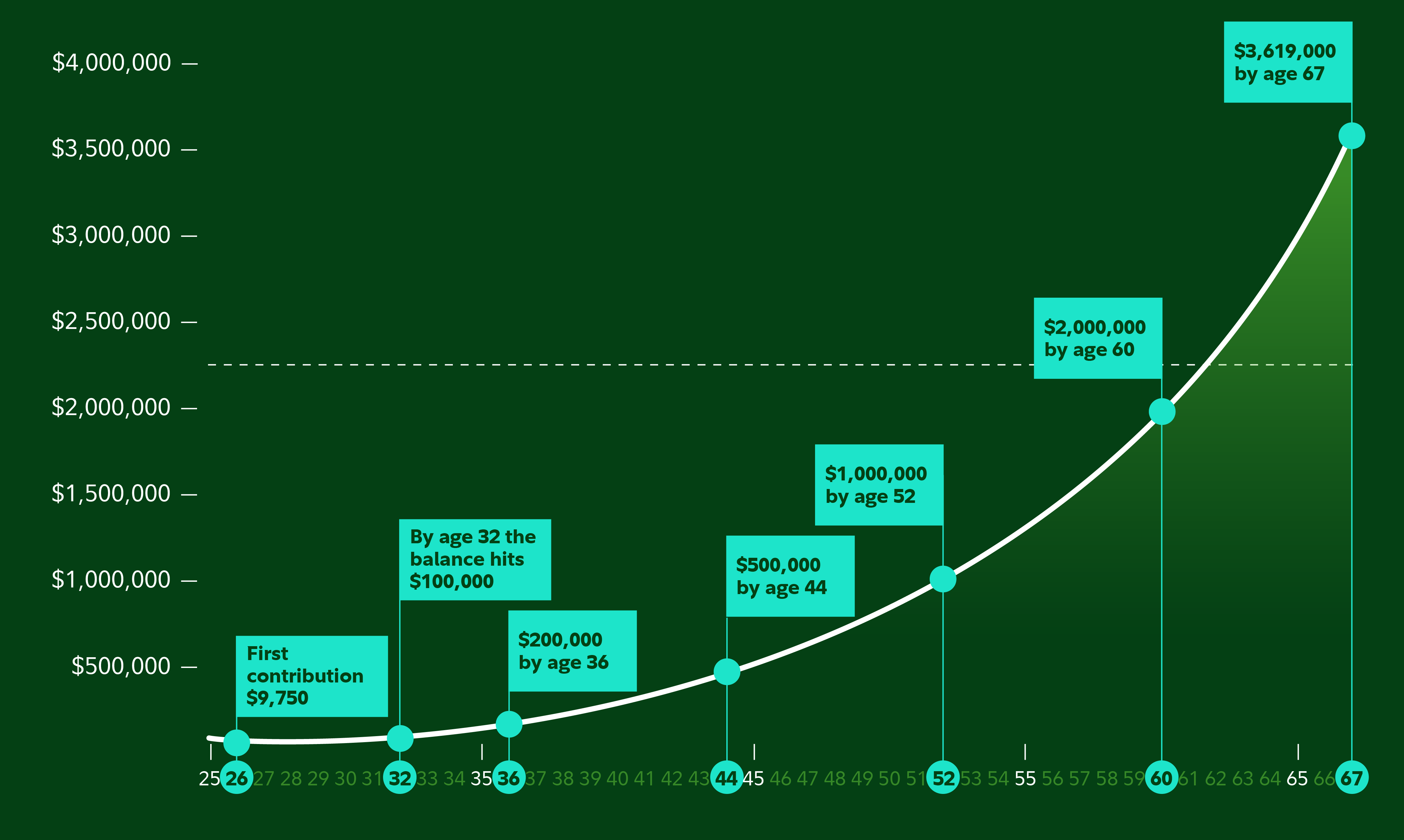
Suppose that Alex contributes 15% of a $65,000 salary on a pre-tax basis starting at age 25. Including an employer match, total annual contributions are about $9,750.
Early growth is slow and comes mostly from contributions. It takes 7 years to reach $100,000. But as the balance grows in this hypothetical example, investment returns start to contribute a larger portion of overall growth. As the hypothetical illustration below shows, it takes about 4 years to reach the next $100,000—and the pace continues to accelerate
How compound growth could help you reach $100,000 and beyond
Common mistakes to avoid when saving and investing for your first $100,000
Even with a solid plan, some investors find progress stalls at certain stages.
- Getting stuck before you start. Investing can seem complicated at first. Opening an account, choosing investments, and learning new terminology may feel intimidating. But you don't need to know everything on day one. Starting small and gaining experience over time can help you build momentum. Read Viewpoints: How to start investing
- Holding too much in cash as balances grow. It may feel safer, but over time inflation can erode purchasing power.
- Trying to avoid losses during downturns. Scaling back contributions or stepping out of the market can mean missing the rebound—when some of the strongest gains may occur.
- Letting savings lag behind rising income. As income increases, spending often rises with it—a pattern often called lifestyle creep. Increasing contributions alongside income can help keep goals on track.
How to keep your long-term wealth goals in focus while saving and investing
Maintaining a long-term perspective—and revisiting your investment mix as goals evolve—can help keep your plan on track. Remember that progress isn’t linear. Periods of slower growth and market declines are a natural and inevitable part of investing.
Reaching $1 million is a significant goal—but it’s built on smaller, repeatable steps. For many investors, the hardest part is getting started and building that initial foundation. Reaching $100,000 doesn’t guarantee future results—but it reflects the habits that make long-term investing possible.
From there, the same principles apply: Invest regularly, stay diversified, and give your money time to work. Over time, the work you put in early could potentially start to pay off.