


Over the past decade, both stock and bond investments have enjoyed healthy gains thanks to strong economic growth and solid corporate earnings. But it hasn’t always been a smooth ride.
Investment portfolios and market volatility
From the COVID-19 pandemic to the ongoing geopolitical conflicts in Europe and the Middle East, unexpected events have roiled markets time and time again. Uncertainty in the US around tariffs and trade policy, as well as stubbornly persistent inflation, have made forward-looking economic forecasts more challenging. Questions linger about the potential impact of advancements in artificial intelligence (AI), with some anticipating revolutionary economic changes and others concerned that it may be a bubble on the verge of bursting.
Still, even in the face of such uncertainty, markets have proved remarkably resilient. Whether investors can say the same depends largely on how they reacted to the brief spells of volatility that cropped up when the headlines were gloomy.
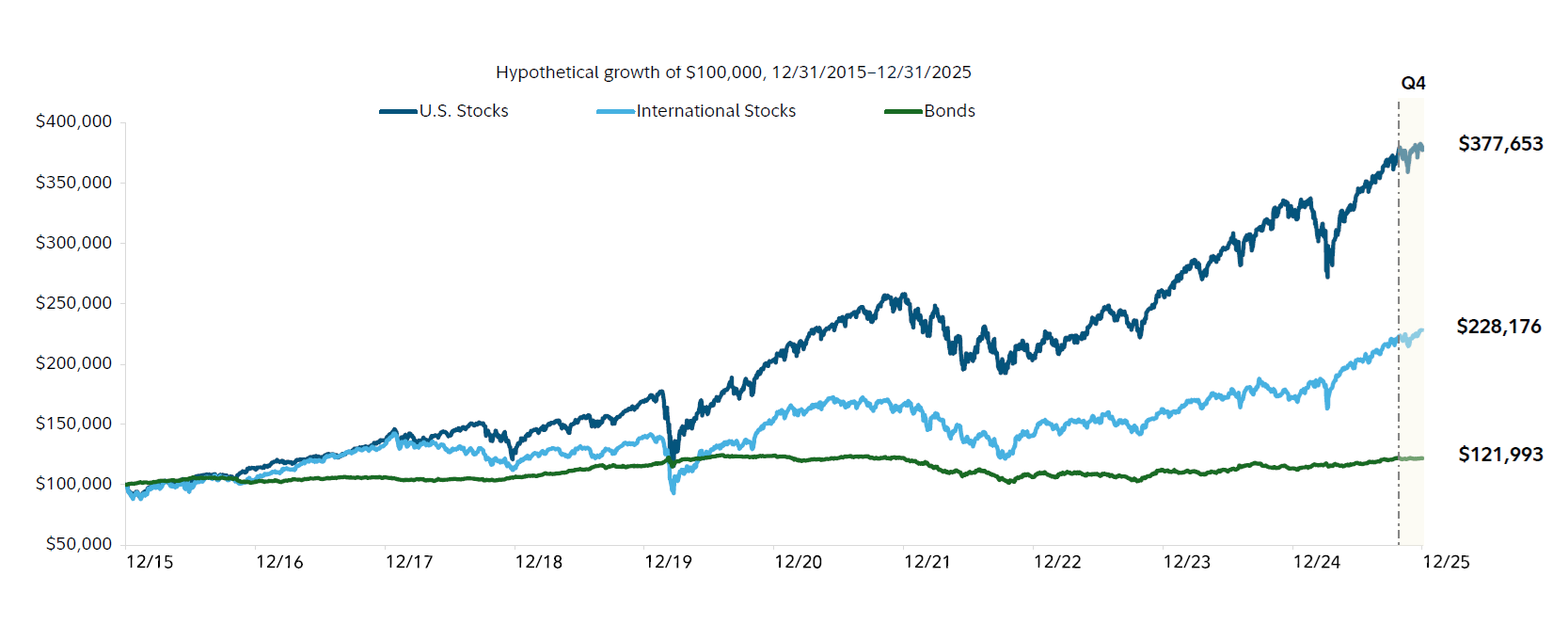
For example, an investor who entered the market at the end of 2015 and endured downturns caused by the pandemic, the war in Ukraine, and concerns regarding tariffs and AI would likely still have come out well ahead of where they started had they simply stayed the course through the volatility. Pulling out of the market however, even for just a short time, could have had an adverse effect on long-term performance. Historically, missing just the best 5 days in the market from 1988 to 2025 could have reduced portfolio returns by 38%.1
But even knowing all this, keeping a cool head during tough times is easier said than done. If you’re concerned that you won’t have the fortitude to ride out a short-term downturn, you may want to consider taking steps to help mitigate the impact that market volatility can have on your assets. By introducing some diversification into your portfolio, you may be able to help make the dips shallower so that when the time comes, you may feel less pressure to act in a way that could undermine your long-term goals.
For example, in 2025, a diversified portfolio—with 60% of its assets allocated to domestic and international stock investments and 40% to short-term and fixed income investments, such as bonds—would have delivered similar returns to a portfolio invested solely in US stocks, yet with much less volatility. As you can see from the following chart, positive returns from a diverse set of asset classes in the portfolio helped dampen the turbulence that occurred earlier in the year. This helped to deliver a less volatile experience than owning just U.S. stocks alone.
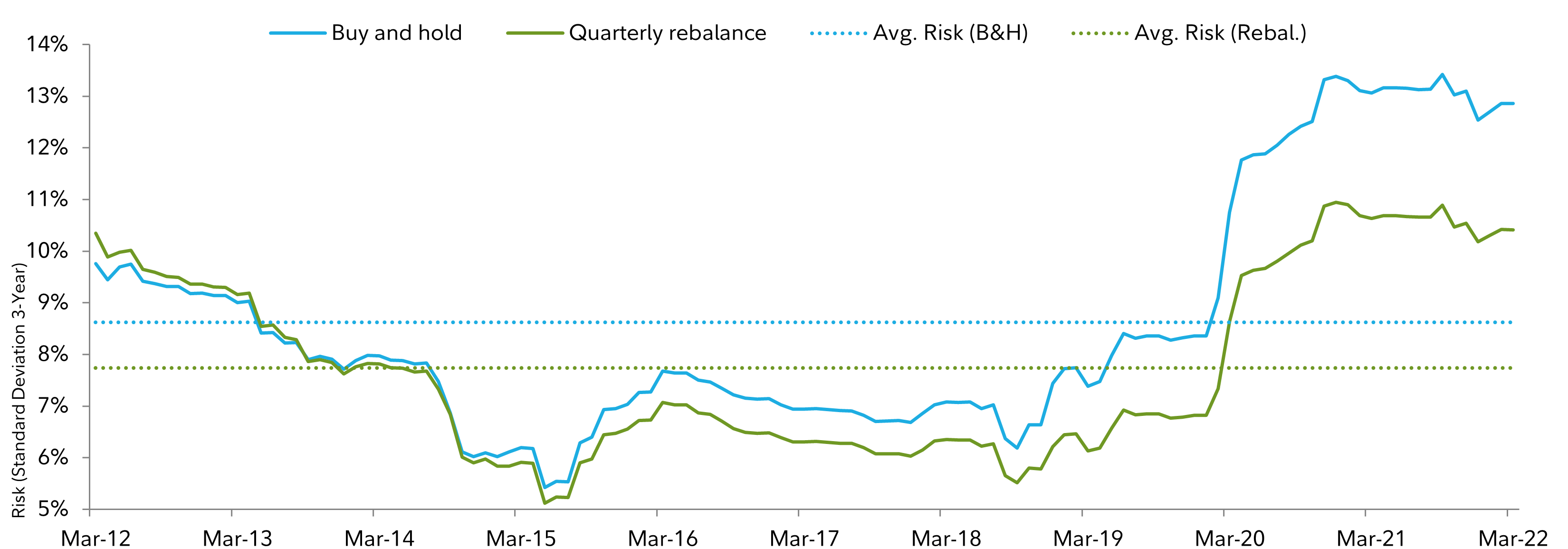
“We use various investment components to diversify a portfolio,” says Scott McAdam, institutional portfolio manager with Strategic Advisers, LLC, the portfolio investment team for many managed account clients at Fidelity. “These components can help reduce volatility so that investors stay more comfortable and stick with their investment plan.”
How to build a diversified investment portfolio
Here are 3 ways you may be able to introduce more diversification into your portfolio.
1. Understand your risk, return, and correlation profile
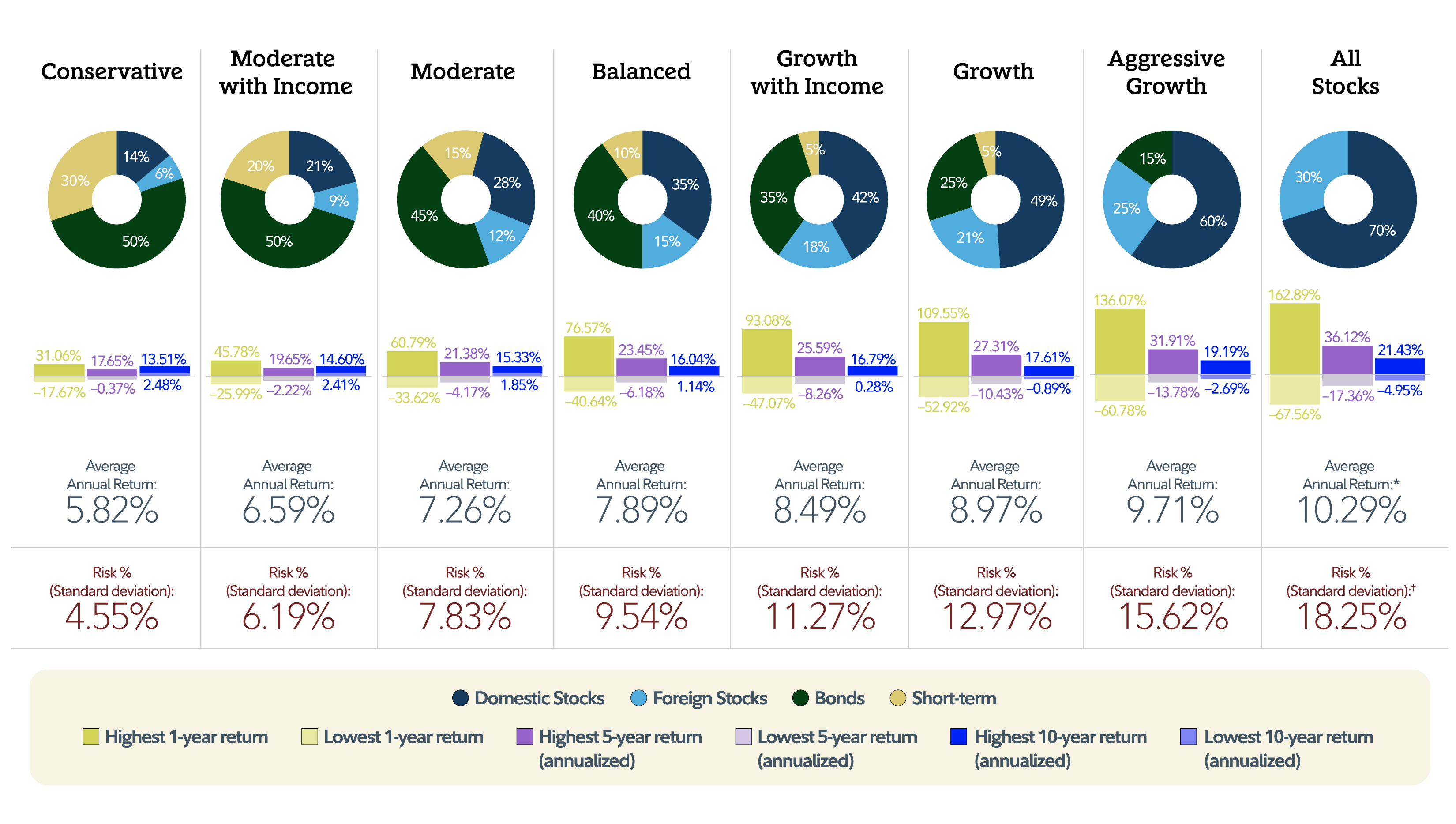
When allocating the assets in your portfolio, remember that the pursuit of higher average annual returns brings with it a higher level of risk. Allocating more of your assets to stock investments in the hopes of generating the gains necessary to reach your goals will likely leave you more exposed to the ups and downs of market volatility.
“There are 3 pillars to investing,” says McAdam. “Risk, return, and correlation. The first 2 are related. To potentially get the level of return you want, you need to be comfortable taking on a certain degree of risk. The third, correlation, has to do with how your investments move in relation to one another. If your assets are highly correlated, that is, all moving up or down at the same time, that will accentuate volatility. But if you have a portfolio with asset classes that are less correlated, you may have a smoother investment experience because when some investments are trending downward, others may offset that decline by moving upward.”
Understanding the risk and return profile of your asset allocation, as well as the relative correlations of the asset classes involved, will help you better anticipate how your portfolio will react when markets get choppy and allow you to make adjustments so you can feel more confident about how your assets are performing in volatile circumstances.
For example, while an all-stock portfolio may offer the best potential average annual returns, a “growth with income” portfolio similar to the diversified 60/40 portfolio described above, may offer potential returns that are only marginally lower but with much less potential for risk.
2. Think globally
When looking closely at the 2025 returns of our example diversified portfolio, one thing in particular stands out: the performance of international stocks. International stocks, as represented by the MSCI ACWI ex USA Index, posted an annual return of 33.2% in 2025—well ahead of the 17% return of US stocks, as represented by the Dow Jones U.S. Total Stock Market Index.
“Our view is that the party is far from over,” says McAdam. “In fact, we believe the case for investing globally remains incredibly strong as we move through 2026, and it rests on 3 main pillars. First: Valuations. International stocks are still on sale compared to their U.S. counterparts, trading at a discount. Second: The growth story is accelerating overseas. While US corporate earnings growth is solid, we see forecasts for even faster growth in Europe and especially in emerging markets this year. And third: A weaker US dollar provides a powerful, built-in tailwind.”
“At Strategic Advisers, our core philosophy is built on global diversification, precisely for moments like this,” says McAdam. “By owning international stocks, you may be able to build a more resilient portfolio by not putting all your eggs in one basket, even if that basket is a strong one, like the US.”
3. Spread the wealth
Investors looking to further manage risk in their portfolios may want to consider taking advantage of certain opportunistic investments, such as commodities, real estate investment trusts (REITs), and Treasury Inflation-Protected Securities (TIPS), which can help temper stock market volatility and provide some protection from inflation.
“These are asset classes with hybrid characteristics,” says McAdam. “They sometimes combine aspects of stocks and bonds, but don’t always behave quite like either. As a result, they are typically less correlated to each. In circumstances when stock and bond performance is more highly correlated, these opportunistic diversifiers can potentially aid in reducing the overall volatility of the portfolio.”
While you can’t predict, you can prepare
Working to create a well-balanced asset allocation within your portfolio can be a good way to increase the likelihood that you will benefit from rising markets over the long term while helping to protect against the emotional stresses that come with short-term bouts of volatility. While you can never predict what shocks might affect the market in the future, McAdam says, you can prepare for them.
“By spreading investments globally across U.S. and international stocks, bonds, commodities, and other assets, we ensure our clients’ portfolios are not overly dependent on the fortunes of any single country or region. If a crisis impacts one area, other parts of the portfolio can provide a stabilizing buffer,” says McAdam.