


What is the Consumer Price Index report?
The Consumer Price Index (CPI) tracks changes in the prices that consumers must pay for a broad range of goods and services, including housing, groceries, gas, health care, and entertainment. The index combines those price movements into a single economic report, which is published by the Bureau of Labor Statistics and updated monthly.
Because it offers a snapshot into how prices are rising or falling, CPI is one of the most closely watched economic indicators. Economists, policymakers, and investors monitor CPI data to better understand inflation trends and the health of the overall economy.
How does CPI work?
There are several measures of inflation, including the Consumer Price Index (CPI), Producer Price Index (PPI), Personal Consumption Expenditures Index (PCE) Price Index, and wage growth data in the monthly Employment Report.
CPI is the most widely watched of these reports and includes several pieces of data. To learn more, Fidelity offers the Econoday economic calendar, where key information from the monthly CPI report is collected. Here are some of the key terms that you’ll find:
| Inflation | An increase in the overall prices of goods and services. |
| Headline CPI | The broad measure of inflation that includes all goods and services tracked by the index. |
| Core CPI | A measure of inflation that excludes food and energy prices. |
| Purchasing power | The amount of goods and services a dollar can buy. |
Source: Fidelity Investments, Econoday, as of November 10, 2026.
Why inflation matters to investors
Inflation measures how prices for goods and services are changing. As prices rise, the purchasing power of a single dollar falls—meaning consumers can afford to buy less than they could before with the same amount of money. As prices fall, the purchasing power of a dollar increases.
A moderate amount of inflation is generally considered normal in a growing economy. But when inflation rises too quickly, it puts pressure on businesses and consumers who may not be able to keep up with rising prices. Similarly, inflation that falls too quickly can be a signal of weakening economic demand, but it can provide relief to businesses and consumers.
Keep in mind that the markets tend to react less to the inflation figure itself and more so on how it compares with analysts' expectations. Inflation data may come in high or low, but whether it exceeds or falls short of the forecasts often has a greater impact on market performance.
How CPI influences interest rates
Investors pay close attention to CPI because inflation can impact monetary policy. The Federal Reserve, whose main goal is to promote healthy employment levels while keeping prices stable, relies on a wide range of data when making decisions on interest rates.
While the Fed’s preferred inflation metric is the PCE price index, CPI can still shape market expectations and that impacts the overall economy.
For example, if inflation rises, policymakers may have to keep interest rates elevated to help slow demand and ease price pressures. If inflation slows, on the other hand, investors might anticipate lower future rates. Those changing expectations can influence everything, from stock prices to bond yields and even the interest rates on auto loans and mortgage rates.
Headline CPI vs. Core CPI
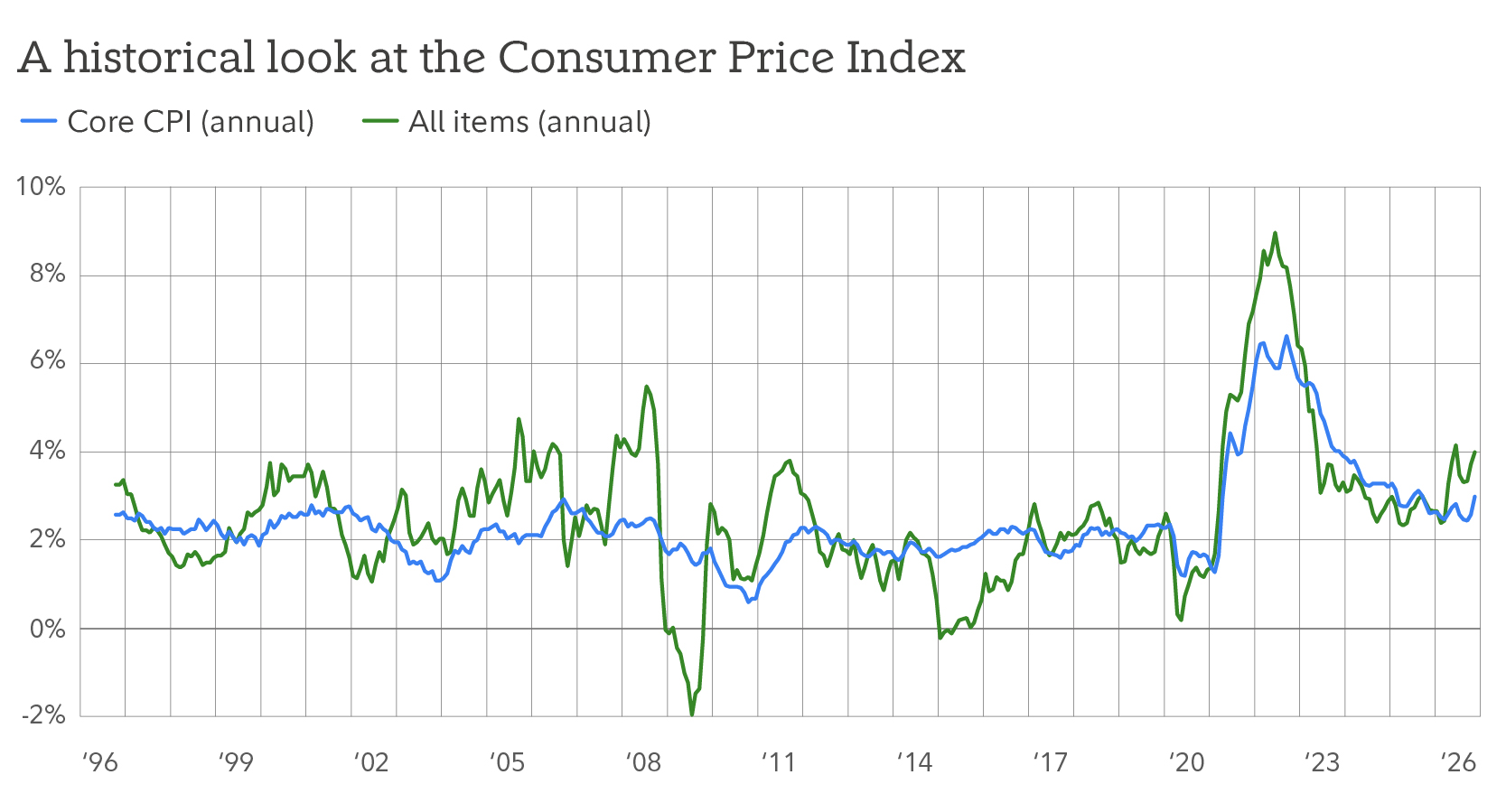
You may often hear about two different inflation measures and understanding the differences is important. Headline CPI measures overall inflation and includes all items in the index. Core CPI excludes food and energy prices, which can be volatile from month to month.
Taken together, these inflation measures can help investors understand both short-term price movements and longer-term inflation trends.
Critiques of CPI
While CPI is one of the most widely followed inflation measures, it has limitations. Some economists argue that the index may not fully reflect the spending patterns of all households because it is based on a standardized basket of goods and services. There’s also debate about how accurate certain measures, like housing and health care, are captured by the data.
Moreover, CPI may not immediately reflect the actual increases in the cost of living. That's because people may adjust their behavior when prices go up, like finding sales on goods or services more often. They may even switch to cheaper store brands or consider driving less to save on gas.
There are other ways to measure inflation:
- CPI minus food and energy (“core” CPI): As the name suggests, the CPI minus food and energy removes the food and energy categories from the index. Because food and energy prices can be volatile, they may drive the index up or down, even if overall prices stay relatively consistent. Stripping out volatile categories can create an index that is more focused on the “core” or underlying rate of inflation.
- Personal consumption expenditures (PCE): The PCE price index also measures inflation, but it measures all spending, not just consumer spending. For example, while CPI includes what consumers pay for health care, PCE also counts what insurance companies and employers pay.
- Producer price index (PPI): The PPI is designed to capture the change in prices that are paid to manufacturers of goods and services. The index is sometimes considered a precursor to consumer inflation measurements, because producers are likely to pass on increases or decreases in prices to their customers.
The bottom line on CPI
The Consumer Price Index is one of the key indicators investors use to assess economic conditions and the potential direction of interest rates. While there are some limitations to the data, the CPI is useful when viewed as part of a broader economic picture. By understanding why the CPI matters, investors can make more informed decisions about their investments.