

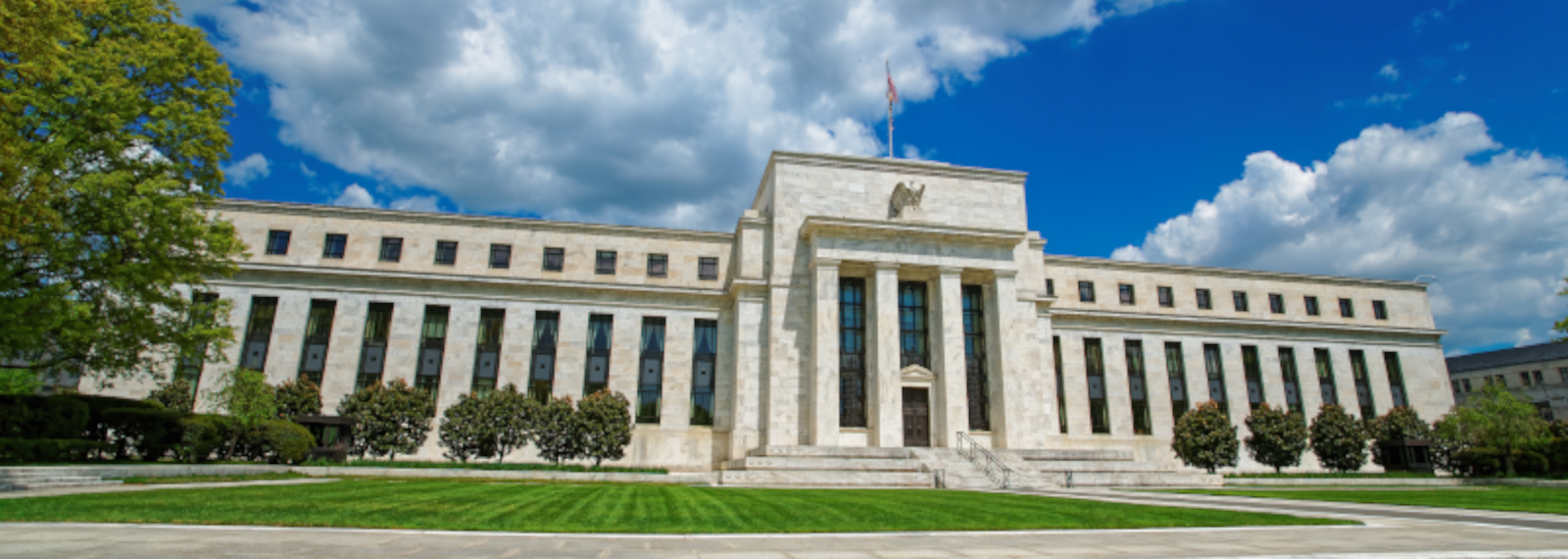
With the last real hurdles to his candidacy now in the rearview mirror, Kevin Warsh appears poised to be sworn in as the 17th Chair of the Board of Governors of the Federal Reserve System.
Much of the discussion around a potential Warsh era at the Fed has focused on overtly political questions: whether the central bank’s independence could be at risk, and whether political pressure could translate into earlier rate cuts.
While those issues do matter, they may be obscuring an equally important shift Warsh himself has been advocating for: a significant paring back of the Fed’s role in financial markets, including how much guidance it provides to investors, and implicitly, its readiness to step in when markets become uncomfortable.
In comments to the Senate Banking Committee, Warsh said that he sees a need for “regime change in the conduct of policy” by the Fed. For investors, what happens next may depend less on politics and more on whether the institution moves away from the practices that have defined its relationship with markets for more than a decade.
The Kevin Warsh vision of the Fed
In his Senate Banking Committee comments in April, Warsh expressed a vision of a Fed that potentially does less, signals less, and is more comfortable taking the market by surprise. If that vision were to become a reality, it would meaningfully reshape how the Fed interacts with markets—across 4 main dimensions:
1. Less market participation
Ever since the 2008 Global Financial Crisis (GFC), the Fed has had an unmistakable footprint in the market. The Fed bought more than a trillion dollars in mortgage-backed securities during the GFC in an effort to ease the market crisis. It continued to intervene in the Treasury and mortgage-backed security markets through the 2010s as a way to influence markets and the economy. Then COVID hit—the machinery of the markets seized—and the Fed’s balance sheet ballooned. The central bank ultimately bought more than $4 trillion in Treasurys and mortgage-backed securities as it sought to support markets and the economy from 2020 to 2022.
Warsh has criticized what he sees as a normalization of tools that are intended to be used only in emergencies. As an outsized player in the market, the Fed can distort the prices of investments—potentially even pushing markets up, which he’s noted tends to disproportionately benefit wealthier households. Buying Treasurys can also create the appearance that the Fed is trying to help the federal government finance its debts, according to Warsh's critique. In sum, he’s said the Fed should use these emergency tools less and rely on interest rate adjustments more.
2. Telling the market less about the Fed’s point of view
In recent decades, the Fed has moved toward greater transparency and more explicit signaling to investors about what it is likely to do. The Fed introduced routine press conferences under Ben Bernanke in 2011. In 2012 it also began releasing a chart showing committee members’ interest rate projections (i.e., the dot plot). Through the 2010s, the institution increasingly started to see “forward guidance” as a policy tool—for example, telling the market that the Fed would not raise its benchmark rate in the next year would help to keep other interest rates low. This signaling means that the market is often already prepared for and anticipating policy adjustments before they’re officially announced.
Warsh has criticized this evolution, arguing that markets have become overly dependent on the Fed’s words. “Market participants can place undue weight on Federal Reserve communications,” Warsh said in his comments to the Senate. In his view, projecting the Fed’s future path can constrain the institution—boxing it into fulfilling the expectations it’s projected.
3. More on-the-fly decision-making, with messier internal debate
That external signaling, Warsh argues, has also changed how decisions are made inside the Fed. In practice, many Fed decisions are effectively made before officials walk into the meeting room. Warsh has said he favors a Fed that does not make up its mind until the day of a decision, which he’s suggested could help it better respond to the latest economic developments.
This emphasis on flexibility carries through to the Fed’s internal process. Warsh has criticized what he sees as an overly choreographed, consensus‑driven culture, in which officials converge on a position ahead of time and dissent is minimized.
“I tend to favor messier meetings than some, where people don’t show up with rehearsed scripts, but we can have a good family fight,” he said at the Senate committee hearing.
4. Less reliance on headline inflation numbers
Finally, Warsh has critiqued both the data the Fed relies on and how the central bank uses it.
He’s expressed skepticism that mainstream measures like the Consumer Price Index (CPI) and the Personal Consumption Expenditures Index (PCE) truly capture “underlying” inflation. He’s expressed an interest in focusing more on “trimmed mean” inflation—which excludes the highest- and lowest-inflation data points. And he’s floated the idea of new inflation measures, like a new “survey of a billion prices,” to capture a more comprehensive view of price changes.
He's also voiced concern that the Fed places too much weight on these main indexes, effectively allowing backward-looking data to dictate policy. In this view, because CPI and PCE reflect what has already occurred, and because Fed policy inherently works with long lags, the Fed is perpetually behind the ball.
Instead, Warsh has suggested the Fed should place greater emphasis on judgments and forward-looking economic analysis—evaluating where longer-term forces such as productivity gains and technological changes may push the economy—versus backward-looking data that confirms where the economy has been.
What might the Warsh vision mean for the stock market?
In total, Kevin Warsh's vision could mean a Fed that holds the market’s hand much less and spends more time on the sidelines—at times, even making policy decisions that catch investors off guard. With less reliance on the Fed’s guidance and steady hand, it’s possible the market may see more episodes of volatility, particularly around Fed meetings.
“I would expect more interest rate volatility, given potentially less signaling from the Fed,” says Aditi Balachandar, research analyst on Fidelity’s fixed income team. She notes that formal dissents among committee members may become more common given Warsh’s preference for divergences of opinion—in contrast with Jerome Powell, who has had a reputation of valuing consensus.
That uncertainty around Fed meetings could, in turn, ripple out to broader asset prices.
“In theory, if the Fed is less transparent, the market has to do more guessing. And if it has to do more guessing, the risk premium should go up,” says Jurrien Timmer, Fidelity’s director of global macro. That adjustment could look like higher interest rates on long-term bonds, or even somewhat lower valuations on stocks. “But it’s an obstacle the market can overcome,” he says.
Finally, there is some speculation that Warsh’s preference for forward-looking economic analysis could, at times, tilt policy more toward rate cuts. For example, in past comments he has expressed the view that artificial intelligence might help ease inflation over time, by boosting economic productivity. If future inflation is expected to be lower than current inflation, it might help support a lower policy rate for the Fed—even if headline inflation is still high.
Realistically, how much will Kevin Warsh change the Fed?
Certain less-controversial changes, like reducing the number of routine Fed press conferences, might be easier to accomplish than others. For more substantive changes, Warsh’s vision is likely to face 2 significant obstacles: the opinions of the other members of the Fed, and the constraints imposed by real-world events.
The Federal Reserve’s policy decisions are made by committee, not by the Chair. While the Chair may have outsized influence, they still only have one vote. “Without the buy-in of committee members, it might be hard for him to implement these policies,” says Balachandar. In particular, several committee members seem closely attuned to the upside risks to inflation, which may prevent them from supporting rate cuts in the near future. And for at least the immediate future, outgoing Chair Jerome Powell will remain on the committee.
Another hurdle may be the economic environment, particularly with inflation moving undeniably in the wrong direction in most recent readings. “When Warsh was nominated in late January, the narrative was focused on AI—not on the potential for a reacceleration in inflation,” says Balachandar. “The landscape has really shifted since then with the oil price shock, and it’s more likely inflation will be the primary concern for the Fed moving forward.”
Similarly, retiring crisis-era policy tools would be logical given that there is no economic or market crisis at the moment, says Timmer. But inertia can be a challenge, and the market itself may create resistance to taking away certain forms of policy support. “As always happens, Warsh’s views will be tested at some point by the markets,” he says.
Finally, history shows that any Fed Chair’s legacy is often defined less by the vision of one personality, and more by the need to respond to the course of events. In his confirmation hearings in 2005—still several years before the Global Financial Crisis—then-nominee Ben Bernanke didn’t express any preconceived plan to buy trillions of dollars of securities. “Quantitative easing” hadn’t yet entered most investors’ lexicon.
Recognition of those constraints might be why the market has so far shown little reaction to the changing of the guard at the Fed. “Markets are not pricing in any regime change at the Fed,” says Balachandar.
What a new Fed Chair may mean for investors
Fed policy does matter for markets. In a crisis, it can matter a great deal. But at this stage, it’s still challenging to separate rhetoric from realistic policy changes. The Fed’s structure provides it with significant institutional ballast, which makes it unlikely to change course overnight. And history suggests that while leadership style matters, lasting changes tend to be incremental—and many ambitions are reshaped by reality.
For investors with a well-constructed long-term investing plan, a change in Fed leadership is likely no reason to make any portfolio changes. If you’re thinking about how to stay invested through whatever comes next—or how to build an approach you can stick with through future periods of market uncertainty—we’re here to help.