


Tensions between the US and other nations have ebbed and flowed over the years. Now, tensions have escalated into military action in the Middle East, where the US and Israel have carried out extensive airstrikes across Iran, and Iran has responded with missile and drone attacks on certain targets across the wider region.
Such events can trigger short-term volatility, particularly when they impact important global commodity markets such as oil. But over longer periods they historically have not generally been major market drivers.
If you are concerned, it may help to look at what has happened in the past. “The historical record shows that geopolitical crises have had political and humanitarian consequences, but not long-term economic and financial ones,” says Fidelity's Director of Quantitative Market Strategy Denise Chisholm.
How have stocks fared after past conflicts?
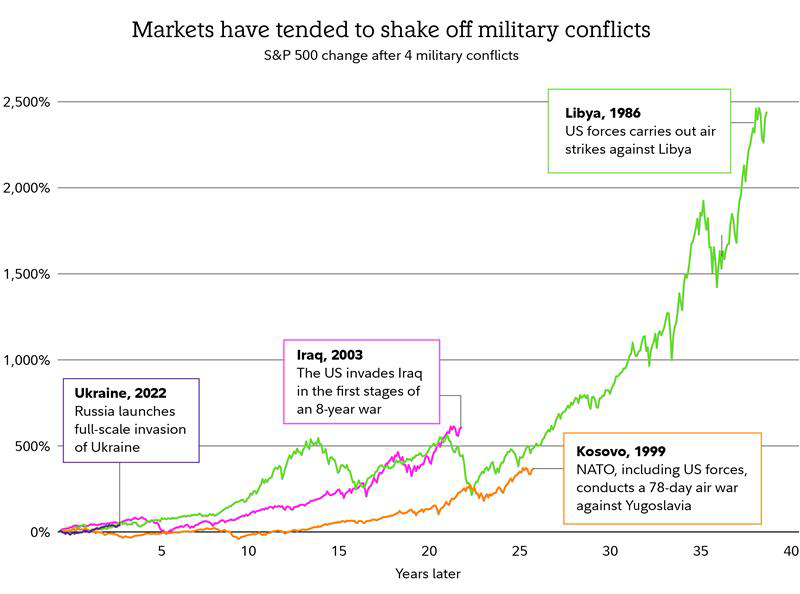
A historical analysis of US stock market performance during times when the US has threatened or used military force abroad shows that there has been little relationship between war and long-term market performance. Generally speaking, the most important driver of stock prices is corporate earnings. Wars have often had little impact on the ability of most companies to earn money.
This has even been true during wars between countries that play significant roles in the global economy. Russia and Ukraine have been locked in conflict since 2022 and both are major exporters of energy, food, and other commodities worldwide. That war is a human tragedy, but it has not hurt the S&P 500, which has risen by more than 60% since that war began. The war has even indirectly benefited stocks in Europe, where many countries have started spending more on investments in defense.
How conflicts may add to bond-market pressures
While military conflicts have had little long-term impact on stocks, they may potentially contribute to bond market volatility. Military conflicts have the potential to exacerbate fiscal pressures over the long term, which can put downward pressures on bond prices. Wars are expensive for governments to fund. Global investors have already expressed concern about the US government’s willingness to manage its debt by selling existing US Treasury bonds and reducing their purchases of newly issued ones.
Bond yields and prices are also impacted by inflation expectations. When military conflict impacts a major oil producer, oil prices can rise—putting upward pressure on inflation and inflation expectations. Investors may then demand higher yields to compensate them for higher expected future inflation, putting further downward pressure on Treasury prices.
What you may want to consider—and what you may want to avoid doing
Stock markets reflect investors' expectations of future corporate profits. Bond markets reflect investors' expectations of how likely they are to receive promised payments of interest and principal. Professional investors know this and act on what they know, which includes recognizing that global conflicts have historically had little long-term influence on markets.
Sometimes, though, individual investors may get caught up in the emotions that media coverage of war can bring. Ominous headlines and heart-wrenching images may stimulate a response from investors of “I need to take action.” A strongly felt but inappropriate impulse to “do something” could even prompt an emotional investor to sell stocks and bonds and retreat to cash, which they may hear described as a “safe haven” in times of war.
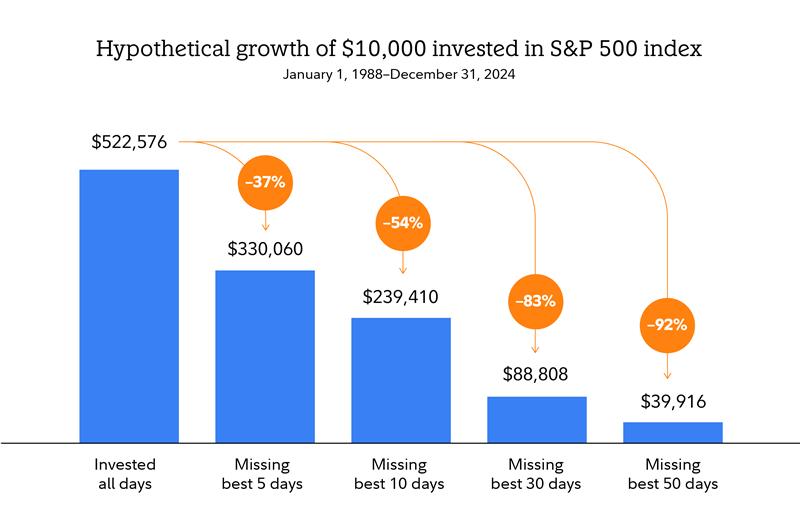
But history says that would be a mistake. Some of the best days in the stock market have historically occurred during bear markets. "What we've seen historically is that investors who give themselves a time out of the market very rarely come back in at the right time," says Naveen Malwal, institutional portfolio manager with Fidelity’s Strategic Advisers LLC. "Negative headlines can persist for some time. Investors typically wait for good news and by the time that happens, they've often missed some of the strongest days of market performance." Missing out on those big days can make a significant difference in your long-term return. As the chart below shows, a hypothetical investor who missed just the best 5 days in the market since 1988 could have reduced their long-term gains by 37%.
Pursuing peace of mind as an investor
One of the best ways for individual investors to manage the emotions of a volatile news environment is to develop an investing plan that they can live with through a variety of market environments, and then stick with it. A key feature of a well-rounded plan is often broad diversification—meaning owning a wide variety of investments. These can include international stocks as well as those from the US. Despite short-term geopolitical risks, Fidelity’s Asset Allocation Research Team expects international stocks to outperform US stocks over the next 20 years. Besides stocks, you may want to consider short-to-medium maturity bonds and alternative investments, such as precious metals or other real assets, if they are appropriate for your needs and goals.
Fidelity’s professional investment management services may also help you manage your responses to wars and other bad news while keeping you on track toward your long-term investing goals. Malwal explains, “My team holds stocks and bonds across many different regions, countries, sectors, and industries. One result of our diversified approach is that our clients generally have very little direct exposure to areas of conflict. That level of diversification can give investors some peace of mind in the face of events.”