


Even though stocks have gained more than 12% year to date, a range of investing risks have caused US stocks to move sideways over the last couple months. Nevertheless, the S&P 500 remains near its all-time high just below 8,000.
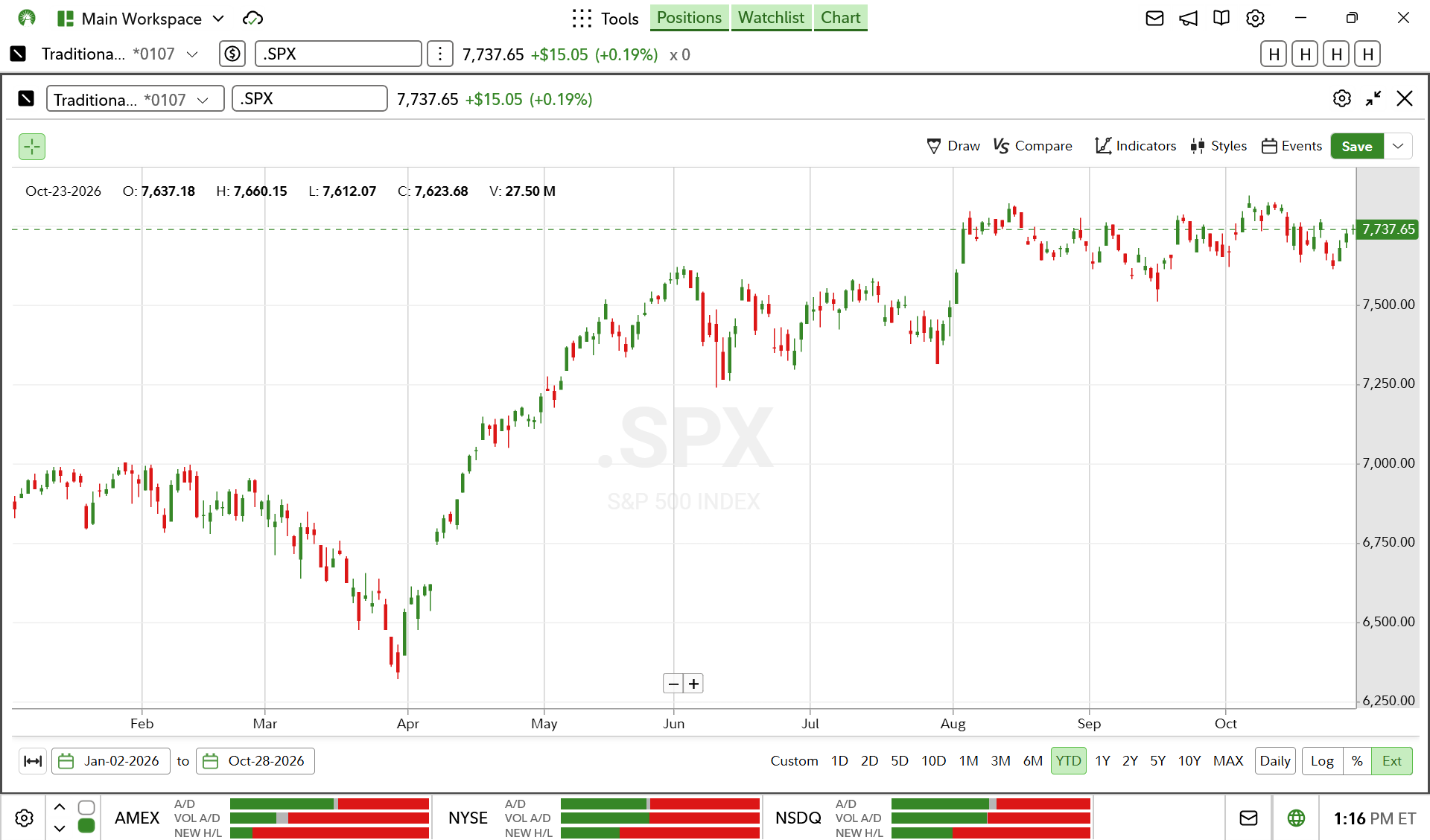
As we head into the final months of 2026, here are 5 of the most pressing threats to the stock market right now—and the reasons to remain optimistic.
1. Stubborn inflation and rising rates
Relatively high costs for many goods like food, shelter, energy, and more have been a multiyear issue for consumers and businesses. Recent data—including the September CPI report showing annual inflation hit 3.7%—revealed that global conflicts, lingering trade disputes, and other factors continue to keep prices generally from coming down.
Resurgent inflation—in addition to rising debt levels (the US budget deficit reached approximately $2 trillion in 2026) and other factors—was a major factor behind the Federal Reserve delivering its first rate hike in 3 years back in September. Fed funds futures currently suggest a strong probability of another rate hike before the end of the year.
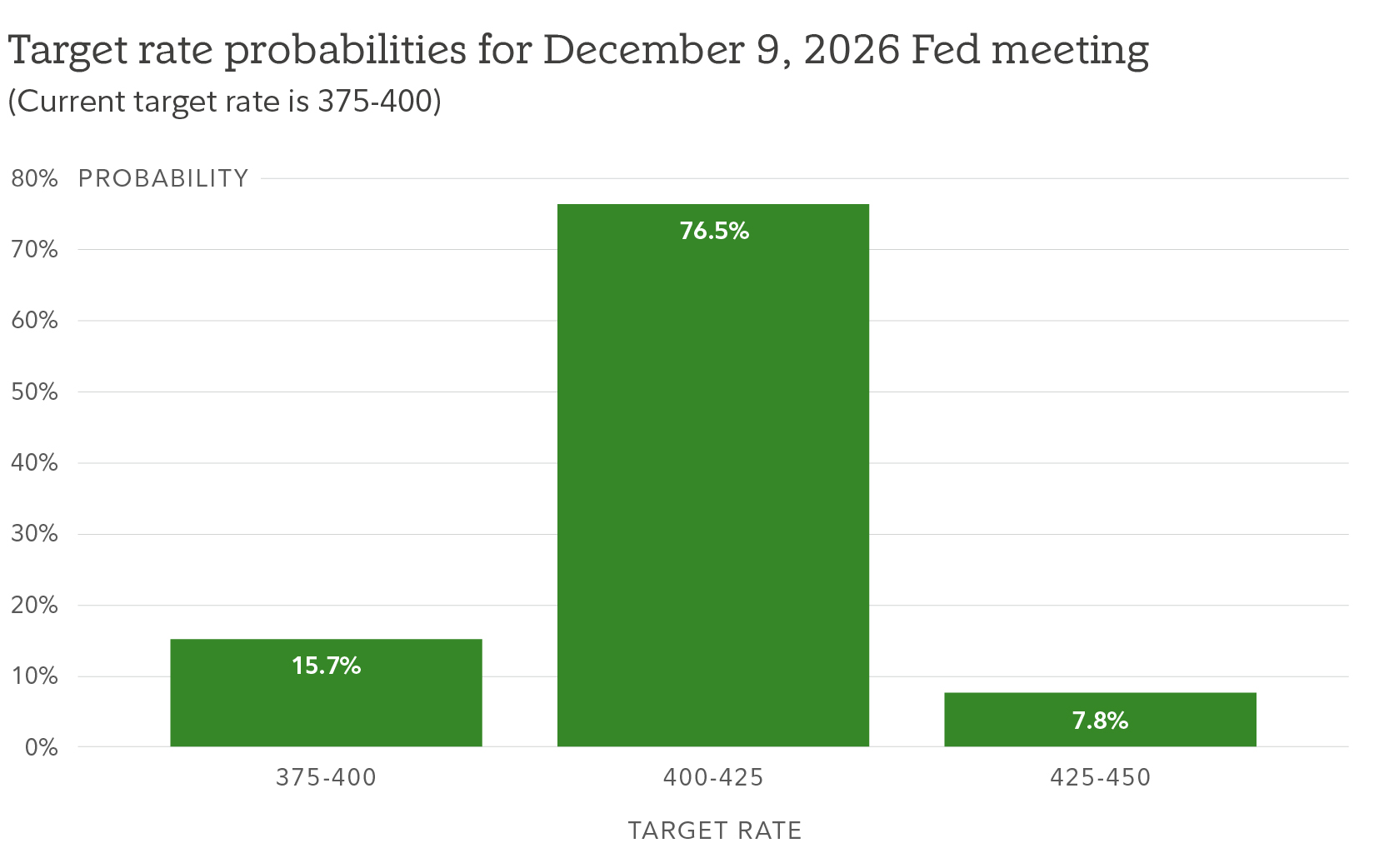
Further rate hikes could unnerve investors who just a few months ago may have anticipated some rate relief. Relatively higher interest rates can increase borrowing costs and reduce company profits.
With that said, the recent rise in rates alone has not been enough to overwhelm other positive factors for stocks—evidenced by stocks remaining within striking distance of their all-time high. Moreover, if inflation stabilizes and rates do not rise much further, that could translate to a more optimistic outlook for stocks.
2. Expensive stocks
The momentum behind US stocks is historically impressive. Looking back to 1945, this is the first time any bull market has delivered double-digit gains in each of its first 4 years (the current bull market began in 2022).
However, that impressive feat is tempered by price-to-earnings (P/E) ratios suggesting stocks continue to be expensive relative to those other bull markets. The S&P 500's current P/E stands at 22.8, which is expensive relative to the 15.8 average during previous fourth years of bull markets.
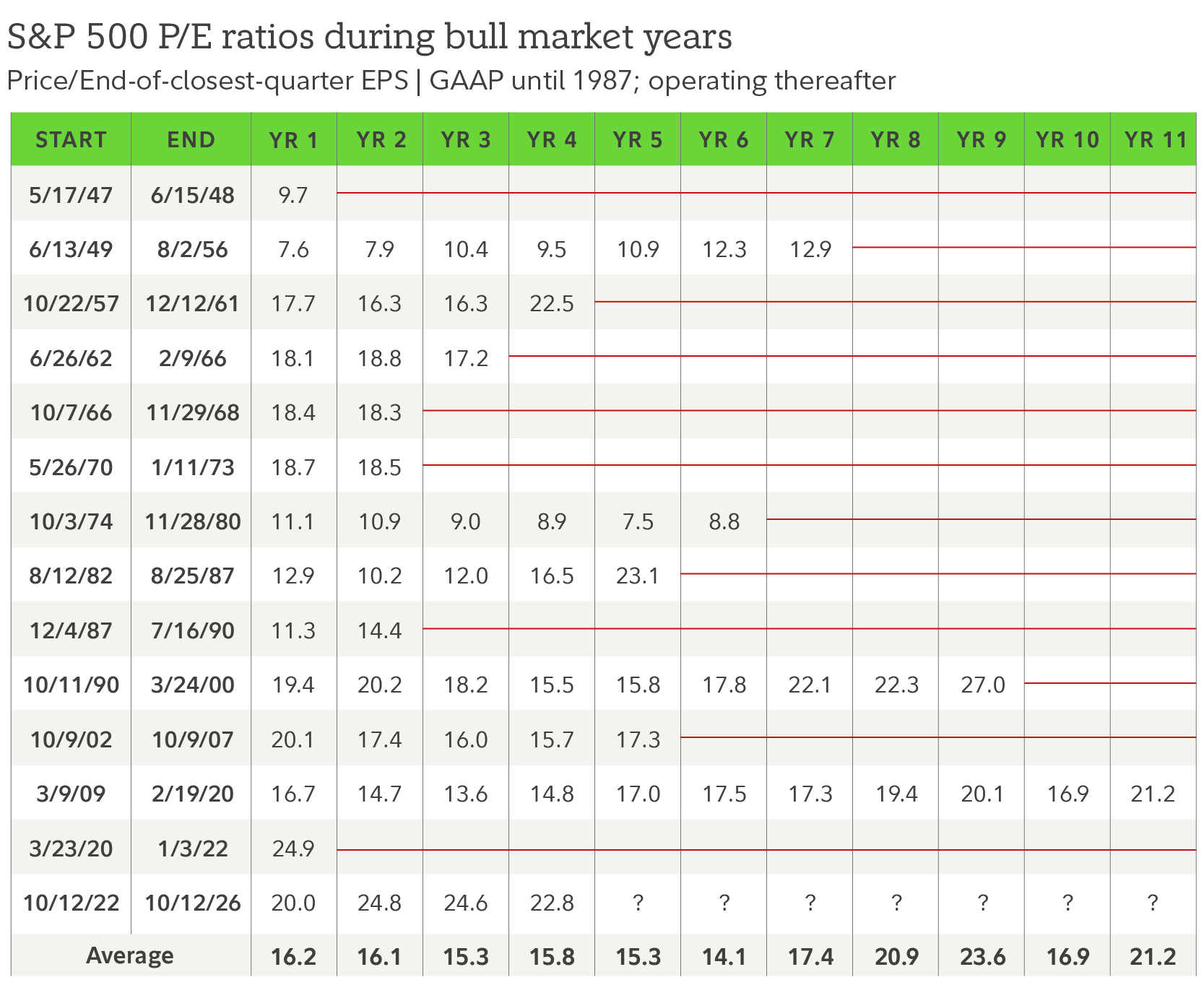
Relatively high valuations could risk market corrections if earnings do not continue to support stock prices. Fidelity’s Asset Allocation Research Team noted in their third quarter Quarterly Market Update that, “Elevated risky-asset valuations—particularly for US and emerging-market stocks tied to artificial intelligence (AI)—may not be a near-term impediment, but they provide little cushion amid a medium-term backdrop of policy, economic, and geopolitical risks.”
With that said, stocks can oftentimes appear expensive because they are worth their valuation. Higher valuations can simply reflect confidence in expected growth and durable earnings. If earnings growth continues to support stock prices, the bull market may have more room to run.
3. An AI bubble?
The AI trade has dominated investing headlines for most of 2026. It could do so again next year, and for good reason. According to some estimates, the AI buildout represents roughly 40% of US GDP growth.
The incredible growth in stock prices for AI developers, semiconductor suppliers, hyperscalers, and other components of the AI trade has resulted in many investors becoming overly concentrated in these positions. This concentration risk—which is essentially holding too many of your eggs in 1 basket—may be contributing to some recent volatility in the AI trade. Additionally, as the cost of capital has risen—along with some uncertainty around energizing data centers to be able to consume the chips AI developers have ordered—more investors have taken note of the risks to the AI trade.
But many of these companies are assuaging some of these concerns with persistently strong earnings. And in addition to some of the major players that have helped lead this bull market to record highs, investors are finding satellite opportunities to the AI trade including demand for industrial metals. Plus, there are ways for investors to diversify concentration risk.
4. Global instability
Recent unrest in France, the conflict in the Middle East, and the war in Ukraine have created a volatile geopolitical backdrop for investors. Additionally, upcoming elections in the US may have contributed to some uncertainty over the last several months.
Global conflicts can disrupt supply chains, pressure energy markets, and increase inflationary pressures, all of which can negatively impact corporate earnings and investor sentiment. Energy prices in particular have remained high for most of this year, with diesel currently at record prices.
Nevertheless, there is hope that many of these conflicts can be resolved. Moreover, even in the absence of resolutions to these conflicts many global economies and businesses have been able to manage the associated risks over the past several years.
5. Faltering confidence
The riots in France played a big role in French consumer confidence recently reaching a 13-year low. Across the pond, roughly two-thirds of the US economy is driven by consumer spending, and so the outlook among US consumers—which has been under pressure for much of 2026—is an important indicator. While the latest consumer confidence data from the Conference Board provided some relief, it’s been a mostly downward trajectory this year. In fact, confidence had hit a nadir in September, reaching near-historic lows, according to the University of Michigan’s Consumer Sentiment report.
With that said, US consumer spending has remained relatively strong (although credit card debt rose to roughly $1.3 trillion at the end of the second quarter, according to the New York Federal Reserve). As is the case for other major market risks, if global conflicts come to a peaceful resolution, that may help ease energy prices, overall inflation, and reduce pressure on the Federal Reserve to potentially raise rates. All of which would likely help bolster consumer confidence—especially as we head into the holiday shopping season, when economic activity usually picks up.
Investing implications
Despite the once again impressive performance of the stock market thus far in 2026, investors must remain vigilant. As always, you should ensure your investment mix is diversified and that your positions align with your overall strategy and risk tolerance. As history has shown, markets can turn swiftly, and those who prepare for volatility are better positioned to manage any of it that may arise.