


Are you optimistic about a stock’s long-term prospects but you may want protection in case its price takes a short-term hit? You might want to consider an options strategy called the protective put. It lets you see potential gains in a stock you own while also limiting your potential losses—in exchange for a cost to buy the option. Here’s the lowdown on protective puts.
What is a put option?
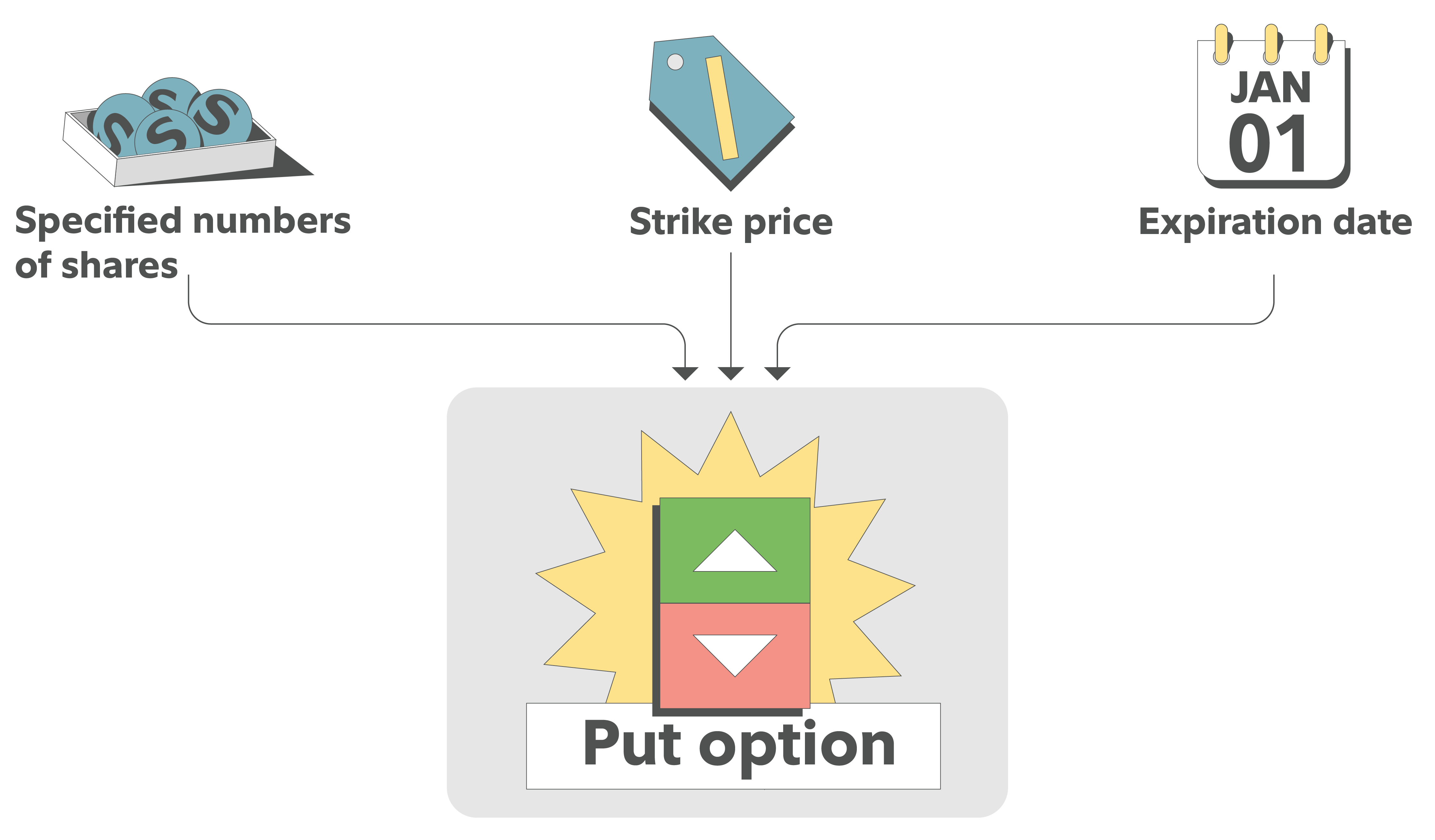
A put option is a contract between 2 parties, an option buyer and an option seller. This put option contract controls a specified number of shares that can be exercised at a specified price (the strike price) before a specified date (the expiration date). From the option buyer’s perspective, they can exercise the option to sell shares of a stock or ETF at the strike price or trade away the contract. Something you’ll often hear in options trading is that buyers are “long the option.”
From the seller’s perspective, if the put option is exercised, the seller is required to buy the underlying investment from the options buyer at the strike price, regardless of the current market price. In a cash‑secured put, the seller sets aside enough cash to fully purchase the shares if assigned. While buyers are said to be “long,” those who sell the option are referred to as being “short.”
What is a protective put?
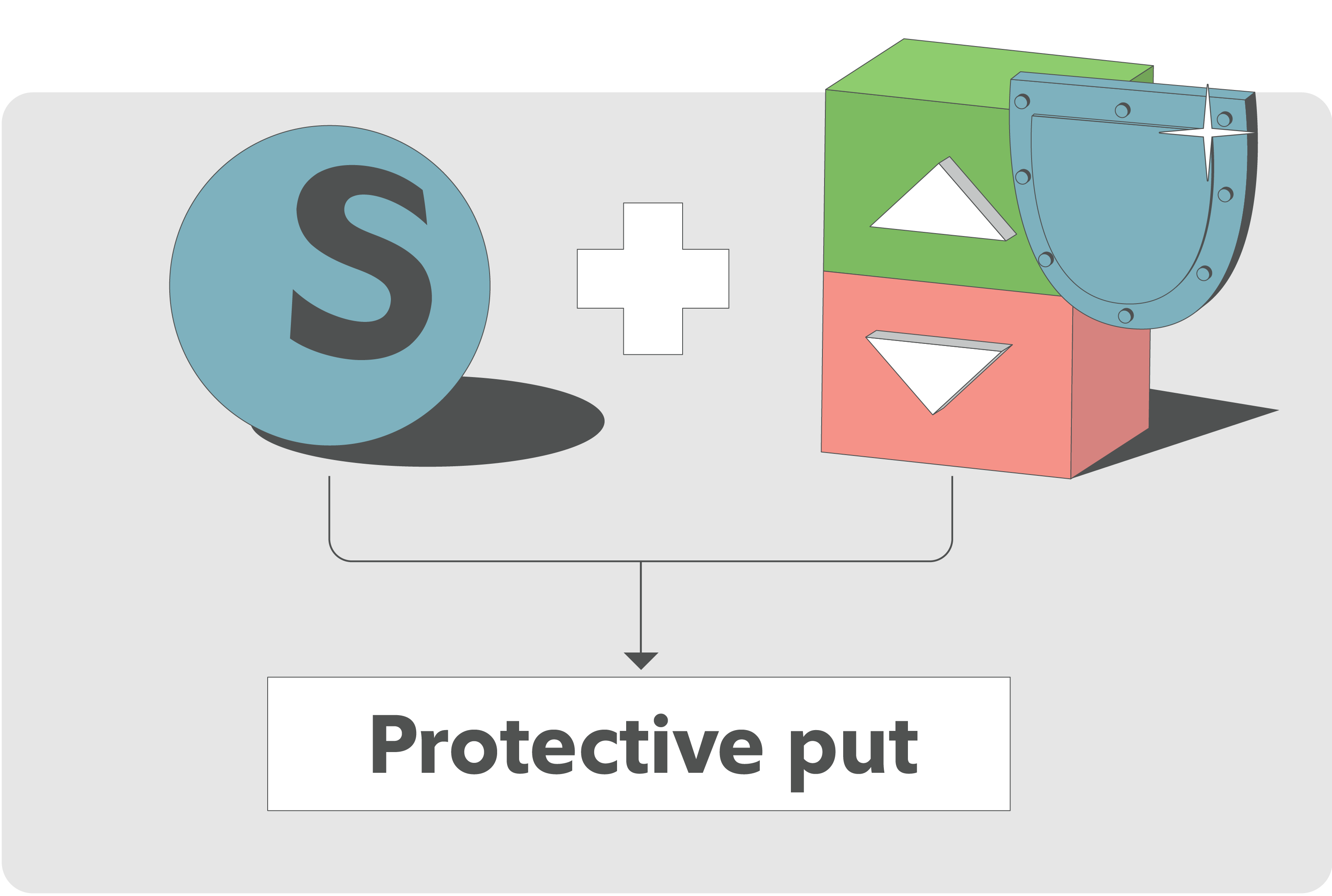
A protective put is an options strategy that allows the option buyer to define the maximum potential loss when owning an asset like a stock. It involves 2 components: owning an investment, such as a stock or ETF, and buying a put option on that same investment. You can buy a put option on a stock you already own, or you can buy a put at the same time that you acquire a new stock, which is called a “married put.” This strategy can reduce downside risk, though the cost of the put premium can affect your overall returns.
Using a protective put doesn’t necessarily mean you’re bearish on that stock. In fact, investors typically use protective puts on stocks they believe will perform well over the long term. But if you’re worried about short-term price declines due to upcoming events, such as quarterly earnings or economic data announcements, a protective put can help limit losses during the life of the put contract.
How does a protective put work?
A protective put is easiest to understand from the put buyer’s point of view. For example, suppose you own a stock that you don’t want to sell because you think it could increase in value over the long term, but you’re concerned it might decline in the next 2 months due to potentially unfavorable quarterly earnings. You might consider buying a put option with a strike price near where you think the stock could fall with an expiration date 2 months away.
Stock price is below the strike price at expiration:
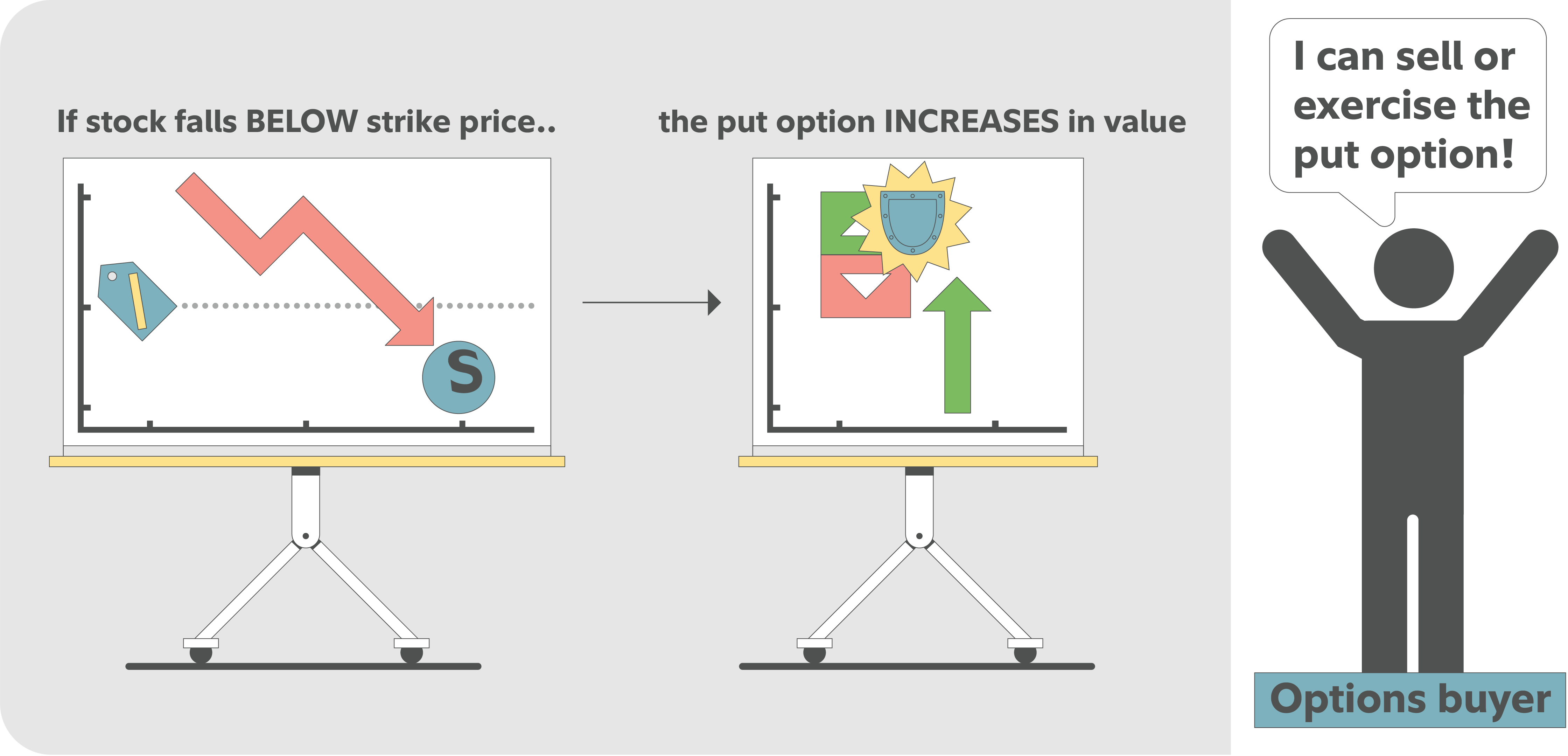
In a protective put strategy, if the stock falls below the strike price, the put option increases in value and helps offset the loss in the underlying shares. Because the put gives you the right to sell at the strike price, your downside is limited—you can either sell the stock at the higher strike price or sell the put itself for a potential gain. While you can still lose money on the stock’s decline, the put acts as protection and prevents larger losses below the strike price.
Stock price is above the strike price at expiration:
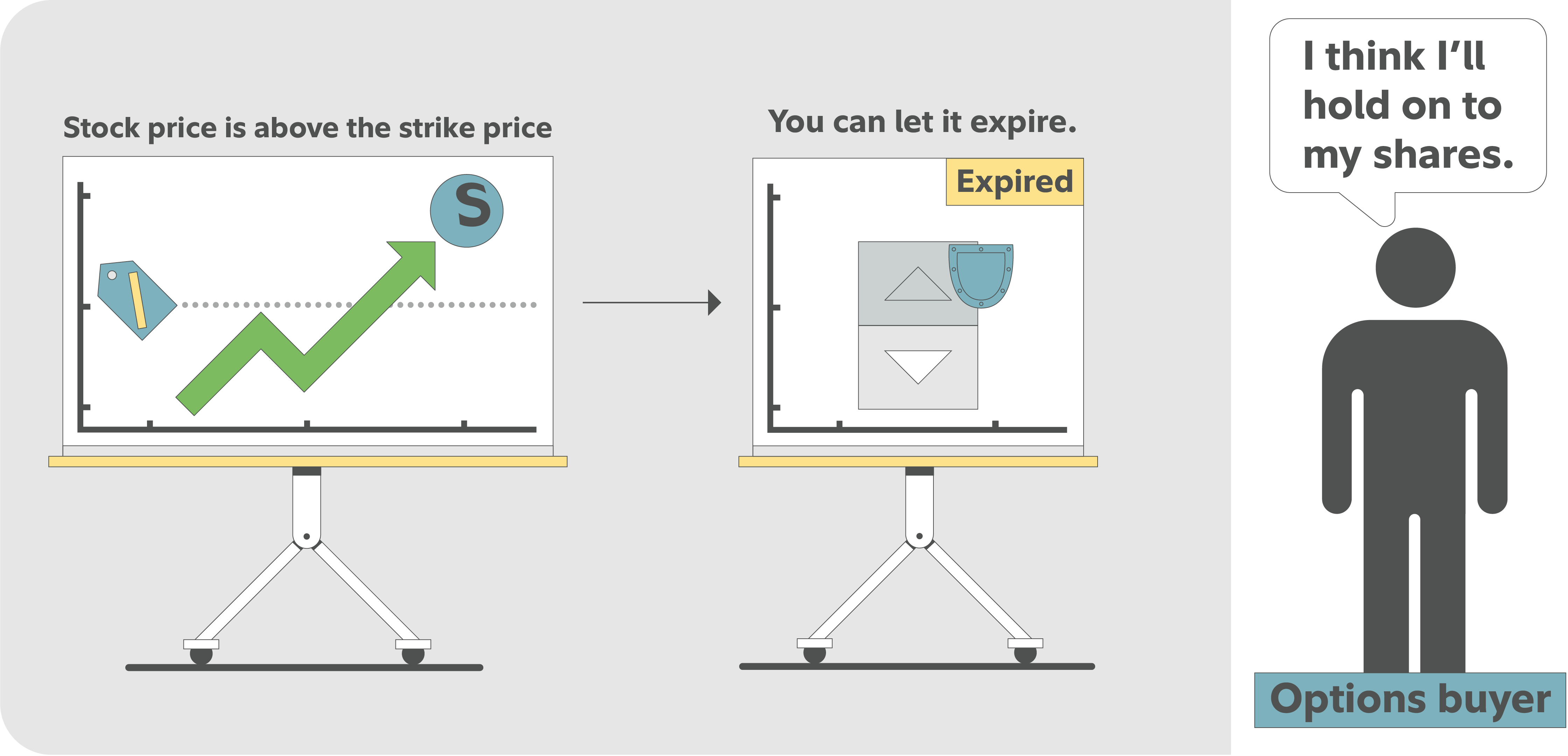
On the other hand, if the stock doesn’t fall during those 2 months, you can simply trade away the put option if there is any residual value, let the option expire worthless, and hold on to your shares.
Remember, as a stock owner, you still benefit from the rising stock price. In this case, you keep your shares and simply lose the money paid to purchase the put option, which acts like the price you paid for the coverage you didn’t end up using. While the put provides no payoff in this scenario, your stock position benefits from any gains above your purchase price, minus the cost of the protection.
An example of a protective put
You own shares of a stock
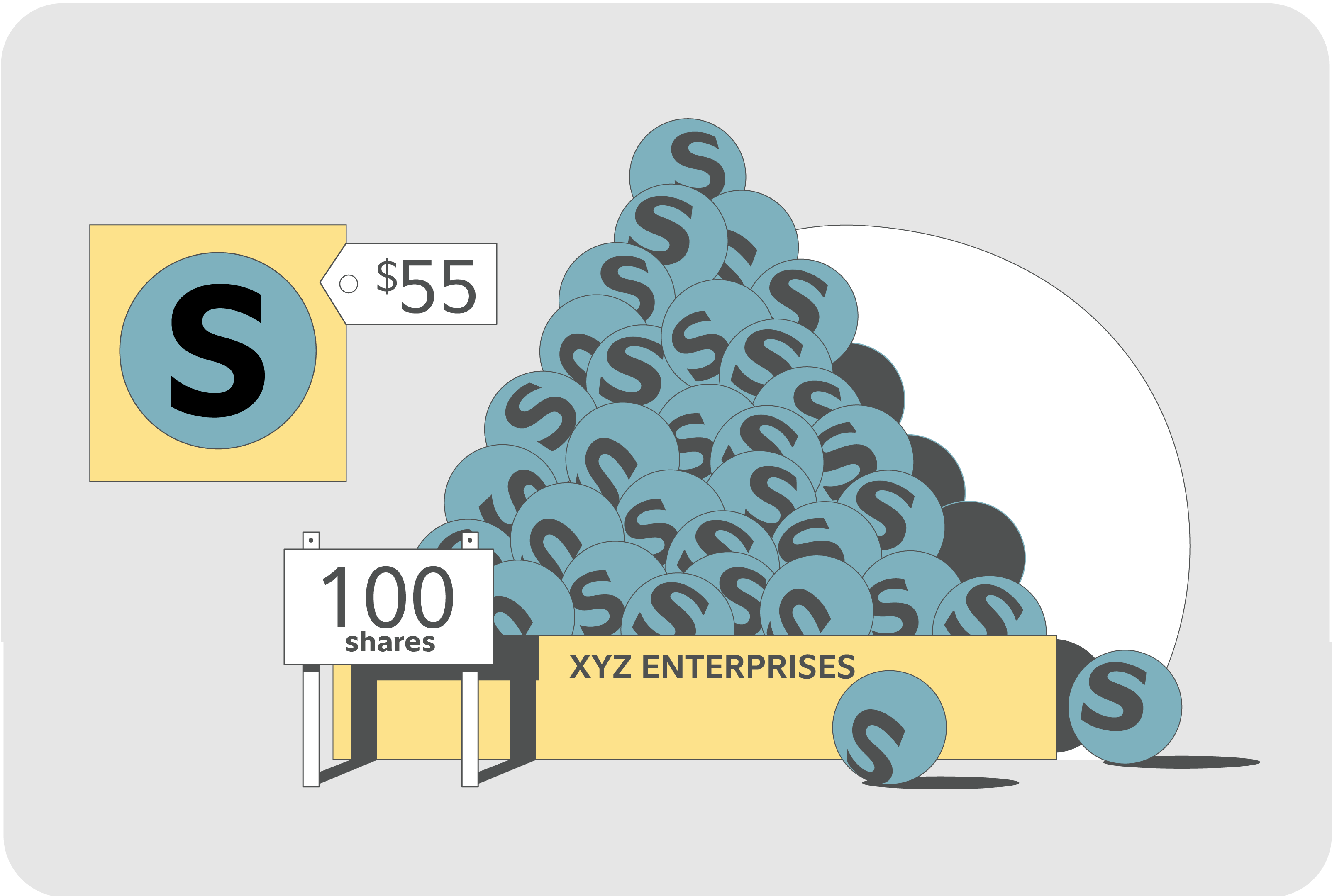
Let's use a hypothetical example to illustrate what we've covered. Let’s say you own 100 shares of a stock called XYZ, and each share is worth $55. If the stock falls below the strike price at any time during those 2 months, you can exercise the put option and sell your shares for a higher price than you’d get on the market. You could also simply sell your put option, which would have theoretically increased in value.
You put a protective put option
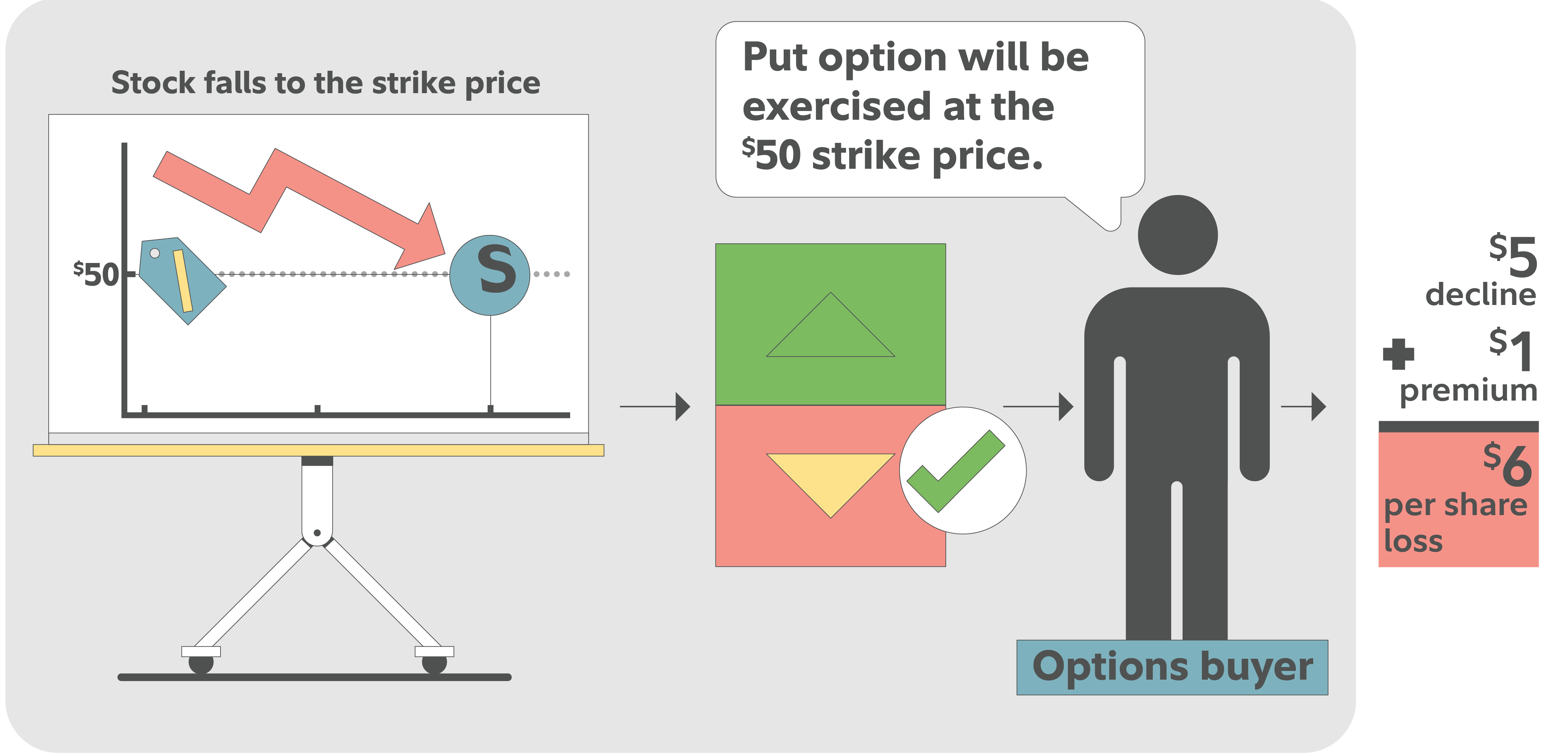
Since you already own the shares at $55 in this example, the next step is buying the protective put. You choose a $50 strike put for $1 per share ($100 total). This option gives you the right to sell your shares for $50 at any time before expiration.
With that protection in place, your maximum loss is limited: You can lose the $5 drop from your purchase price down to the $50 strike, plus the $1 premium, for a total of $6 per share or $600. Your upside remains open as well—if the stock rises above $55, you still participate in those gains, reduced only by the $1 you paid for the put. In essence, the put acts like protection—it limits your downside while allowing most of your potential upside to remain intact.
Benefits of a protective put strategy

- You may be able to limit your maximum risk on an investment. By choosing a strike price, a protective put can help limit how much you can lose on the underlying stock within a specific timeframe. If you’re concerned about a steep short-term decline, a protective put is insurance against losing more than you’re comfortable with.
- You still participate in the upside. Even though you have downside protection, you’re not obligated to exercise your option. If the stock price rises, you retain ownership of your shares—and exposure to any potential profits.
Disadvantages of a protective put strategy

- If a declining stock doesn’t fall to your strike price, you still lose out on the premium. Choosing a strike price is key in a protective put strategy. Lower strike prices cost less but offer less protection because the stock is less likely to fall that far, meaning you could lose the premium without gaining downside coverage. Higher strike prices cost more but provide stronger protection and a greater chance of being able to exercise the option.
- Your returns may be lower on well-performing stocks. If a stock performs well and you do not exercise your option, the cost to buy the option will reduce your overall profit.
How to implement a protective put strategy
If you’re interested in implementing a protective put strategy, here’s how to get started:
- Open and fund a brokerage account. If you don’t already have a brokerage account, look for one with low fees and intuitive research capabilities. Once you’ve opened an account, transfer money into it to cover the cost of buying shares and paying premiums on any put contracts you want to buy.
- Apply to trade options. Some brokerages require approval to trade options. At Fidelity, this involves completing an application about your finances, as well as your investing experience.
- Research investment options and start selling cash-secured puts. If you don’t already know which stocks or ETFs you might want to sell cash-covered puts for, you can use your brokerage’s resources to identify potential candidates. Then log into your brokerage account, access the option chain, and enter the ticker symbol. The option chain lets you filter to potentially view several strikes, expirations, quotes of the options, and option strategy views. It will provide the ability to trade right from the option chain. If you trade at Fidelity, we have an Option Strategy Builder too to help you build and place an options trade.