


Most investors try to buy low and sell high. But it’s also possible to profit from falling stock prices. A long put is an option strategy that gives you the opportunity to make money when an investment price declines. Here are the potential benefits and risks of a long put strategy, and how to trade long puts.
What is a put option?
How does a long put work?
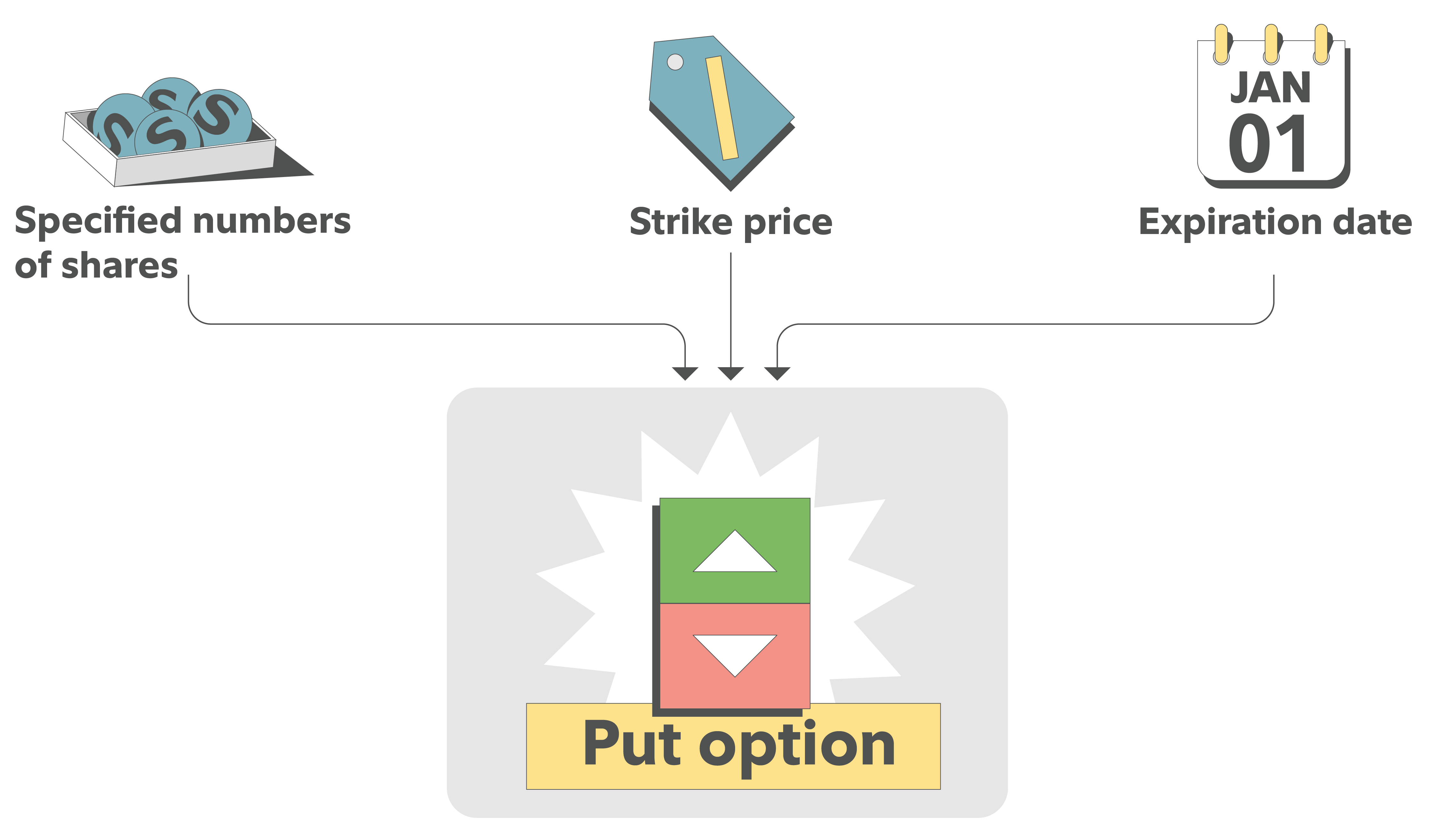
A put option is a contract between 2 parties, an option buyer and an option seller. This put option contract controls a specified number of shares that can be exercised at a specified price (the strike price) before a specified date (the expiration date).
From the option buyer’s perspective, they can exercise the option to sell shares of a stock or ETF at the strike price or trade away the contract. Something you’ll often hear in options trading is that buyers are “long the option.”
From the seller’s perspective, if the put option is exercised, the seller is required to buy the underlying investment from the options buyer at the strike price, regardless of the current market price. While buyers are said to be “long,” those who sell the option are referred to as being “short.”
What is a long put?
A long put is an options strategy where you buy a put option because you expect the stock to fall. The term “long” simply means you are the buyer of the put. When you buy a put option, you gain the right, but not the obligation, to sell the stock at a set strike price before the option expires. Your maximum risk is limited to the premium you paid, while your potential profit grows as the stock drops further below the strike price, because the right to sell at the higher strike becomes more valuable.
You don’t need to own the underlying stock to buy a put. If the stock does fall, you can exercise the option and sell shares at the higher strike price, or simply sell the put itself for a potential gain. If the stock stays above the strike at expiration, the option expires worthless, and your loss is limited to the premium you paid. Traders typically use long puts when they want bearish exposure with limited downside risk, or when they want to hedge shares they already own against a potential decline.

A long put and a short put are opposite sides of an option trade. A long put gives you the right to sell shares of a stock at a specific price within a certain period, and the person selling the put agrees to buy those shares from you.
Selling a put is also known as a short put. Someone using a short-put strategy is typically neutral to bullish on the stock. They think its price will increase in the near future, or at least stay relatively flat, giving them the potential opportunity to buy those shares at a price below current market value. The put seller also earns a premium for taking on that obligation.
How does a long put work?
The stock is above the strike price at expiration
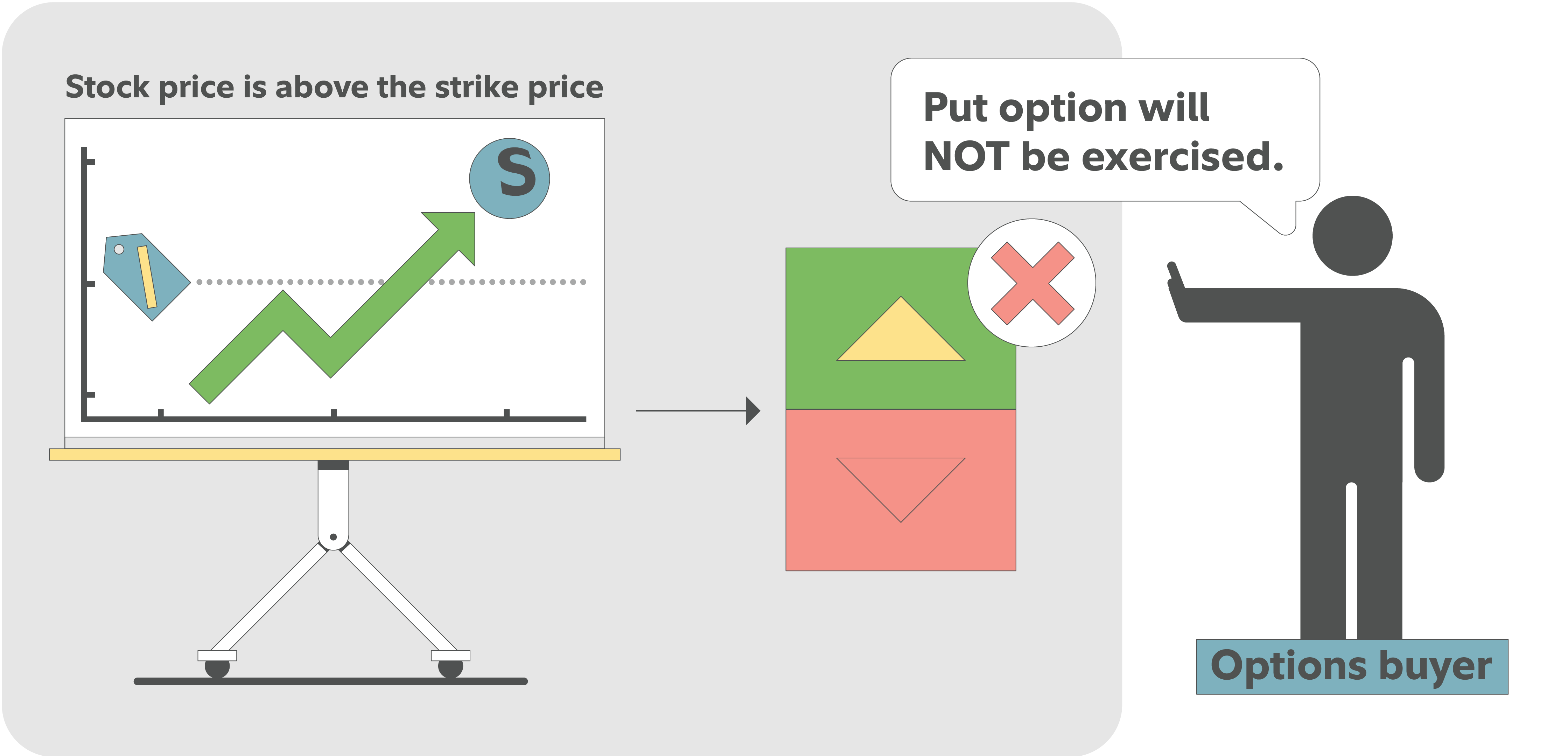
When the stock stays above the strike price at expiration, a long put ends up “out of the money.” That means the option has no value, because it wouldn’t make sense to use the right to sell the stock at the lower strike price when the market price is higher. In this situation, the put simply expires worthless, and the buyer loses only the premium paid for the option. No shares are sold, no further action is required, and the total loss is limited to that upfront cost. This is the trade‑off with a long put: limited risk if the stock rises, with profit potential only if the stock declines below the strike.
Stock price is below the strike price at expiration:
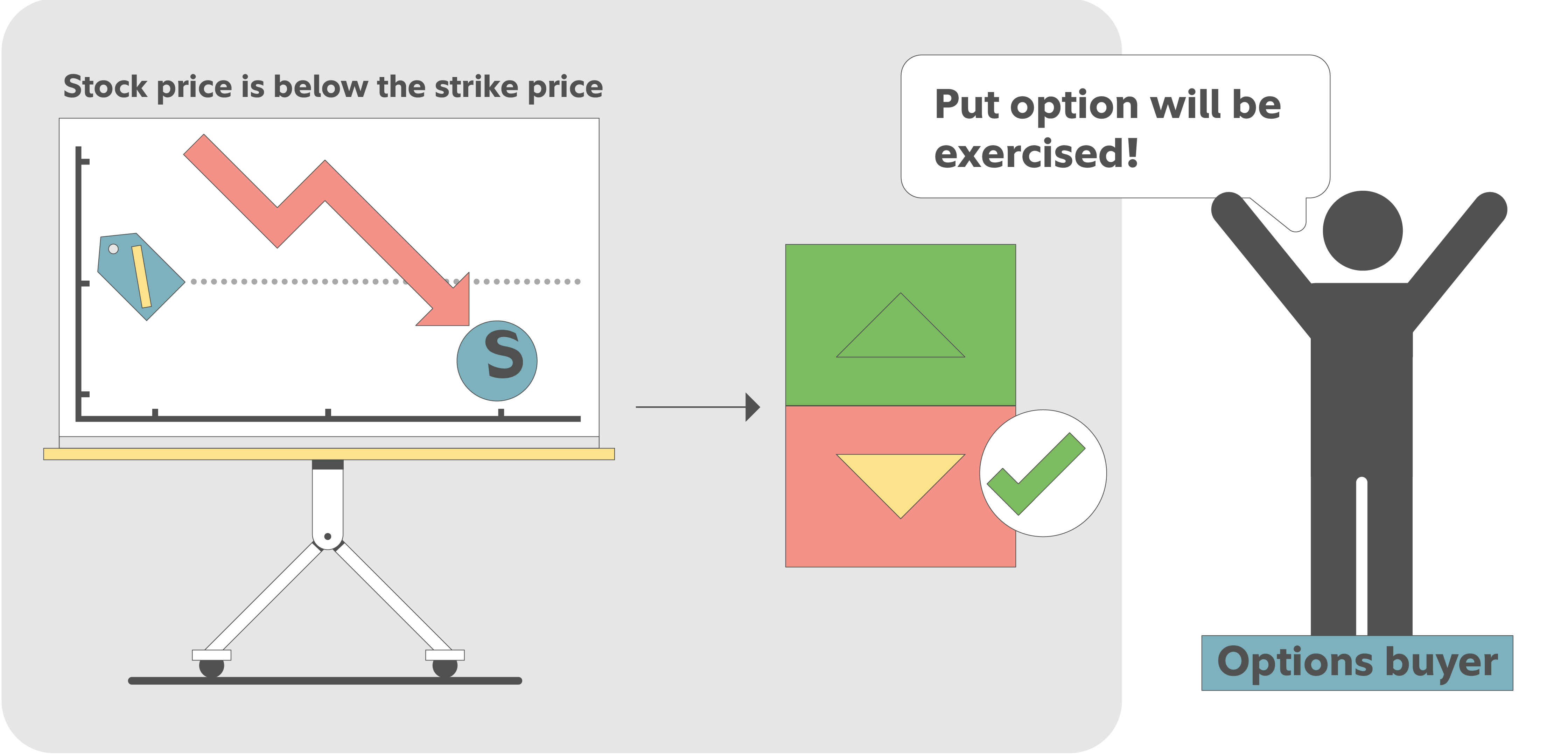
When the stock finishes below the strike price at expiration, a long put is “in the money,” meaning it now has real value. Because the put gives you the right to sell the stock at the higher strike price, you can either exercise the option and sell shares at that price or simply sell the put itself for a potential profit.
The lower the stock falls below the strike, the more valuable the put becomes. Your maximum potential profit occurs if the stock drops all the way to zero. This built‑in payoff is why traders use long puts—they allow you to profit from downward moves in a stock while limiting risk to the upfront premium.
Long put vs. short put
A long put and a short put take opposite views on the market. A long put is a bearish strategy: you buy a put option because you want to profit if the stock falls. Your risk is limited to the premium you pay, and the option becomes more valuable as the stock drops below the strike price.
A short put, by contrast, is a bullish‑to‑neutral strategy in which the seller collects a premium and is comfortable buying the stock if it falls slightly, or profiting if the stock rises or stays above the strike price. Profit is limited to the premium received, while potential losses increase as the stock declines. The key takeaway: Long puts hope the stock goes down; short puts hope it doesn’t.
Example of a long put
Stock is trading at $55
You buy a put option
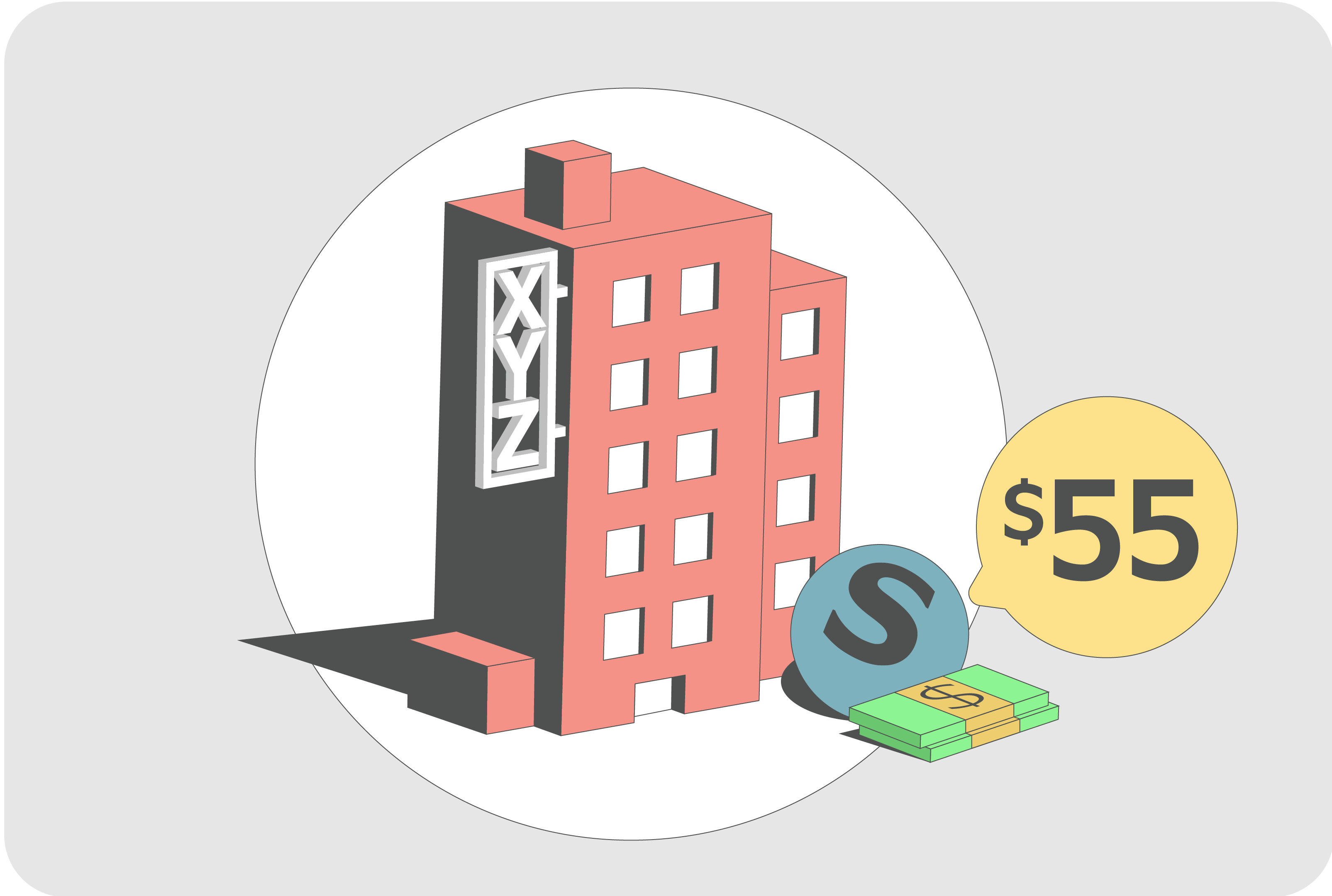
The stock is trading at $55, and you expect the price to drop, so you buy a $45 strike put for a $3 premium ($300 total). Your breakeven is $42, meaning the stock must fall below that level for the trade to become profitable when exercising.
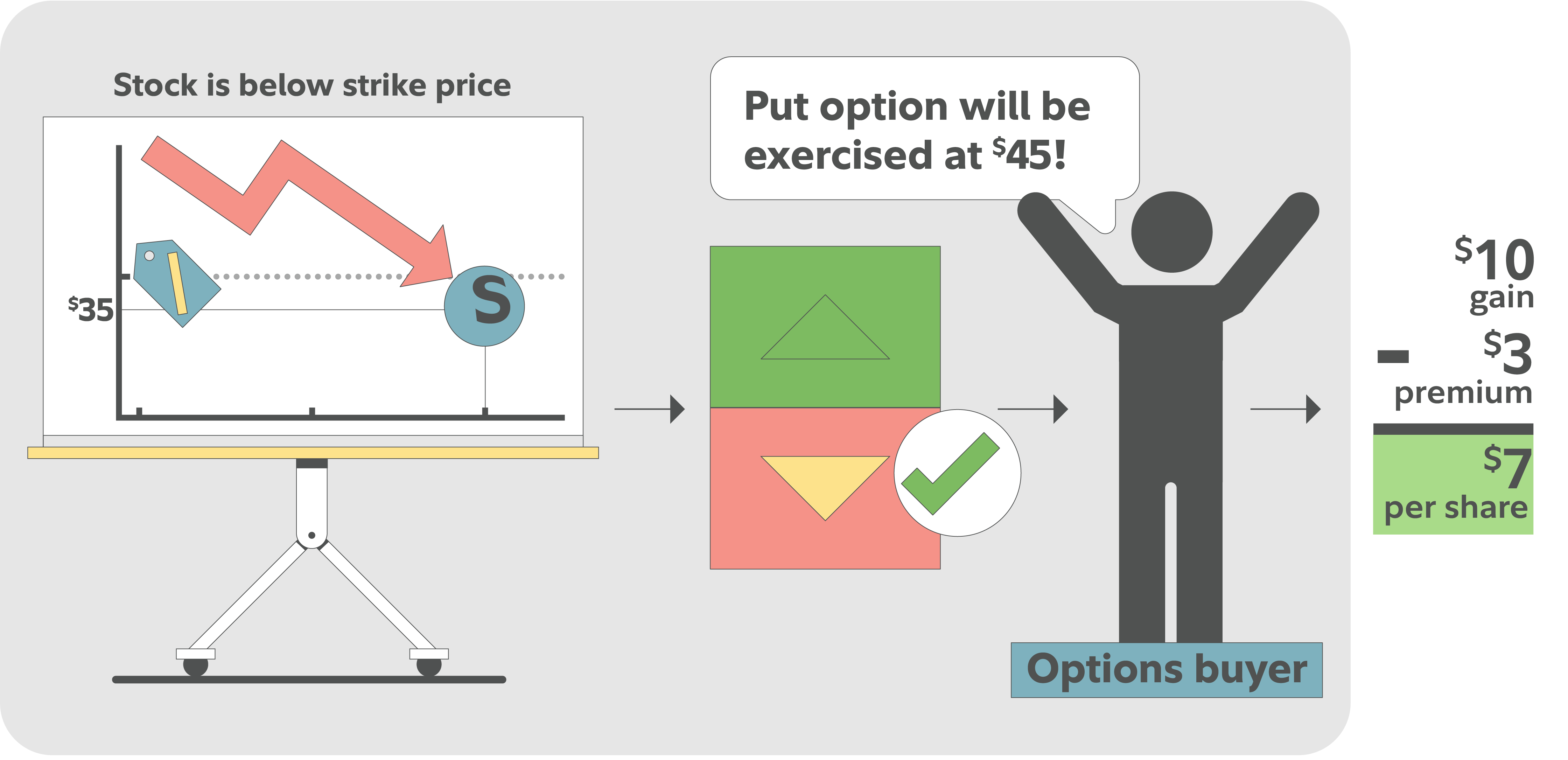
But if the stock drops sharply, the put can become profitable. For example, if the stock falls to $35, the put is worth $10, and after subtracting the $3 premium, your profit is $7 per share, or $700 total. The further the stock falls below breakeven, the larger your potential gain. If the stock stays above $42 or doesn’t fall enough, the put won’t gain value, and you can lose up to the $300 premium—your maximum risk.
It’s important to remember that you can sell the option at any time—you don’t have to wait until expiration or plan to exercise it. In fact, many traders buy put options without any intention of exercising to sell underlying shares. Instead, they’re aiming to profit from the put increasing in value as the underlying stock or ETF moves lower, and then sell the option for a potential gain.
Note: These examples don’t include any commissions or fees that may be incurred, as well as tax implications, which all could potentially subtract from profits further.
Benefits of long puts

If you’re thinking about implementing a long put strategy, here are 3 main benefits to keep in mind:
- You could profit from a falling stock price. When you have a bearish outlook on a stock, a long put gives you the right to sell those shares above market value if your outlook is correct.
- You could enhance returns by putting up less cash. Because you only pay a premium to buy a long put (plus any brokerage fees or commissions), long puts offer the chance to profit on less investment outlay compared with shorting the stock, the process of selling “borrowed” stock at the current price, then closing the deal by purchasing the stock at a future time.
- Your losses are limited. You can only lose your premium, no matter how high the stock price rises during the contract’s lifetime.
Risks of long puts

- You could lose your premium. You pay your premium upfront and risk losing that premium if the underlying stock price doesn’t fall, and you may not recoup your entire premium if the price of the underlying stock doesn’t fall beyond your breakeven point.
- Trading against historical trends. Over the long term historically, stocks have had a propensity to increase in value over time, though past performance doesn’t guarantee future results. By entering a short position with a long put, you are only profiting from a decrease in price. If the price of the underlying asset remains neutral or increases in value, you will lose your premium and not profit.
How to buy long puts
If you’re interested in a long put strategy, these steps can help you get started.
- Open and fund a brokerage account. Trading options requires a brokerage account. If you don’t already have an account, look for one with low fees and helpful research tools. You also need to transfer money into that account to pay for any long put premiums.
- Apply to trade options, if necessary. Some brokerages require you to apply to trade options. At Fidelity, this involves completing an application about your finances and your investing experience.
- Research investment options and start buying long puts. If you don’t already have an outlook on a particular stock or ETF, you can use your brokerage’s resources to research companies and identify stocks you expect to decline in price. To find options contracts on that stock, log into your brokerage account, access the option chain, and enter the ticker symbol. The option chain potentially lets you view several strike prices, expiration dates, and quotes of the options. You also can trade right from the option chain. If you trade at Fidelity, we have an Option Strategy Builder to help you build and place an option trade and apply a strategy for your objective.