Estimate Time2 min

Managing risk amid uncertainty around the Fed’s independence

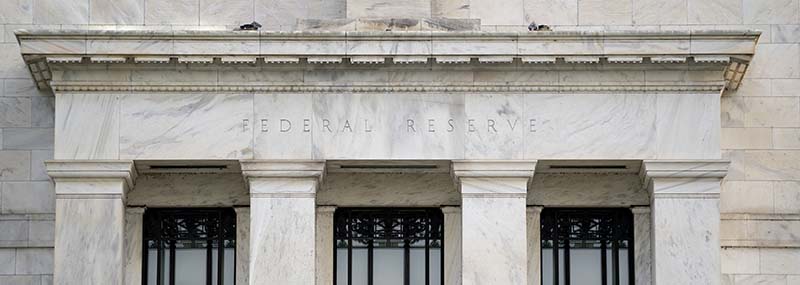
Alongside ongoing concerns about inflation and economic growth, bond investors are vigilant about any threat to the independence of the Fed. Fidelity Portfolio Manager Michael Plage believes it is prudent to position Fidelity® Investment Grade Bond Fund (FBNDX) close to its benchmark until his team gains more clarity about the central bank, fixed-income markets stabilize and investors regain confidence.

“In pursuing its dual mandate of price stability and maximum employment, the Fed is a key driver of bond valuations, interest rates and even equity performance,” says Plage, who co-manages the fund. “But with recent political calls for the Fed to lower its short-term interest rate sparking discussion about the central bank’s autonomy, I believe it is wise to take a cautious approach.”

Launched in 1971, the fund is a core fixed-income strategy seeking to provide investors one-stop access to a diverse group of U.S. high-grade bond sectors. Plage and his co-managers concentrate on areas where they see the potential to repeatedly add value, including asset allocation, sector and security selection, yield-curve positioning and opportunistic trading.

Learn More

Interested in Fidelity® Investment Grade Bond Fund? Research FBNDX.

A sharp focus on risk management is crucial amid the macro uncertainty, according to Plage. “Any perceived shift in the Fed’s independence could introduce ambiguity that is on par with other risks facing bonds, including global trade tension,” he says.

Accordingly, the fund holds a large allocation to U.S. Treasurys (as of February 28, 2026), with Plage noting their relative value and liquidity.

Among corporate bonds, there’s an emphasis on short-duration holdings because they tend to offer more-favorable spreads per unit of interest-rate risk than longer-term counterparts, he explains.

The team also is favoring shorter-duration asset-backed and commercial mortgage-backed securities, according to Plage.

In addition to the Fed’s interest-rate policy, Plage says he is keeping an eye on the Fed’s regulation of banks and management of its balance sheet, two factors that may significantly impact supply and demand and the shape of the yield curve.

“Until we have greater clarity on the Fed’s path, we plan to hold steady with the fund’s conservative positioning,” he concludes.

For specific fund information, including full holdings, please click on the fund trading symbol above.

Michael Plage
Michael Plage
Portfolio Manager

Michael Plage is a portfolio manager in the Fixed Income division at Fidelity Investments.

In this role, Mr. Plage co-manages the Fidelity and Fidelity Advisor Investment Grade Bond Funds, Fidelity and Fidelity Advisor Sustainable Core Plus Bond Funds, Fidelity and Fidelity Advisor Tactical Bond Funds, Fidelity and Fidelity Advisor Total Bond Funds, Fidelity Investment Grade Bond ETF, Fidelity Sustainable Core Plus Bond ETF, Fidelity Total Bond ETF, and Fidelity VIP Investment Grade Bond Portfolio, as well as various institutional portfolios for U.S. and non- U.S. investors.

Prior to assuming his current responsibilities, Mr. Plage managed Fidelity Corporate Bond ETF, Fidelity and Advisor Corporate Bond and Short Duration High Income Funds, and Fidelity Puritan Fund, as well as institutional and retail fixed income portfolios within credit strategies, including high yield. Previously, he worked as a fixed income trader from 2005 to 2009.

Before joining Fidelity in 2005, he was a trader at Travelers Insurance (Citigroup) from 1997 to 2005. He has been in the financial industry since 1997.

Mr. Plage earned his Bachelor of Science in management from the University of South Carolina and his Master of Business Administration in finance from the University of Connecticut. He is also a CFA® charterholder.

Interested in mutual funds?

Choose your criteria and get fund picks from Fidelity or independent experts.

More to explore

Before investing, consider the funds' investment objectives, risks, charges, and expenses. Contact Fidelity for a prospectus or, if available, a summary prospectus containing this information. Read it carefully.

Because of their narrow focus, sector investments tend to be more volatile than investments that diversify across many sectors and companies.

Growth stocks can perform differently from the market as a whole and other types of stocks, and can be more volatile than other types of stocks.

Value stocks can perform differently from other types of stocks, and can continue to be undervalued by the market for long periods of time.

Stock markets are volatile and can fluctuate significantly in response to company, industry, political, regulatory, market, or economic developments. Investing in stock involves risks, including the loss of principal.

Foreign investments involve greater risks than U.S. investments, including political and economic risks and the risk of currency fluctuations, all of which may be magnified in emerging markets.

In general, the bond market is volatile, and fixed income securities carry interest rate risk. (As interest rates rise, bond prices usually fall, and vice versa. This effect is usually more pronounced for longer-term securities.) Fixed income securities also carry inflation risk, liquidity risk, call risk, and credit and default risks for both issuers and counterparties. Unlike individual bonds, most bond funds do not have a maturity date, so holding them until maturity to avoid losses caused by price volatility is not possible.

The municipal market can be affected by adverse tax, legislative, or political changes, and by the financial condition of the issuers of municipal securities.

The securities of smaller, less well known companies can be more volatile than those of larger companies.

Some funds may use investment strategies involving derivatives and other transactions that may have a leveraging effect on the fund. Leverage can increase market exposure and magnify investment risk. Investors should be aware that there is no assurance that a fund's use of such strategies will succeed.

Leverage can magnify the impact of adverse issuer, political, regulatory, market, or economic developments on a company. In the event of bankruptcy, a company's creditors take precedence over its stockholders.

Changes in real estate values or economic conditions can have a positive or negative effect on issuers in the real estate industry.

​As with all your investments through Fidelity, and in connection with your evaluation of the security, you must make your own determination whether an investment in any particular security or securities is consistent with your investment objectives, risk tolerance, and financial situation. Fidelity is not recommending or endorsing this investment by making it available to its customers.

Past performance is no guarantee of future results.

Views expressed are as of the date indicated, based on the information available at that time, and may change based on market or other conditions. Unless otherwise noted, the opinions provided are those of the speaker or author and not necessarily those of Fidelity Investments or its affiliates. Fidelity does not assume any duty to update any of the information.

Fidelity Brokerage Services LLC, Member NYSE, SIPC, 900 Salem Street, Smithfield, RI 02917

935100.124