

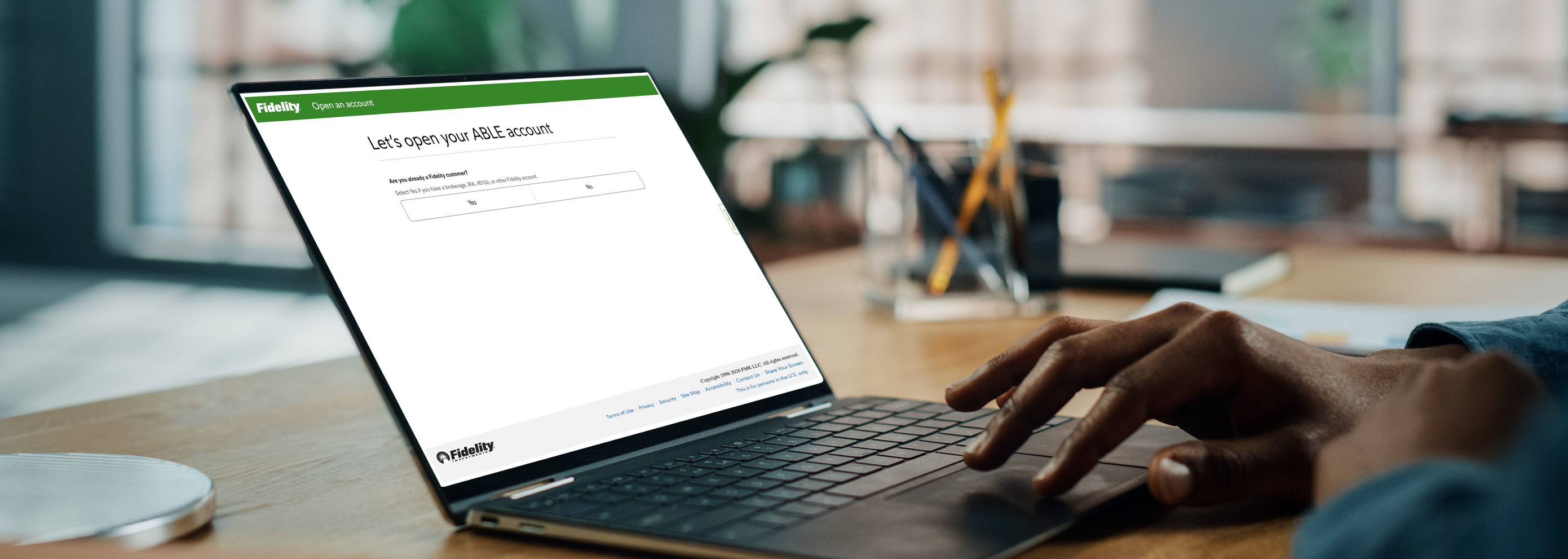
An Achieving a Better Life (ABLE) account allows qualifying individuals with disabilities to save money in a tax-advantaged account without jeopardizing certain benefits. Keep reading to learn how ABLE accounts work, and whether you or your loved one may qualify.
What’s an ABLE account?
An ABLE account is a tax-advantaged account that allows individuals with disabilities to save for qualified disability-related expenses. Any earnings in the account grow tax-deferred and when they’re used for qualified disability expenses, the distributions are tax-free. In addition, money in the account does not impact Medicaid benefits. Balances below $100,000 do not impact SSI (Supplemental Security Income) benefits.
Who can open an ABLE account?
You may be eligible to open an ABLE account if the disability begins before age 46, and you meet one of these criteria:
- You already receive SSI or SSDI benefits (Social Security Disability Insurance); or
- A licensed physician certifies that you have a disability resulting in “marked and severe” functional limitations, with onset before age 46.1
If the person with the disability is under 18—or unwilling or unable to manage the account independently—an authorized individual (such as a parent or guardian) can open and manage the account on their behalf. Be sure to check the preferred order of selection.
Why is it important to have an ABLE account?
Individuals with disabilities or their caregivers often have a higher cost of living. An ABLE account can be a valuable tool to help alleviate these financial challenges when it comes to saving for both short- and long-term financial needs. Those who receive disability benefits are often impacted by benefit "cliffs;" they may earn too much money to qualify for certain benefits, but not enough to fully support themselves without financial support. Many public assistance programs have strict limits, often capping eligibility at just $2,000 in countable assets.
ABLE accounts can make a big difference with navigating these financial challenges. Saving in an ABLE account allows individuals to:
- Help build savings without losing key benefits.
- Potentially grow earnings in the account in a tax-deferred manner and when used for qualified expenses, withdraw those funds federal income tax-free.
- Pay for a wide range of qualified expenses, including housing, food, transportation, education, employment support, and medical care.
6 steps to open an ABLE account
Follow these 6 steps when you’re ready to open an ABLE account.
1. Determine eligibility
An ABLE account can be opened by the individual with the disability or by an authorized person acting on their behalf. Federal law limits who can serve as the authorized individual. If you’re opening an ABLE account for someone else, you’ll also need to confirm your relationship with the account owner. Be sure to become familiar with the ABLE account’s PSA (person with signature authority) hierarchy.
To qualify, the disability must have begun before age 46. Before 2026, the cutoff was age 26—this expanded eligibility now includes many more people.
2. Choose an ABLE account
Most states offer ABLE accounts, and many accept out-of-state residents.
For example, the Attainable® Savings Plan—sponsored by MEFA and managed by Fidelity®—is open to everyone, regardless of the state you reside in. Anyone can contribute to an ABLE account using after-tax dollars.
When comparing plans, you should consider the account option for the state you live in for potential tax advantages as part of your process when choosing an ABLE account. Also consider:
- Fees
- Investment options
- Withdrawal rules
- How funds are distributed
- State tax benefits (if applicable)
3. Gather your information and apply
When you select a plan, you must complete an application. Having information ready will help make the process smoother. You’ll typically need:
- Contact information
- Social Security number or tax ID
- Investment or bank account details (routing and account numbers) to fund the ABLE account
- A government-issued ID (like a driver’s license or passport)
4. Decide how much to contribute
Many ABLE plans have low minimum initial contributions—some starting around $25. There are no minimums and no fees for Fidelity-managed ABLE accounts.
You can fund the account through bank transfers, checks, and payroll deposits. You can also set up recurring contributions or add funds whenever you’d like. The ABLE account may provide the account holder with a debit card or checks for easy spending. For 2026, the annual contribution limit is $20,000, and up to $35,650 per year for a designated beneficiary who has employment income.
5. Choose your investments
You’ll need to select how to invest the money during the enrollment process. Options typically range from conservative to more growth-oriented portfolios. Your decision should reflect your:
- Financial goals
- Time horizon
- Risk tolerance
6. Check in regularly
It’s a good idea to review your account periodically and make sure your investments still align with your goals. Track your contributions against annual limits and adjust automatic contributions if needed. Setting reminders can help you stay on track.
What can an ABLE account be used for?
There’s flexibility in how you use an ABLE account. Some people treat it like a long-term investment account, while others may use it for everyday expenses. Many do a combination of the two.
As you consider opening an account, think about what role you want it to play, whether that’s saving for the future, covering day-to-day costs, or both.
How to open an ABLE account with Fidelity
If you’re considering opening an ABLE account with Fidelity for you or your loved one, here’s how to get started:
1. Visit Fidelity.com.
2. Select Open an account.

3. Scroll down the page and choose View all accounts.
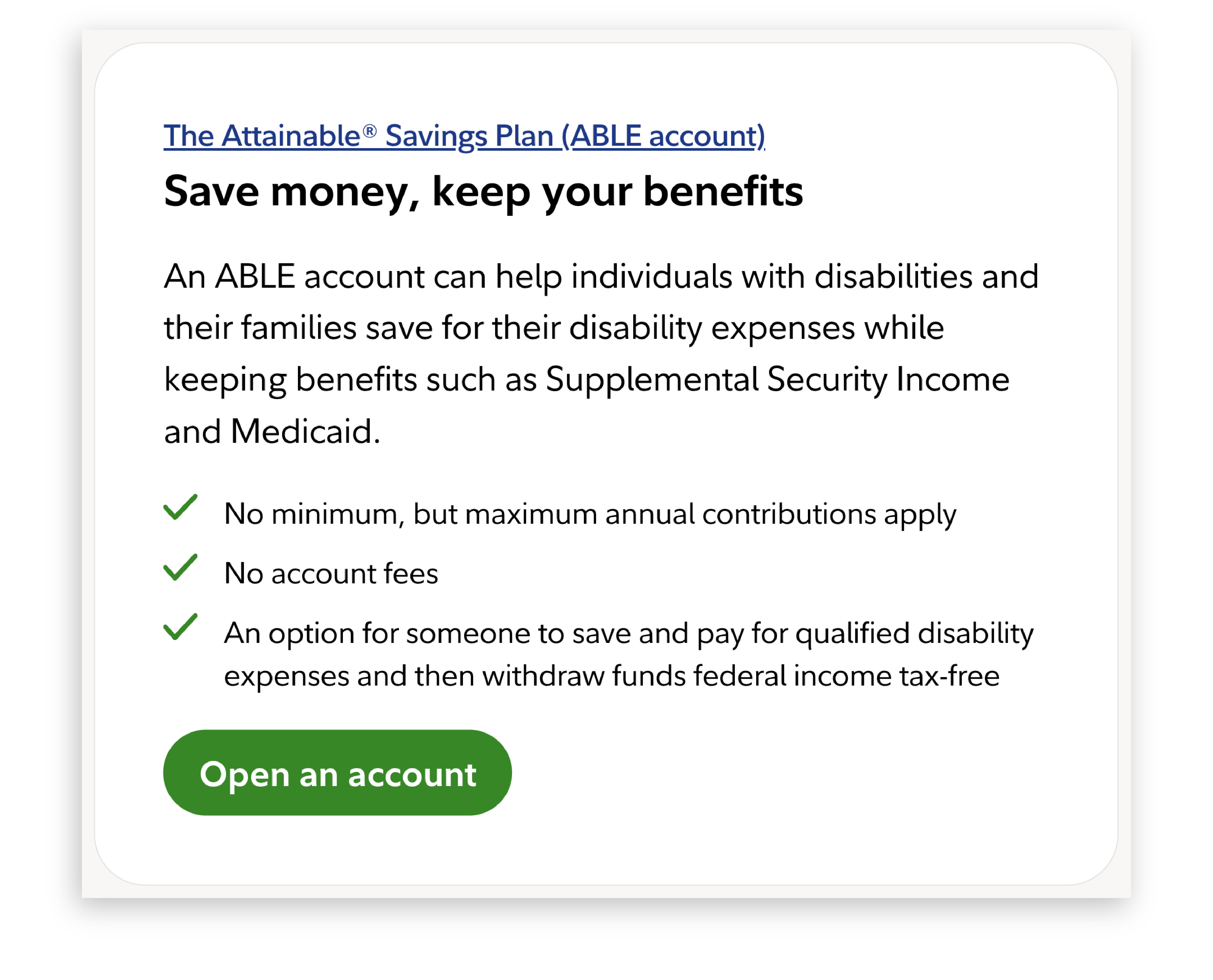
4. Choose The Attainable® Savings Plan (ABLE account) and select Open an account.
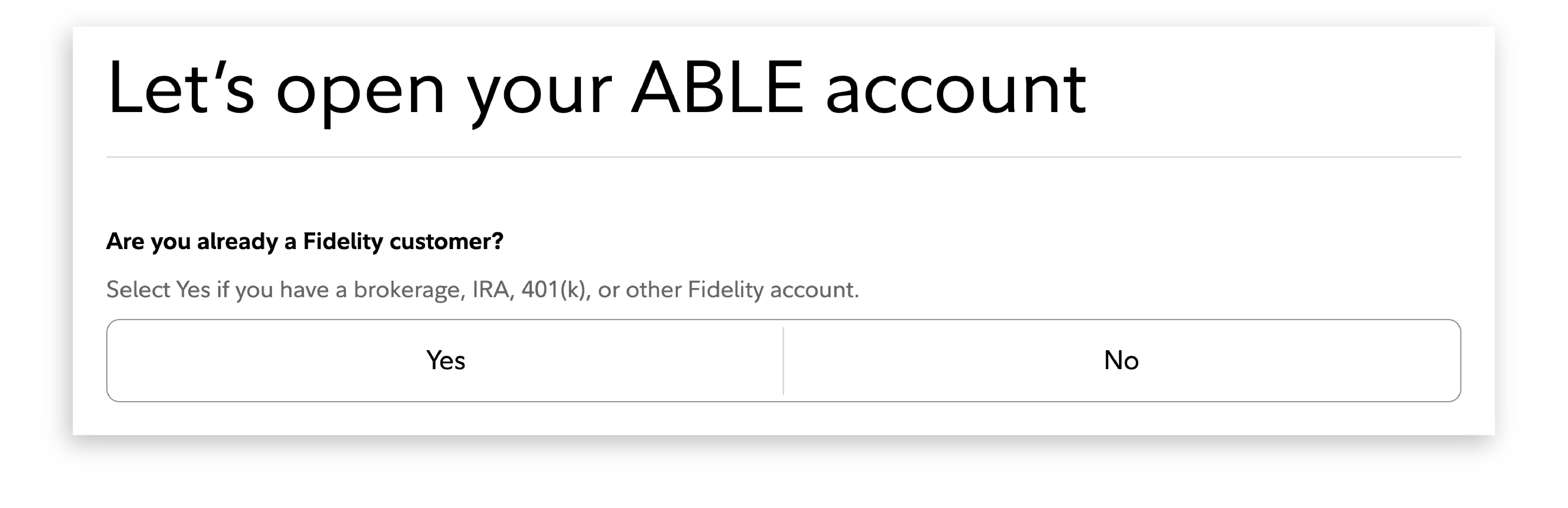
5. Answer Yes or No to the question about whether you’re already a Fidelity customer. Already a Fidelity customer? Just log in and skip ahead to step 8.
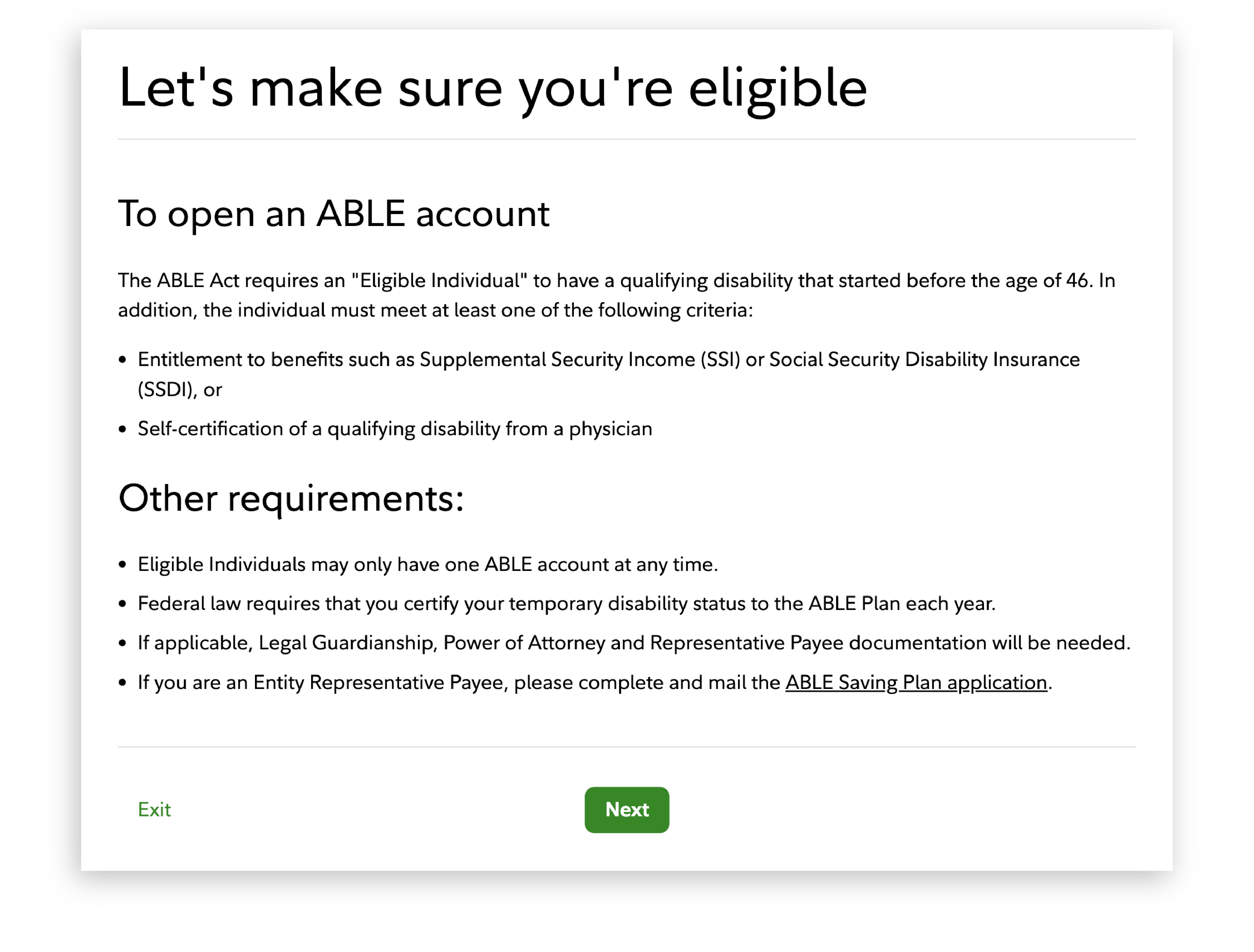
6. Make sure the beneficiary meets the eligibility requirements to open an ABLE account.
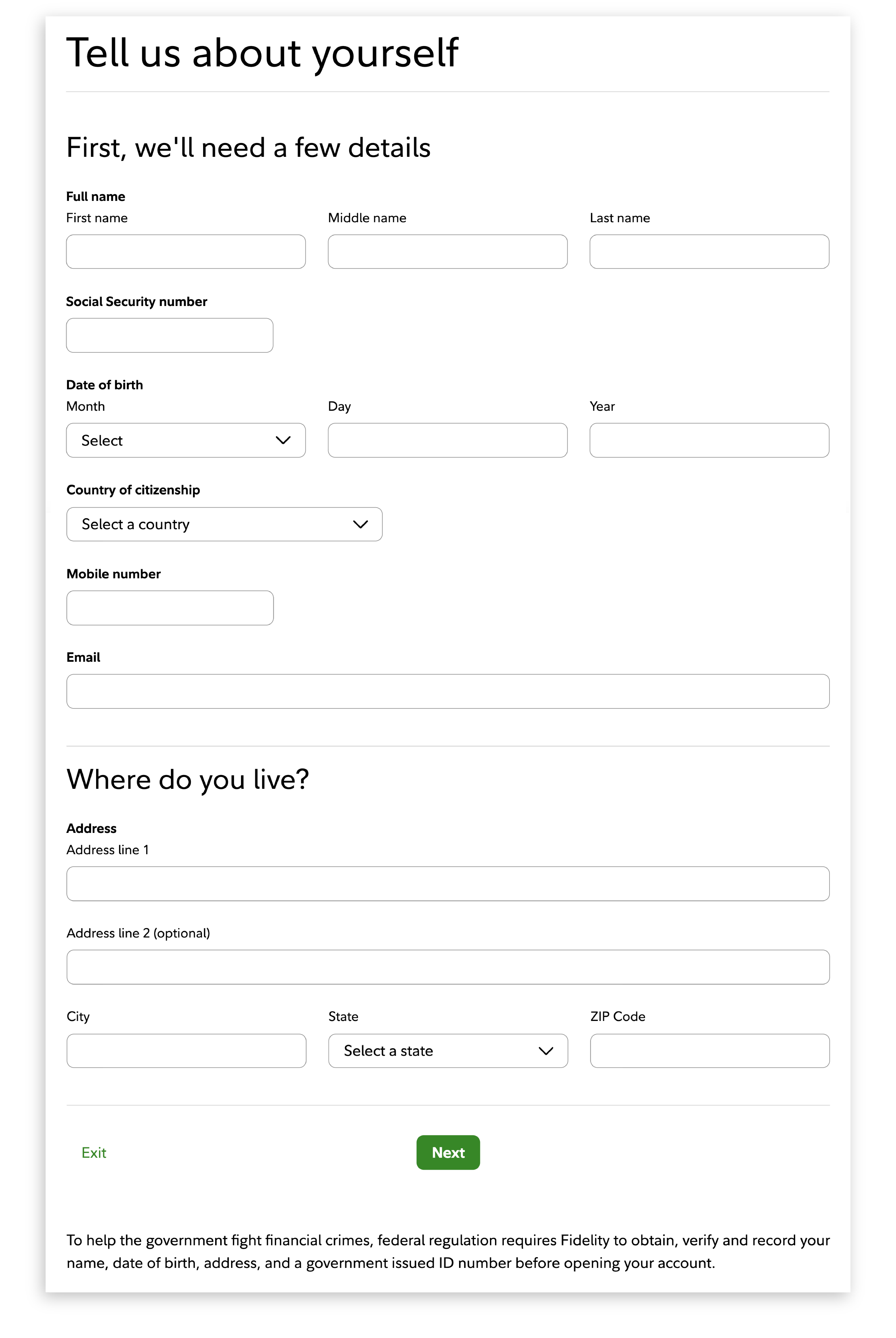
7. Fill in the required personal information.
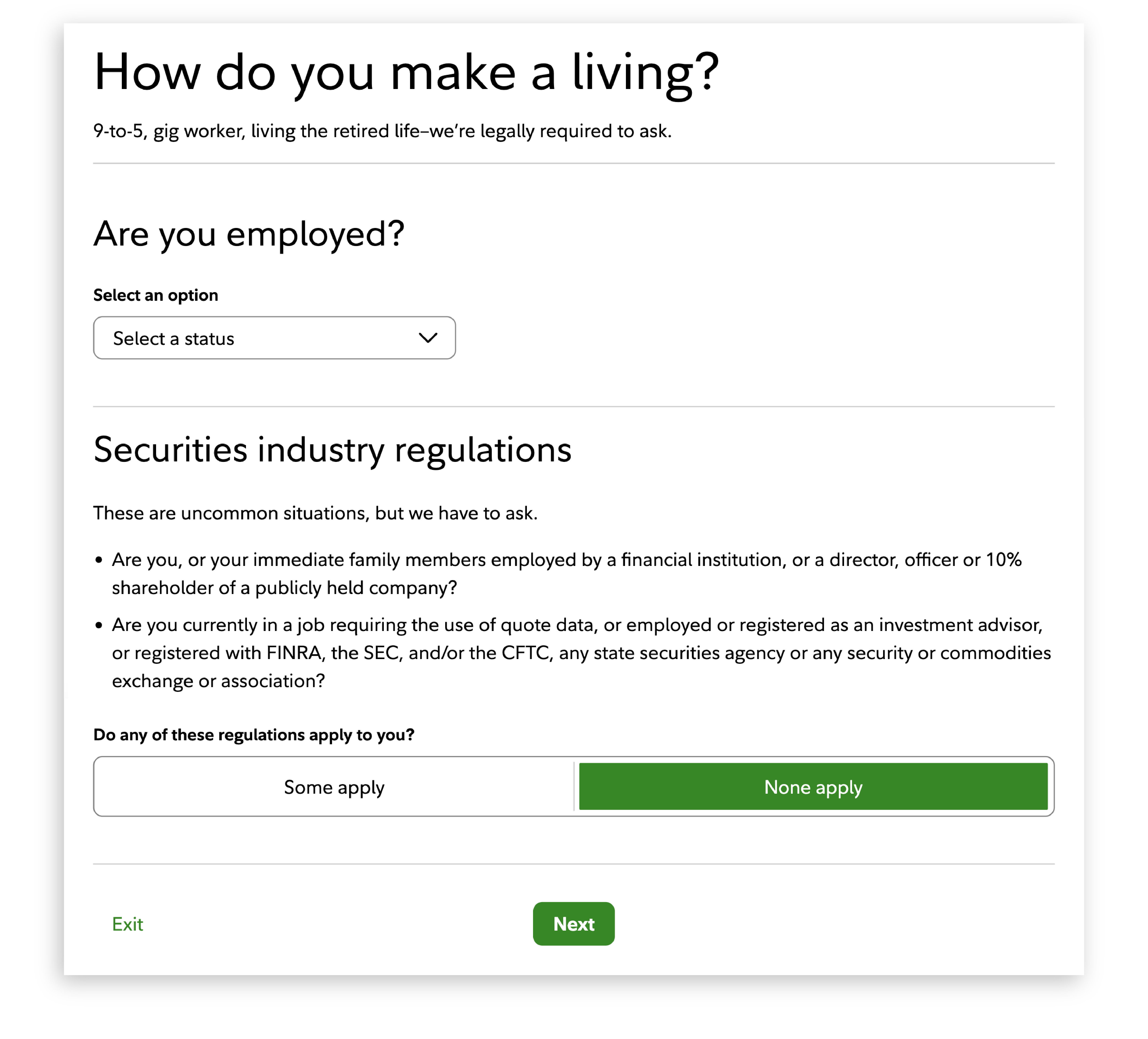
8. If you’re new, you’ll be asked for some employment information.
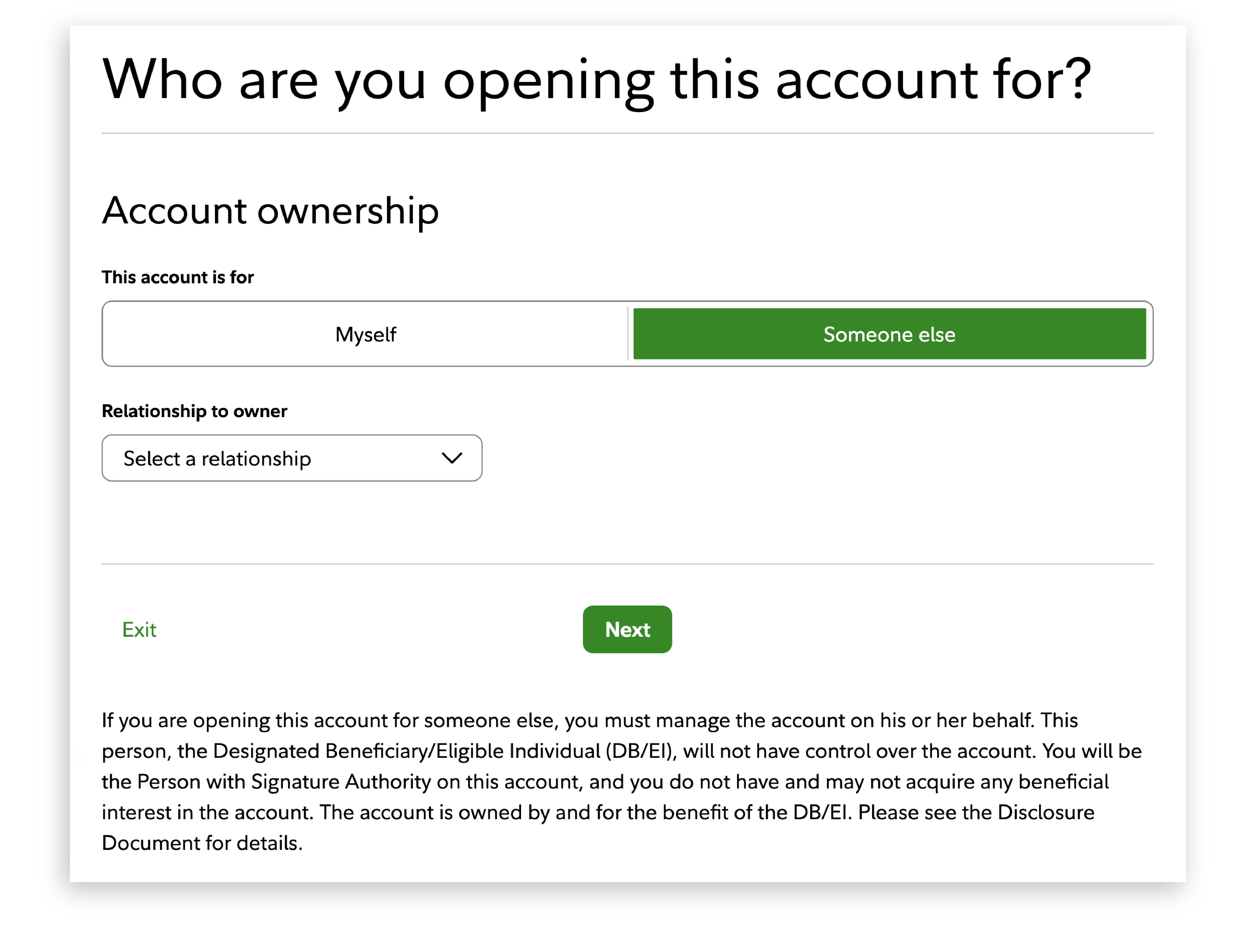
9. Identify the account type you’d like to open: For you or someone else (the owner).
10. Select the relationship with the owner (if applicable).
11. Provide personal information about the owner.
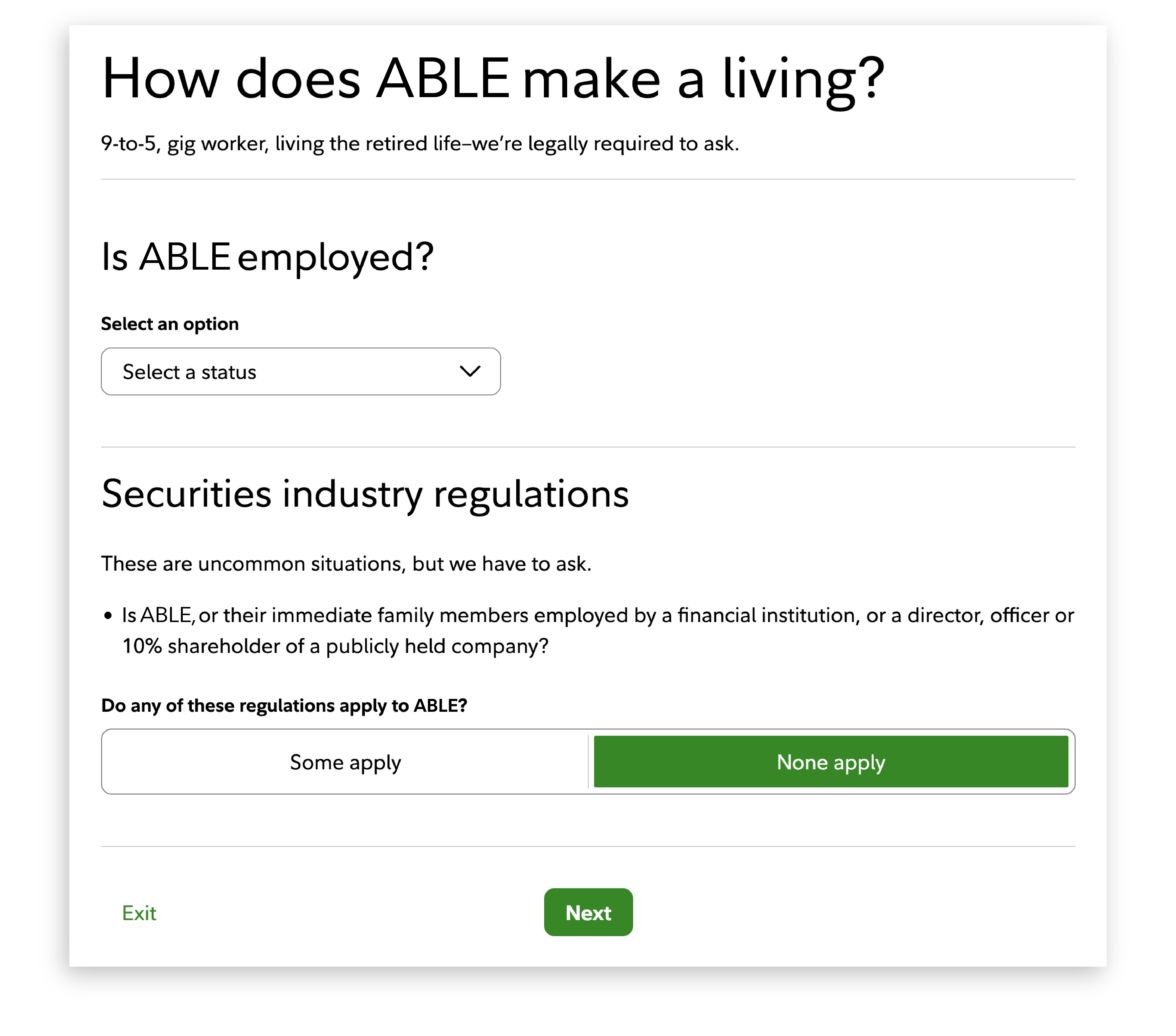
12. Provide employment information about you or the owner.
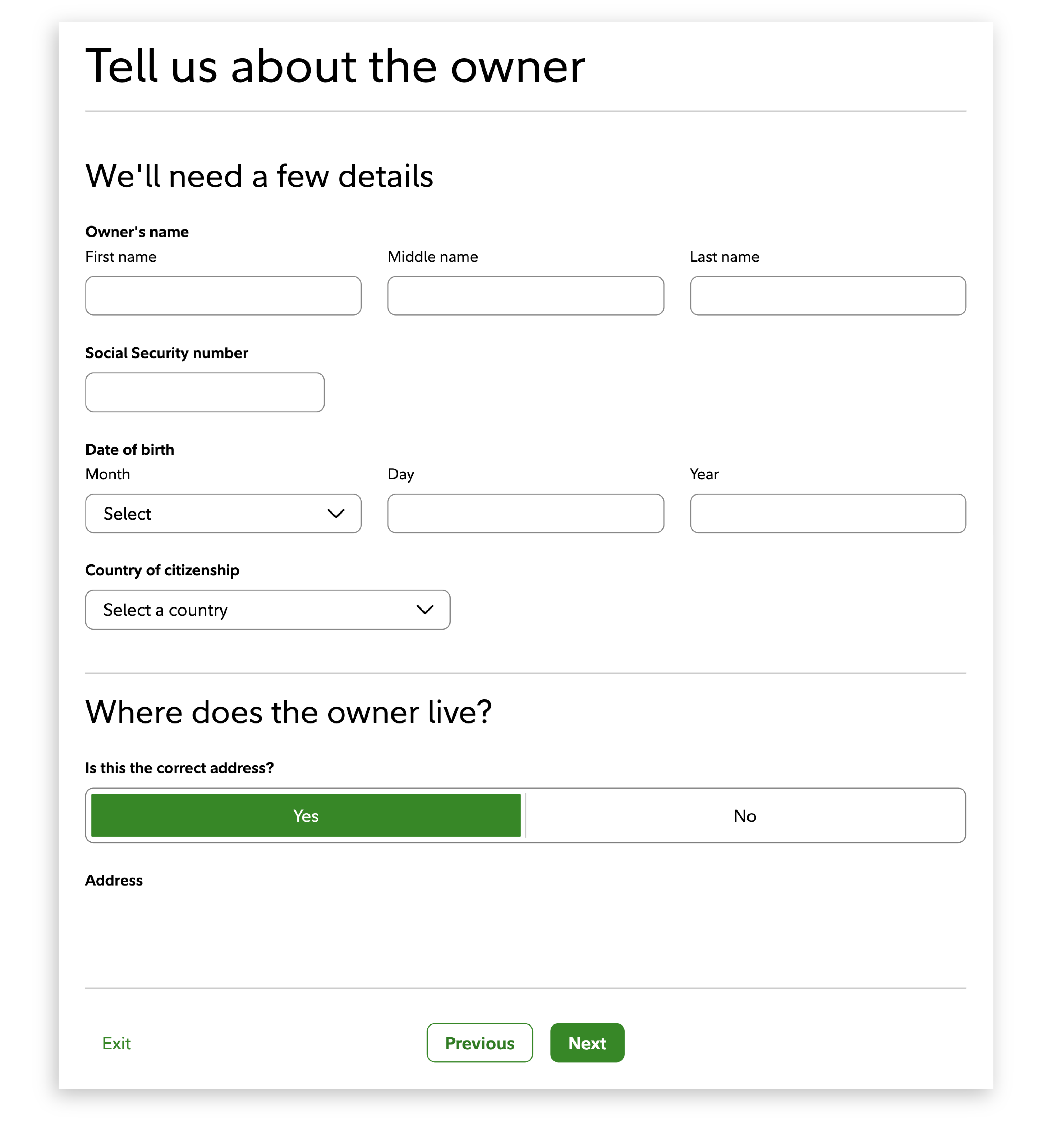
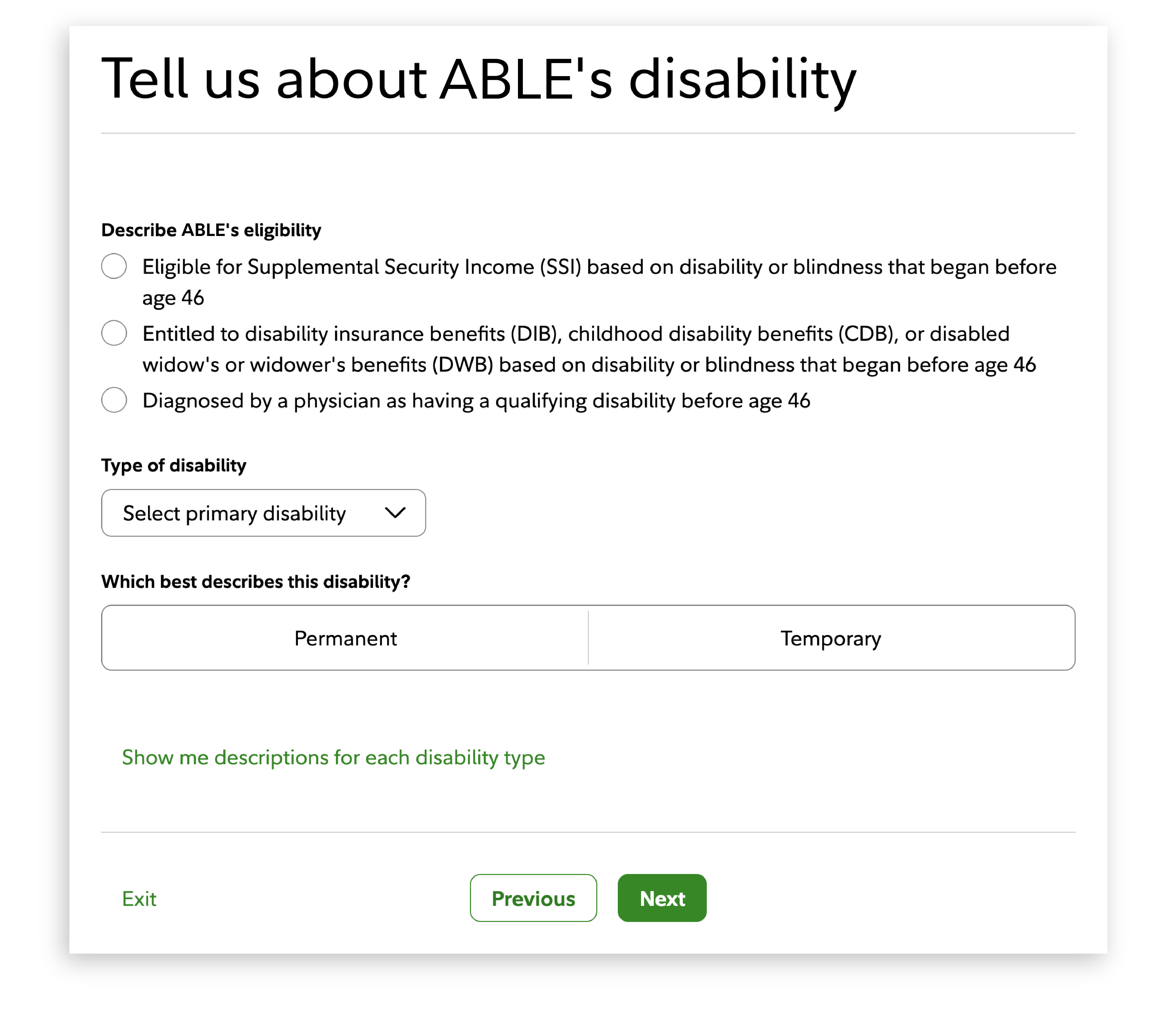
13. Provide disability information for either you or the owner.
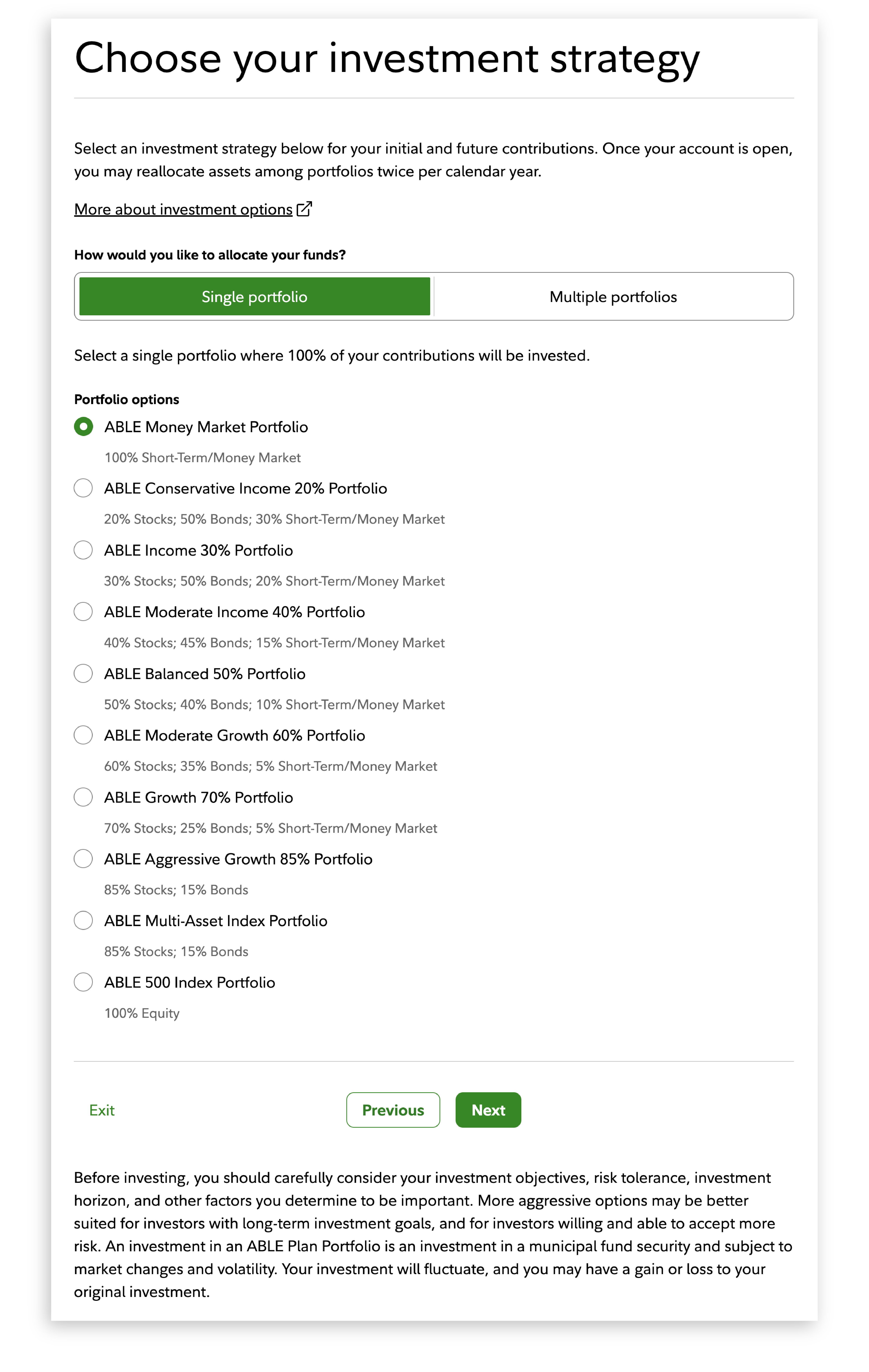
14. Choose your investment strategy: Single portfolio or multiple portfolios. The portfolio options are the same; you just need to choose whether you’re contributing to one or several.
15. Review all your information to make sure it’s correct. Take time to review all the important documents and confirmation, including the account opening agreements.
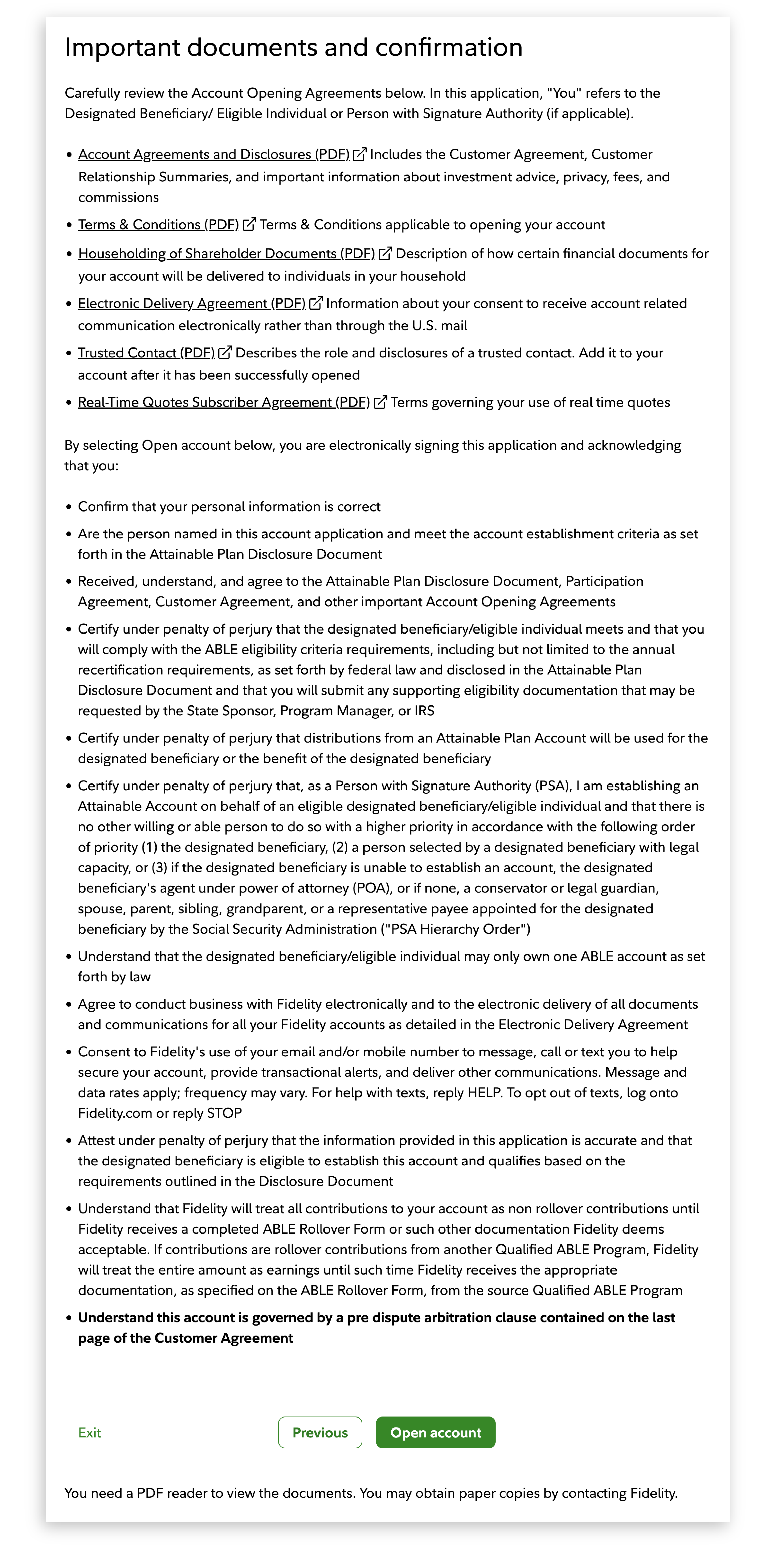
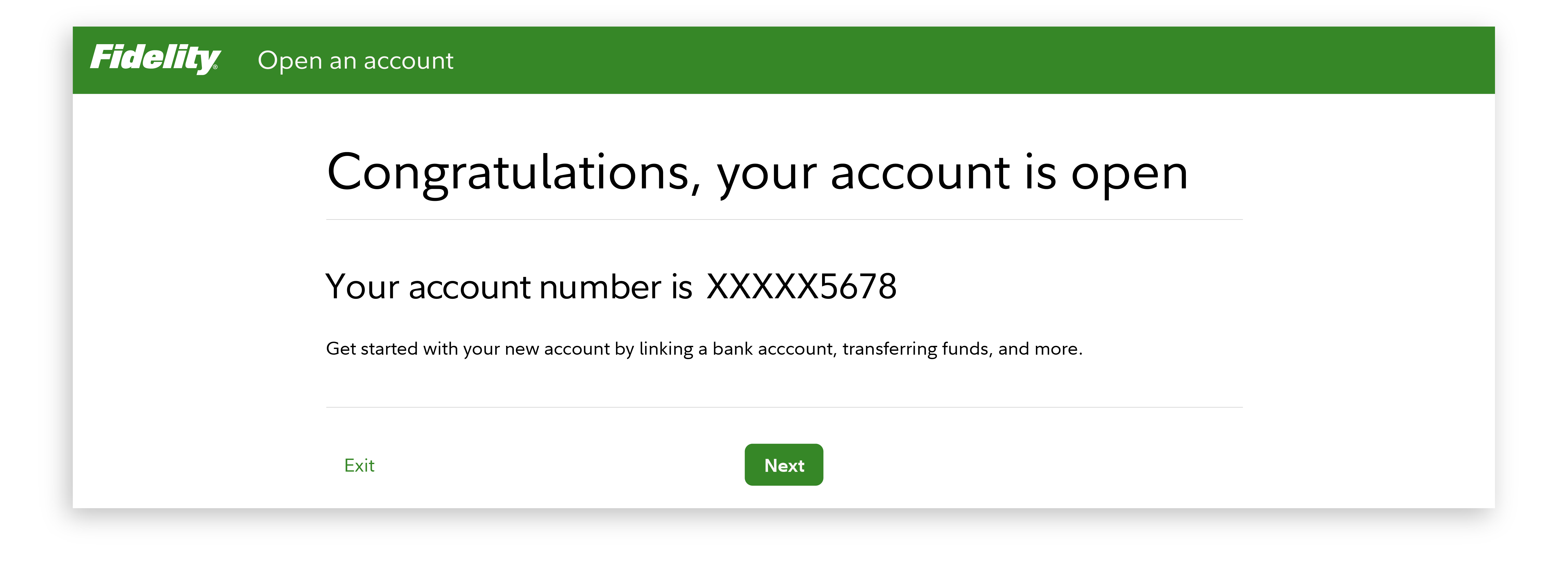
16. Select Open an account—and you’re all set!
The bottom line on ABLE accounts
Before opening an ABLE account, it’s important to understand how it fits into your broader financial plan. There can be tax, estate, and special needs planning considerations, so it may be helpful to consult with a qualified professional. Also, keep in mind that federal guidelines require ongoing certification of disability status with your ABLE plan. Check out this video to learn more about how an ABLE account can help you or a loved one invest and save for disability-related expenses, without potentially impacting certain public benefits.