


Health insurance probably isn’t something you spend much time thinking about until suddenly you have to. For many people in their 20s, that means turning 26 and losing coverage on a parent’s plan, starting a new job, or shopping on your own for the first time.
Read this HSA detail
If you’re covered by a parent’s HSA eligible health plan, you may be able to open and fund your own HSA—even if you’re working full time and under age 26.
In some cases, you can contribute up to the full family contribution limit, creating a powerful head start for motivated savers.
Choosing a health plan is a big decision but it’s not a permanent one—what works for you now can change as your needs do.
Health insurance helps protect both your health and your finances. Even if you don’t expect to need much care right now, one unexpected illness or injury can be costly without coverage.
Understanding health plans and their pros and cons
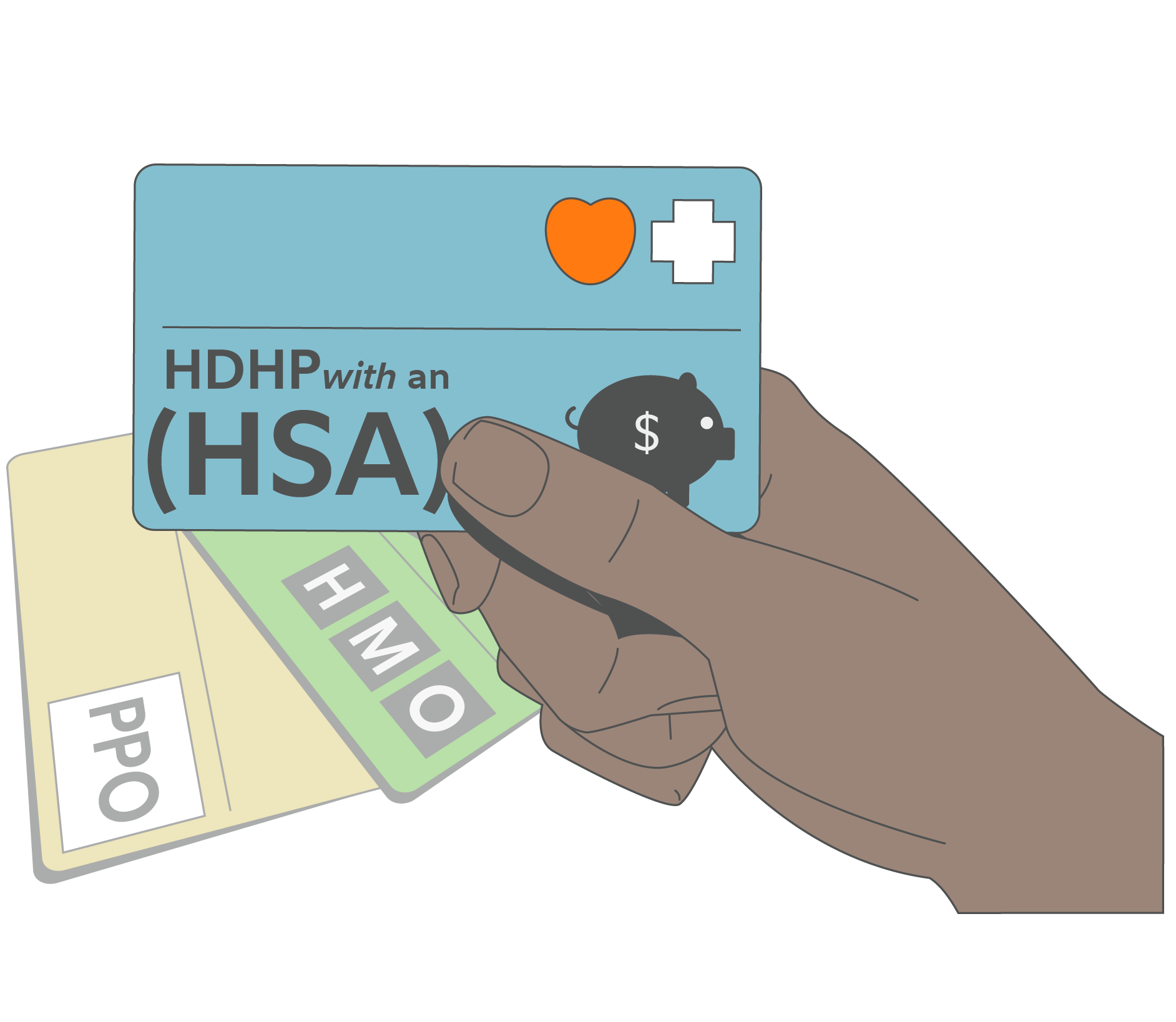
Most plans fall into a few types: health maintenance organizations (HMOs), preferred provider organizations (PPOs), and high-deductible health plans (HDHPs), also called HSA-eligible health plans. There are other types of plans, but these are the most common. The biggest difference usually comes down to costs and the network options.
- PPO plans
PPOs tend to have a relatively higher monthly cost than other types of health plans but more predictable costs at doctor visits.
You can generally choose the doctors or specialists you see but may get a better deal staying in network.
- HMO plans
HMOs typically offer lower costs but less flexibility in choosing doctors. You must stay within the network and follow specific steps to receive care.
- HSA-eligible health plans
Monthly premiums for HSA-eligible health plans (also known as high-deductible health plans, or HDHPs) tend to be lower than other options, but you may have a higher deductible.
A tax-advantaged account called a health savings account (HSA) can help you plan ahead for health care costs and invest for the future.
Each type of health plan has different costs and coverage features. Understanding how and when you pay for covered care can help you evaluate your options.
What to consider before you choose
Costs can vary depending on the plan you choose. Some people expect regular visits to the doctor while others may want coverage for preventive care and the unexpected. Thinking about how often you might need care can help you evaluate your options.
Health plans also differ in how and when you pay for care. A few common terms can help you understand what to expect, from monthly costs to what you may pay when you go to the doctor.
How these terms come together, based on your health plan and how you use care, can influence what you actually pay. For example, the plan with the lowest monthly cost may not be the least expensive overall, and the plan that looks more expensive up front may cost less depending on how you use care. Understanding the full picture—including premiums, out-of-pocket costs, how often you expect to use care, and options like tax-advantaged savings—can help you choose a plan that works for you.
One place this dynamic often shows up is in high-deductible health plans (HDHPs), also called HSA-eligible health plans. These plans often come with lower monthly premiums but higher out-of-pocket costs before coverage kicks in. That trade-off can work differently depending on your situation—and a health savings account (HSA) could play a role.
HSA-eligible health plans
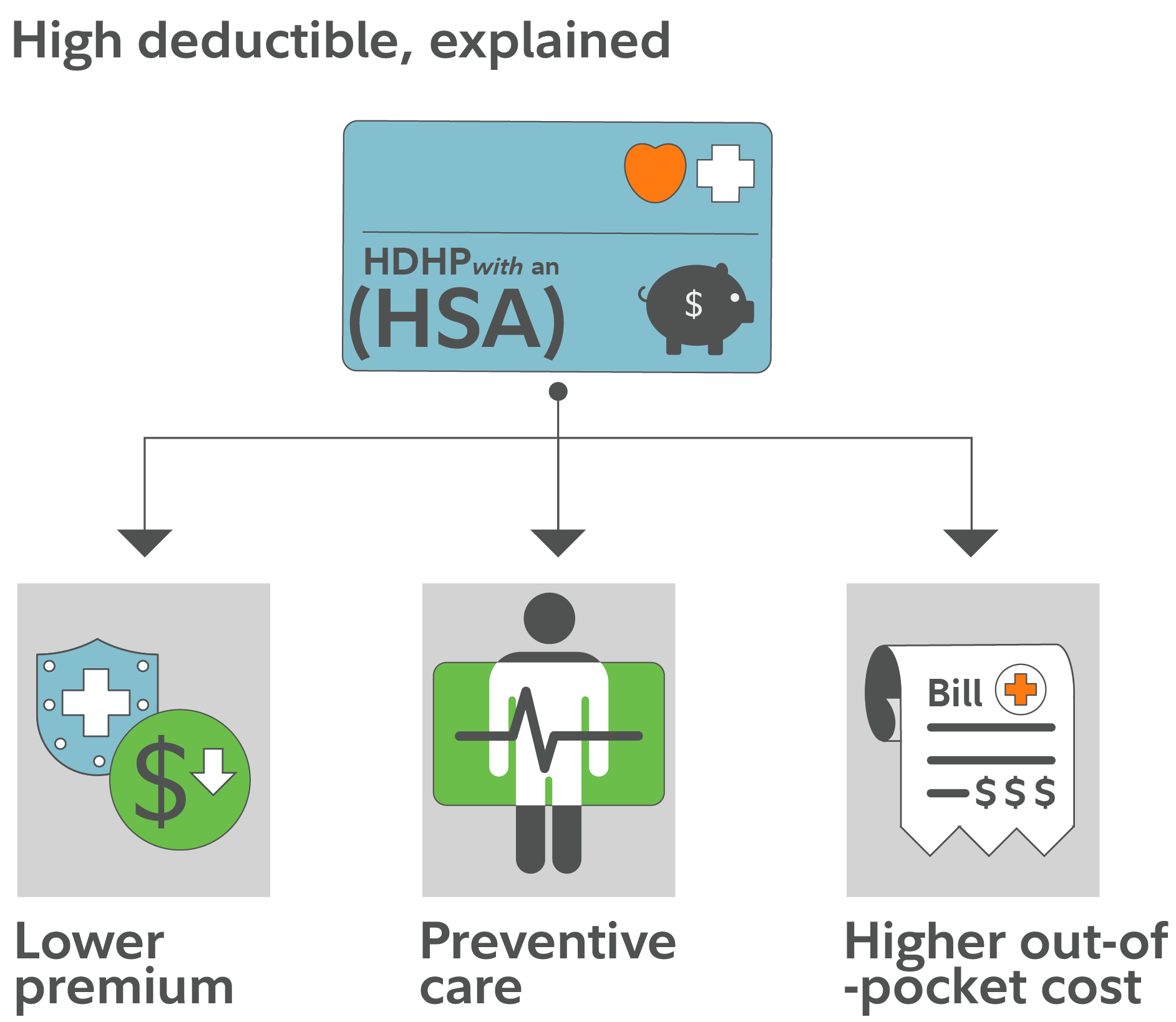
A high-deductible health plan means you’ll typically pay more out of pocket for covered care until you reach your deductible.
But HSA-eligible health plans, also known as high-deductible health plans, often come with lower monthly premiums, which means less money coming out of your paycheck. While the deductible may be higher, most plans cover preventive care like annual checkups and screenings even before you meet the deductible.
One benefit of HSA-eligible health plans is that they allow you to open a health savings account (HSA). With an HSA, you can pay for qualified medical expenses with pre-tax dollars rather than after-tax income.
An HSA can be used to pay for qualified medical expenses now, be saved for future costs, and can even be invested for growth potential over time—giving you flexibility as your needs change. It can also act as a buffer, helping you set aside money so unexpected out-of-pocket costs don’t catch you off guard.
An account that can help you save for health care
What sets HSAs apart is how they’re taxed. They’re the only account with 3 distinct tax advantages:1
- Contributions can lower your taxable income. Money goes into the account pre-tax through your employer, or you can deduct the contribution at tax time.
- Any earnings in the account grow tax-deferred, potentially tax-free.
- Withdrawals are tax-free when used for qualified medical expenses.
Read more: HSA triple tax advantages explained
The money is yours to keep and use on your timeline. You can contribute a little or a lot, take it with you if you change jobs, and later in life, you can even use it in ways that go beyond health care. Because HSAs come with unique tax advantages, they can help your money go further whether you spend it now or save it for the future. Read Viewpoints: 6 surprising HSA benefits
To learn more, read: What is an HSA, and how does it work?
Once you reach age 65, there’s no penalty for using the money in your HSA. You can withdraw money for any reason and simply pay the income tax like a traditional IRA.
Using your HSA
Money in your HSA can be used federally tax-free for qualified medical expenses. Here are a few examples of qualified medical expenses that you can pay for with HSA money.
- Therapy sessions
- Glasses or contacts
- Sunscreen with SPF 15 or greater
- Prescription medication
- Some over-the-counter items, like aspirin, ibuprofen, allergy medicine, and feminine hygiene products
- Doctor visits or urgent care
To learn more, read: HSA- and FSA-eligible expenses
Spending the money in your HSA doesn’t have to be complicated. The Fidelity HSA® offers a debit card to make payments easy. You can also save receipts on Fidelity.com or the Fidelity Health® app and track your spending.
Start where you are and build from there
Health insurance in your 20s can be less about getting everything right and more about getting oriented. Choosing a plan that fits your situation now can help build confidence and clarify what you need from your coverage.
The rest can evolve. Health insurance decisions aren’t permanent, and the right choice today may change as your life does. A solid understanding and regular check-ins can help your coverage keep pace with you over time.