


Fidelity Portfolio Manager Roberto Croce says because market trends can be unpredictable, incorporating multiple input signals into a managed futures strategy can help identify emerging trends and assess whether they are strengthening, weakening or pivoting – potentially improving investor outcomes.
“Many traditional trend-following strategies are built to capture extended directional moves,” explains Croce, who manages Fidelity Managed Futures ETF (FFUT). “But markets can stall, reverse abruptly, or shift direction in ways that make trends harder to interpret in real time, as we’ve seen from market moves so far in 2026.”
The actively managed ETF, launched in June 2025, seeks to provide investors with portfolio diversification and strong returns, particularly during prolonged periods of market stress. The strategy aims to capture the persistence of price trends – both upward and downward – by taking long and short positions in futures contracts across equity, fixed income, currency and commodity markets.
Croce says many managed futures strategies rely on a single return driver: trend-following, or seeking to profit from markets that are persistently higher or lower. While this approach can be effective, he believes it also can involve trade-offs.
“When trends are strong, such as during a sustained rally or prolonged drawdown, these strategies can perform well,” he says. “But markets don’t always move in a straight line, and in more volatile or rapidly changing environments, recognizing when trends are forming or beginning to reverse can be just as important as capturing them.”
Learn More
Rather than relying on a single set of signals, Fidelity Managed Futures ETF incorporates multiple inputs to help improve trend identification and assess potential direction. The goal is to enhance the strategy’s ability to participate in trends while also navigating transitions between market regimes and balancing exposures across varying market conditions.
Croce believes this approach still captures the core benefit of a managed futures strategy – systematically following trends across global markets – while incorporating additional layers designed to refine signal quality and balance different sources of return, including defensive positioning and income generated from holding positions.
“This isn’t about replacing trend-following,” Croce notes. “It’s about enhancing how trends are identified and combining that insight with other inputs that can help balance the strategy throughout different environments.”
The fund applies signals across a broad range of futures markets, helping the managers to respond dynamically as market conditions evolve. Positions are adjusted regularly based on model inputs, with risk managed across markets and exposures.
Croce adds that combining multiple inputs through a systematic implementation process may help deliver a more consistent experience over time, while preserving the potential diversification benefits that have made managed futures strategies a compelling complement to traditional portfolios.
“For investors, the distinction of having multiple inputs is subtle but important, particularly in today’s more dynamic market environment,” says Croce. “It’s not just about being in the trend – it’s about identifying it early and adapting as it evolves.”
For specific fund information, including full holdings, please click on the fund trading symbol above.
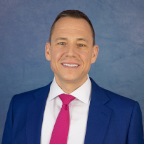
Roberto Croce is a portfolio manager in the Quantitative Research and Investments division at Fidelity Investments.
Prior to assuming his current role, Roberto worked at Newton Investment Management as senior portfolio manager and head of liquid alternatives, where he was responsible for product development and portfolio management. Prior to that, Roberto worked in various roles at Salient Partners, where he eventually led Salient’s quantitative platform including research, strategy development, portfolio management, and institutional marketing. Roberto joined Fidelity in 2024 and has been in the financial industry since 2011.
Roberto earned his Bachelor of Science from Penn State University and his PhD from The Ohio State University