

Tougher carbon rules have transformed Europe’s cement industry, squeezing high-emission producers while creating lasting cost, scale and pricing advantages for efficient, low-carbon leaders, according to Fidelity Portfolio Manager Jed Weiss, who believes the early adopters now stand on firmer financial footing.
“What was once seen as a regulatory burden is fast becoming a competitive moat,” says Weiss, who manages Fidelity® International Growth Fund (FIGFX). “For high-emission producers, this shift has compressed profit margins, but for companies that invested early in low-cost, low-carbon production, often at greater scale, the landscape has tilted in their favor.”
In helming the diversified international equity strategy, Weiss favors companies with multiyear structural growth prospects, high barriers to entry and attractive valuations. He targets cyclically out-of-favor businesses with pricing power and limited competition, as well as those with strong earnings potential whose share prices have been pressured by macroeconomic concerns.
The European Union is subject to some of the most stringent regulatory standards anywhere in the world, according to Weiss, including the Green Deal and “Fit for 55” legislative package, backed by carbon pricing, trade policies and strict environmental standards.
Weiss believes the most consequential rule for cement producers is the EU Emissions Trading System, which requires companies to pay for every ton of carbon they emit, with those costs continuing to rise.
Learn More
A critical change is on the horizon, according to Weiss, as the number of free allowances shrinks each year and will eventually disappear entirely. At that point, every ton of emissions will carry a full market price.
To that end, he believes that as carbon costs rise, efficient firms gain an expanding cost advantage, while smaller and/or less efficient players are forced to scale back or exit. As a result, industry capacity tightens, supporting a stronger pricing environment.
At the same time, Weiss notes that Europe’s rules extend beyond its borders. Imported cement is subject to similar carbon-related constraints, reducing competitive pressure from outside the region.
One notable recent development is that macroeconomic pressures, primarily ongoing conflicts involving Russia, Ukraine and Iran, have driven up energy costs, which is typically bad news for energy-intensive industries like cement.
“But this time, something different happened,” Weiss stresses. “For the first time in roughly a decade, European cement producers successfully raised prices to offset rising costs. What began as a move by smaller firms to preserve profitability has evolved into broader pricing discipline throughout the industry, including among larger players.”
He concludes that when combined with increased infrastructure spending across the region, the backdrop may be even more supportive of well-positioned companies.
Against this evolving landscape, Weiss continues to view the fund’s investments in Switzerland’s Holcim, Germany’s Heidelberg Materials and U.S. firm CRH favorably as of July 31, 2026. While each has varying exposure to Europe, he believes the underlying fundamentals remain compelling, supported by tightening supply, strengthening pricing dynamics and a structural shift toward lower-carbon production.
For specific fund information, including full holdings, please click on the fund trading symbol above.
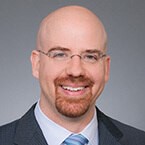
Jed Weiss is a portfolio manager in the Equity division at Fidelity Investments.
In this role, Mr. Weiss manages Fidelity Series International Growth Fund, Fidelity Series International Small Cap Fund, Fidelity International Small Cap Opportunities Fund, Fidelity Advisor International Small Cap Opportunities Fund, Fidelity International Growth Fund, and Fidelity Advisor International Growth Fund. Additionally, he co-manages Fidelity Total International Equity Fund and Fidelity Advisor Total International Equity Fund.
Prior to assuming his current position in 2007, Mr. Weiss covered the telecommunications, health care, and consumer sectors as an analyst on Fidelity’s Global Emerging Markets team. Previously, he worked as an analyst and portfolio manager of Select Environment Fund, during which he also covered a wide range of industries within the cyclical sector. Prior to that, Mr. Weiss held various other roles at Fidelity, including equity research analyst covering communications, semiconductors, and networking stocks, during which he also managed Select Networking and Infrastructure Portfolio. Additionally, he worked as an equity research analyst covering semiconductors and as an associate analyst covering U.S. regional banks.
Before joining Fidelity in 1997, Mr. Weiss was a summer associate at Goldman Sachs and a legislative affairs intern at the White House. He has been in the financial industry since 1997.
Mr. Weiss earned his bachelor of arts degree in government from Harvard University, where he graduated Phi Beta Kappa.