


Fidelity Portfolio Manager Forrest St. Clair is emphasizing what he views as overlooked, attractively valued small-cap companies that he believes are well-positioned to grow, capitalize on durable market trends and enhance their earnings visibility.
“These are what I call ‘long-term compounding’ businesses,” says St. Clair, who manages Fidelity® Small Cap Discovery Fund (FSCRX). “The term captures the essence of the idea: companies that may be underappreciated today and, in our view, have characteristics that could support value creation over time.”
In helming the small-cap core equity strategy, St. Clair seeks to invest in better-than-average businesses trading at below-average prices, with a goal of being “paid twice” – first through above-average earnings-per-share growth and second through valuation multiple expansion as the market recognizes and rewards that growth.
He acknowledges that this discipline has at times left the portfolio out of step with more-speculative market environments, where trading activity rather than fundamentals drives stock prices. Even so, his focus remains on businesses that can prosper regardless of near-term market noise.
St. Clair also notes that he is wary of chasing momentum-driven stocks. “This is because when buying the shares of such companies, you have to be right twice – once when you buy and again when you sell, usually within a fairly short window,” he explains, adding that this is no small feat, even for the most skilled stockpickers.
Learn More
St. Clair says that he has been a portfolio manager long enough to know that his core competency is investing in businesses that can ideally be owned for years, allowing shareholders to benefit from the power of compounding.
One illustrative example he points to within the portfolio is Brady (BRC), an overlooked small-cap company specializing in the development and manufacturing of specialty labels for wires, components and equipment that has generated solid earnings.
“While not especially flashy, I believe the business sits at the intersection of several powerful long-term investment themes: data-center expansion, increased electrification and reshoring,” says St. Clair.
The stock sold off sharply this spring amid investor concerns about potential disruption from artificial intelligence, although shares have rebounded since then. He believes negative sentiment was misplaced, as he sees no obvious reason why the business would be at risk from the technology.
Another large fund holding that has struggled more recently, Fabrinet (FN), plays a critical role in building the infrastructure underpinning the digital economy.
Data centers require these optical networking components to connect their server racks, according to St. Clair, who notes that the vast majority are made by Fabrinet, giving the company what he believes is a highly defensible market position.
“Ultimately, my investment strategy is about tuning out the noise, especially in speculative environments, and focusing on durable business models,” concludes St. Clair. “In a market obsessed with quick wins, I’m playing the long game, one built on patience, discipline and compounding.”
For specific fund information, including full holdings, please click on the fund trading symbol above. Securities mentioned were top-10 holdings as of June 30, 2026.
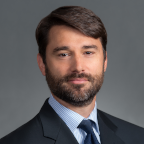
Forrest St. Clair is a portfolio manager within the Global Institutional Solutions (GIS) group at Fidelity Investments.
In this role, Mr. St. Clair co-manages the Fidelity Small Cap Discovery Fund and the Fidelity Series Small Cap Discovery Fund. He is also a member of the Fidelity Institutional Asset Management (FIAM) Small Cap team and manages the small company strategy, which he has done since 2009.
Prior to assuming his current responsibilities, Mr. St. Clair co-founded Skystone Capital Management, a small cap equity investment management firm, where he served as portfolio manager from 2005 to 2007. Previously, he held various roles within Fidelity, including that of portfolio manager, equity research analyst, and equity research associate. He has been in the financial industry since 1998.
Mr. St. Clair earned his bachelor of arts degree in biology from Williams College.