

Compelling supply-demand technicals, a rebound in manufacturing, and the likelihood of persistent inflation create a favorable backdrop for many companies in the materials and industrials sectors, says Fidelity Portfolio Manager Dan Kelley.
“The conflicts in Iran and Ukraine, and constraints on shipping through the Strait of Hormuz, have been a wake-up call regarding the risks confronting businesses and governments,” says Kelley, who co-manages Fidelity® Growth Discovery Fund (FDSVX) with Chris Lin. “Many companies and governments have not invested enough to maintain an adequate supply of critical raw materials, but recent geopolitical developments have galvanized their determination to heighten focus on strategic resources, leading to what I consider promising investment opportunities.”
In helming the diversified, growth-oriented equity strategy, Kelley looks for companies that he believes are mispriced based on their growth potential. He favors businesses with the potential to achieve earnings growth that is meaningfully better than consensus estimates. He also wants the stocks he selects to be reasonably valued, based on Fidelity’s estimate of their earnings growth potential.
With companies and governments increasing spending to meet the needs of their populations and provide for their defense, Kelley believes demand will outstrip supply globally.
Learn More
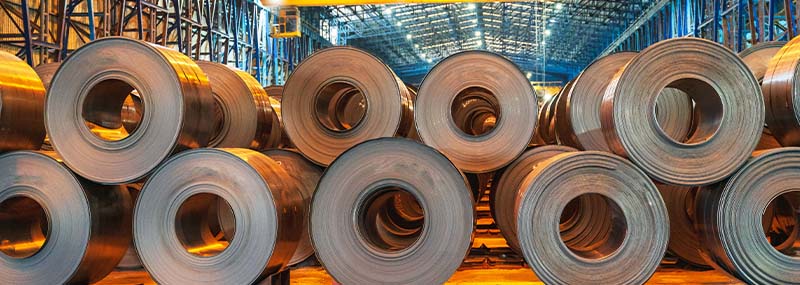
To this end, the fund has invested in names such as aluminum producer Alcoa (AA), steel maker Steel Dynamics (STLD) and global steel producer ArcelorMittal (MT), with Kelley believing each will benefit from inflation, which he expects to remain higher for longer.
In recent months, he boosted the fund’s allocation to capital goods companies within the industrials sector. Kelley cites U.S. Purchasing Managers Index data from 2026 that have shown accelerating expansion in the manufacturing sector, with recent readings reaching four-year highs. He notes that this growth has been driven by increased production and new orders, although some activity is linked to inventory stockpiling rather than rising demand alone.
“I believe the U.S. is emerging from an industrial recession that has lasted three years,” Kelley says. “In the current environment of not-too-hot/not-too-cold economic growth, industrial companies with a relatively short sales and production cycles have experienced strong demand.”
Accordingly, Kelley has invested in companies such as engine maker Cummins (CMI), truck manufacturer PACCAR (PCAR) and climate solutions provider Trane Technologies (TT).
“I have conviction that each of these companies is well-positioned for growth as U.S. manufacturing expands,” he concludes.
For specific fund information, including full holdings, please click on the fund trading symbol above. Securities mentioned were fund holdings as of July 31, 2026.

Daniel Kelley is a portfolio manager in the Equity division at Fidelity Investments.
In this role, Mr. Kelley manages Fidelity Puritan Fund, Fidelity Advisor Diversified Stock Fund, Fidelity Founders Fund, and Fidelity Advisor Founders SMA.
Previously, Mr. Kelley managed Fidelity Trend Fund, Fidelity Large Cap Growth Fund, Fidelity Advisor Strategic Growth Fund, and Fidelity VIP Growth Stock Portfolio. He also managed Fidelity Select Construction and Housing Portfolio. Prior to assuming his portfolio management responsibilities, Mr. Kelley served as sector leader of the real estate investment trusts (REITs) research team, where he was responsible for the coverage of REITs and homebuilder stocks.
Before joining Fidelity in 2005, Mr. Kelley was an associate in the Institutional Equities division at Morgan Stanley. He was also a financial analyst, and later an associate, in the Equities division at Goldman Sachs & Co. He has been in the financial industry since 2001.
Mr. Kelley earned his bachelor of science degree, summa cum laude, in finance and accounting from Georgetown University.