


With many European banks emerging from the debt crisis in significantly stronger financial shape, Fidelity Portfolio Manager Bill Kennedy sees compelling investment opportunities in those operating in countries that were among the hardest hit during the crisis, which began in 2008 and lingered into the early 2020s.
“Banks in several of the countries that struggled the most – including Greece, Portugal, Ireland, Italy and Spain – now offer attractive value, in my view,” says Kennedy, who manages Fidelity® International Discovery Fund (FIGRX). “They tend to have better prospects for loan growth because consumers and businesses in these nations are carrying lower debt than others in the EU, particularly the U.K. and France.”
In helming the diversified international equity strategy since 2004, Kennedy seeks capital growth by investing primarily in non-U.S. stocks, focusing on high-quality companies with what he considers above-average growth prospects and reasonable valuations.
This has led him to European banks that he believes have substantially strengthened their capital position and risk controls since the debt crisis.
Examples in the portfolio as of midyear include AIB Group (Ireland), PKO Bank Polski (Poland), OTP Bank (Hungary), Alpha Bank (Greece), Banco Comercial Portugues (Portugal), UniCredit and Intesa Sanpaolo (Italy), and Spain-based banks Banco Santander and CaixaBank.
“These banks tend to have better prospects for loan growth because consumers and businesses in their countries carry less debt than those in other EU countries, such as the U.K. and France,” Kennedy notes.
Learn More
AIB Group, one of Ireland’s biggest banks, has benefited from the nation’s improved economic standing in recent years, according to Kennedy, explaining that the Irish government recorded a budget surplus for the fourth consecutive year in 2025 and offers subsidies to help citizens make down payments on homes. Additionally, AIB Group recently announced plans to increase shareholder returns through dividends and share buybacks in 2026.
Kennedy initiated a new position in Hungary-based OTP Bank following the April election of Péter Magyar to replace Viktor Orbán as prime minister of the country. “Magyar is much more pro-Europe than his predecessor and helped unlock more than €16 billion in previously frozen EU funding, of which €4 billion was earmarked for infrastructure development,” Kennedy says. “All of this funding had been withheld due to Orbán’s human rights record and close alignment with Russian President Vladimir Putin.”
Kennedy believes PKO Bank Polski, another fairly recent addition to the portfolio, is well-positioned for stronger loan growth as increased EU investment and defense spending bolster Poland’s economy.
Lastly, Italian banking group UniCredit has been repurchasing its stock for many years, often at prices well below book value, Kennedy notes. “That’s accretive to book value per share because the company is buying stock at a significant discount to its inherent value,” he says.
Kennedy believes a higher-for-longer interest-rate outlook may continue to support bank profit margins, not only in Europe but elsewhere. “As long as economies keep growing, even as little as 1% per year, that should provide a favorable backdrop for banks,” he concludes.
For specific fund information, including full holdings, please click on the fund trading symbol above.
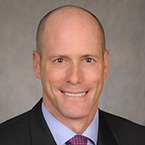
Bill Kennedy is a portfolio manager in the Equity division at Fidelity Investments.
In this role, Mr. Kennedy manages Fidelity International Discovery and Sustainable International Equity strategies across various investment vehicles.
Prior to assuming his current responsibilities, Mr. Kennedy managed Fidelity Pacific Basin, Japan, and Worldwide strategies across various investment vehicles. Previously, he served as an assistant portfolio manager and as a research analyst covering investment opportunities in India and the regional power sector. Mr. Kennedy also served as director of equity research in Fidelity’s Hong Kong office and was a group leader of the Global Research group. Prior to joining Fidelity, Mr. Kennedy was an analyst in Prudential Investment Corporation’s private equity arm in Newark, NJ; Hong Kong; and Singapore. He has been in the financial industry since 1990.
Mr. Kennedy earned his bachelor of arts degree in economics from the University of Notre Dame. He is also a CFA® charterholder.