


Retirement plans rarely succeed or fail because of one decision. More often, they drift off course gradually, as saving, investing, and planning get pushed aside by everything competing for your attention today.
The biggest retirement mistake may be waiting: waiting to save, invest, make a plan, or give your future the same priority as today’s demands. Each delay may seem reasonable on its own. You may be waiting until work settles down, the kids get older, you earn more, or the market feels safer. But over time, those delays can add up, and the cost may not become clear until years later.
Getting started doesn’t have to mean overhauling your finances. A few manageable steps today could give your money more time to grow and give you more choices in the future. And planning for retirement doesn’t mean putting your life on hold. It means making thoughtful choices about how to use your money, both now and later.
5 retirement saving mistakes to avoid
1. Putting off saving and investing
The longer you put off saving for retirement, the less time your money has to potentially grow. Starting to plan now or increasing what you can save can help you make the most of the time you have from this point forward.
You don’t have to make up for lost time all at once. Increasing your workplace plan contribution by 1%, capturing the full employer match if one is available, or setting up recurring investments in an IRA could help you begin building momentum.
What matters is making a sustainable move and building from there as your circumstances change.
2. Trying to time the market
Even after you begin saving, it can be tempting to wait for a better time to invest. When markets are falling, you may want to hold off until conditions stabilize. When markets are reaching new highs, you may worry that they’re due for a decline or that you’ve already missed your opportunity.
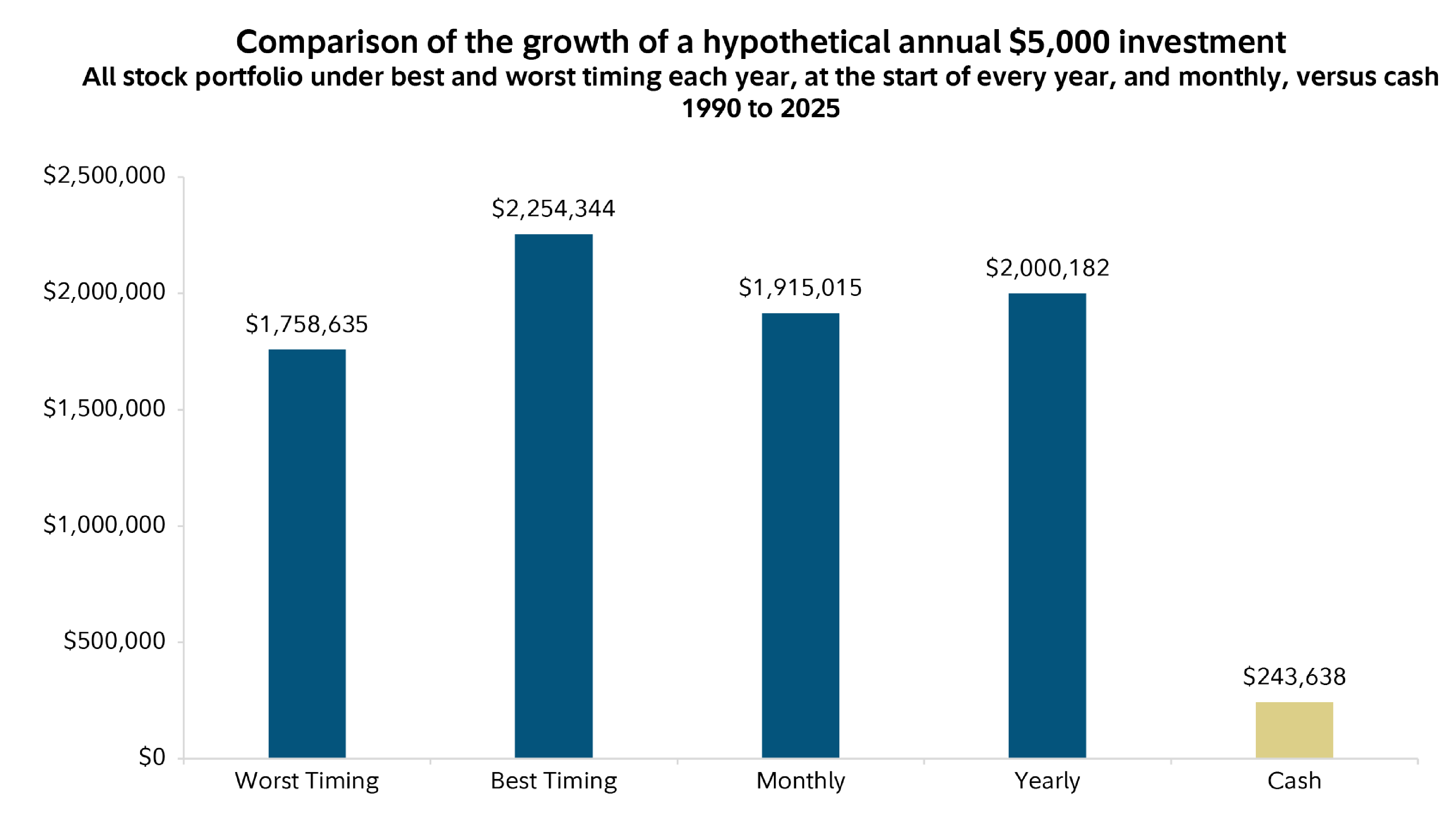
Historically, getting invested mattered more than timing the market perfectly
Waiting for the perfect entry point may carry a greater cost than investing at the “wrong” time. The hypothetical example below compares several approaches to investing $5,000 annually from 1990 through 2025, including investing at the market’s high each year and remaining in cash.
“Building wealth does not involve luck or magic. It takes discipline and time,” says Kenny Davin, CFP®, vice president and branch leader in Fort Lauderdale, Florida.
Rather than trying to predict what the market will do next, consider creating a long-term investing plan based on your goals, time frame, and comfort with risk. Investing regularly can reduce the pressure of choosing the perfect moment by allowing you to buy at a range of prices over time.
3. Skipping a retirement plan
Saving for retirement without a plan can make it difficult to know whether you’re doing enough or what to adjust. A retirement plan isn’t just a forecast of whether you’ll have enough money. It can help you clarify what matters to you, assess your progress, and make choices today that may give you more options later.
Davin recalls working with a client who assumed retirement was still years away. But after reviewing his savings, spending, and retirement projections, the client learned that he could afford to retire several years earlier than expected. That gave him and his wife more time to enjoy retirement together and be with aging family members.
“The earlier you look, the more time you have to respond,” Davin says. “Knowing where you stand gives you choices.”
Some people put off planning because they’re afraid of what the numbers might show. But a plan isn’t a verdict. It’s information you can use. You may discover changes that could improve your outlook or possibilities you hadn’t considered.
In fact, a 2026 Fidelity study found that people with a retirement plan were more than twice as likely to feel confident about their financial future as those without one.1
4. Putting everyone else first
When someone you care about needs help, your own retirement can feel like the easiest goal to put last. But unlike college, a home, or a wedding, retirement generally isn’t something you can finance with a loan.
That doesn’t mean you should never help your family. It means considering what you can afford to give without putting your own financial security at risk.
“If you’re saying yes to something, you’re typically saying no to something else,” Davin explains. Every dollar has a job, and repeatedly moving retirement to the back of the line can limit your choices over time.
A retirement plan can help you weigh those trade-offs. You may find that you can support someone you love while staying on track, perhaps by giving a smaller amount, adjusting the timing, or setting a clear limit. The goal isn’t to say no to everything today. It’s to understand what each yes may mean for your future.
5. Putting life on hold until retirement
Retirement planning can go too far in the other direction. Focusing so much on the future that you consistently put off meaningful experiences today may leave your financial plan out of balance.
None of us knows exactly what the future holds. That’s one reason retirement planning isn’t simply about saving as much as possible. It’s about using your money in a way that supports the life you want, both now and later.
“I find it very important to incorporate meaningful life experiences into a financial plan alongside retirement savings, rather than automatically delaying them until retirement,” says Davin. “It’s about finding the right balance.”
That may look different for everyone. It could mean taking a meaningful trip, making time for people you love, or spending money on something that adds real value to your life, even as you continue saving for the future.
The biggest retirement mistake often isn't a bad investment or a single wrong decision. It's waiting too long to act. The goal isn’t to spend everything now or save everything for later. It’s to make intentional choices about both, so you can prepare for the future without overlooking the life you’re living today.
The earlier you understand where you stand, the more choices you may have. Learn how a retirement plan can help.