Fidelity® International StrategyA separately managed account that seeks to deliver returns greater than the MSCI EAFE Index (Net MA Tax) over a full market cycle by diversifying across developed-market countries outside the US. The strategy uses tax-smart strategies in an effort to enhance after-tax returns in taxable accounts.4 |
Investment strategy: Seeks to deliver long term growth of capital and to outperform the MSCI EAFE Index (Net MA Tax) over a full market cycle.
Types of investments: Primarily U.S. traded American Depositary Receipts (ADRs) and a completion fund2
Investment minimum: $100,0001
Eligible registration types: Taxable & Retirement
Gross annual advisory fee: 0.30%–0.70%3 (varies based on total assets invested)
Why we focus on geographic diversification
In general, we believe a well-diversified equity portfolio should include at least 30% allocation to international securities including developed and emerging markets. Returns from developed-market countries, including the U.S., can vary widely from year‐to‐year, as seen in the chart below. Given these ups and downs, investing in a diverse set of international securities may help a portfolio by lessening the impact any one market can have. International benchmarks, such as the MSCI EAFE Index, may consist of 20+ developed market countries, meaning they are diversified on economic and policy shifts that can change sector leadership over time, creating opportunities for varied sources of return across regions. To this end, the Fidelity® International Strategy diversifies across many developed-market countries outside the U.S. while pursuing capital appreciation over the long‐term.
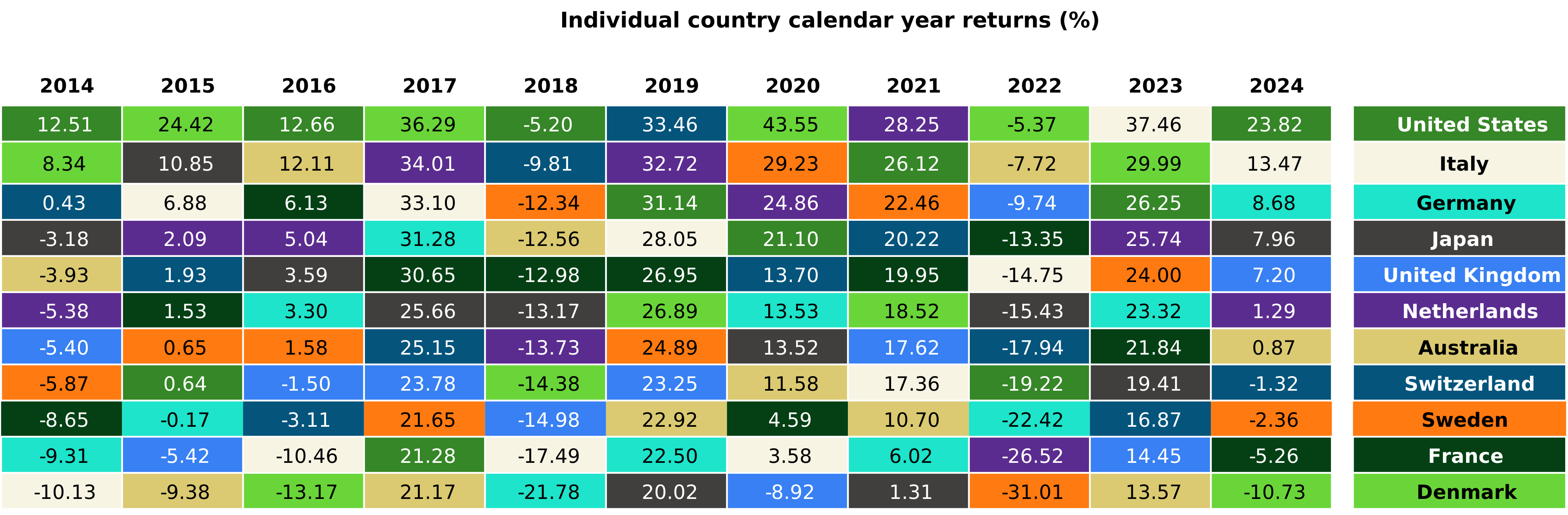
Calendar year returns represented by individual country's MSCI IMI Country Index. The MSCI Investable Market Index (IMI) captures large, mid, and small cap representation of approximately 99% of the investable equity universe for each individual country. Eleven countries shown include the United States and the top 10 country holdings in the MSCI® EAFE Index as of 12/31/25 (represents over 88% of the index's total net assets). Past performance is no guarantee of future results. Diversification does not ensure a profit or guarantee against a loss. It is not possible to invest directly in an index. All market indices are unmanaged.
Broaden diversification through a sector lens
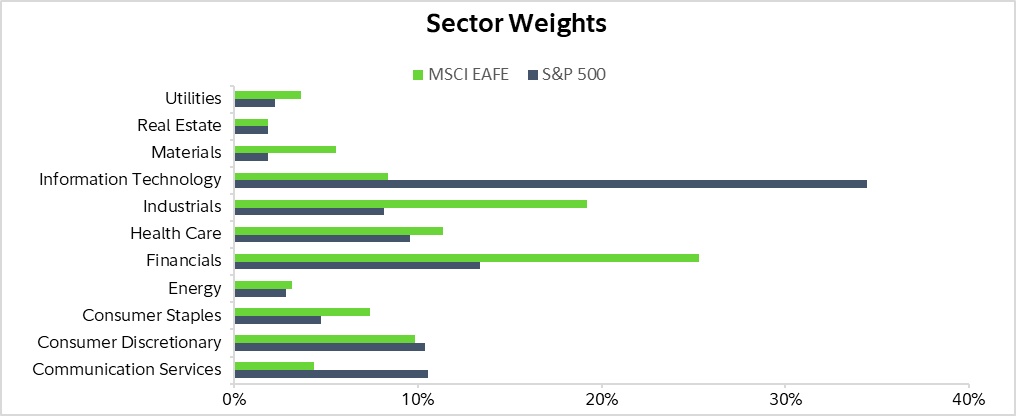
When we think about the diversification international stocks provide, it goes beyond geography. Global markets can help reduce sector concentration risk while expanding the opportunity set for growth. As shown below, sector exposures in international markets can differ meaningfully from those in the U.S. These differences can naturally broaden portfolio exposure and help balance risk in ways domestic markets alone cannot. By combining complementary sector exposures, investors can reduce concentration risk and support more stable performance across market cycles.
Attractive valuation opportunities outside of the U.S.
Valuations between U.S. and international stocks shift over time, with each market becoming relatively more or less expensive at different points. These changes can create more balanced opportunities to invest globally. Market Leadership shifts over time and reliance on prolonged U.S. outperformance may overlook valuation’s role in long-term returns. International stocks closer to long-term averages can diversify return drivers and reduce concentration risk, potentially supporting more durable portfolios. This is one of several valuation metrics our Global Investment Research team takes into consideration when uncovering investment opportunities for your portfolio.
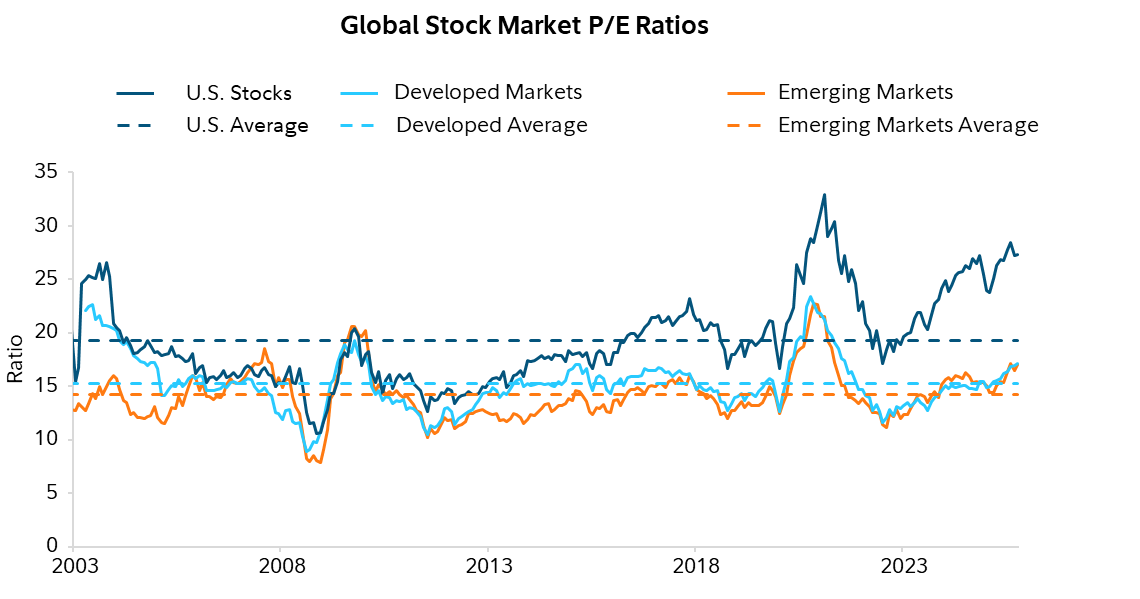
DM: Non-U.S. developed markets. EM: Emerging markets. Chart includes trailing 12-month P/Es. Past performance is no guarantee of future results. It is not possible to invest directly in an index. All indexes are unmanaged. Price-to-earnings (P/E) ratio (or multiple): Stock price divided by earnings per share, which indicates how much investors are paying for a company’s earnings power. Long-term average P/E includes data from 12/31/04 to 12/31/25. Indexes: DM—MSCI EAFE Index; EM—MSCI Emerging Markets Index; U.S.—S&P 500. Source: FactSet, Bloomberg Finance L.P., Fidelity Investments (AART), as of 12/31/25.
Fidelity® International Strategy primarily invests in international develop markets. References to emerging markets focuses are for illustrative and informational purposes only.
Tapping Fidelity's International Expertise
Strategic Advisers LLC (Strategic Advisers) provides portfolio management capabilities for this strategy and has partnered with Fidelity Management & Research Company LLC (FMRCo) to leverage their investment research capabilities. Since the underlying stock selection within Fidelity® International Strategy models will be a significant source of return potential, Strategic Advisers is leveraging Fidelity's experience and history of over 65 years managing international equity strategies.
Fidelity has offices and investment professionals all over the globe providing deep, local research and market insight for security selection decisions. Fidelity's on-the-ground presence helps model portfolio providers make educated decisions based on past experience, rigorous fundamental company analysis, and prevailing market trends as they seek long-term capital appreciation for the strategy.
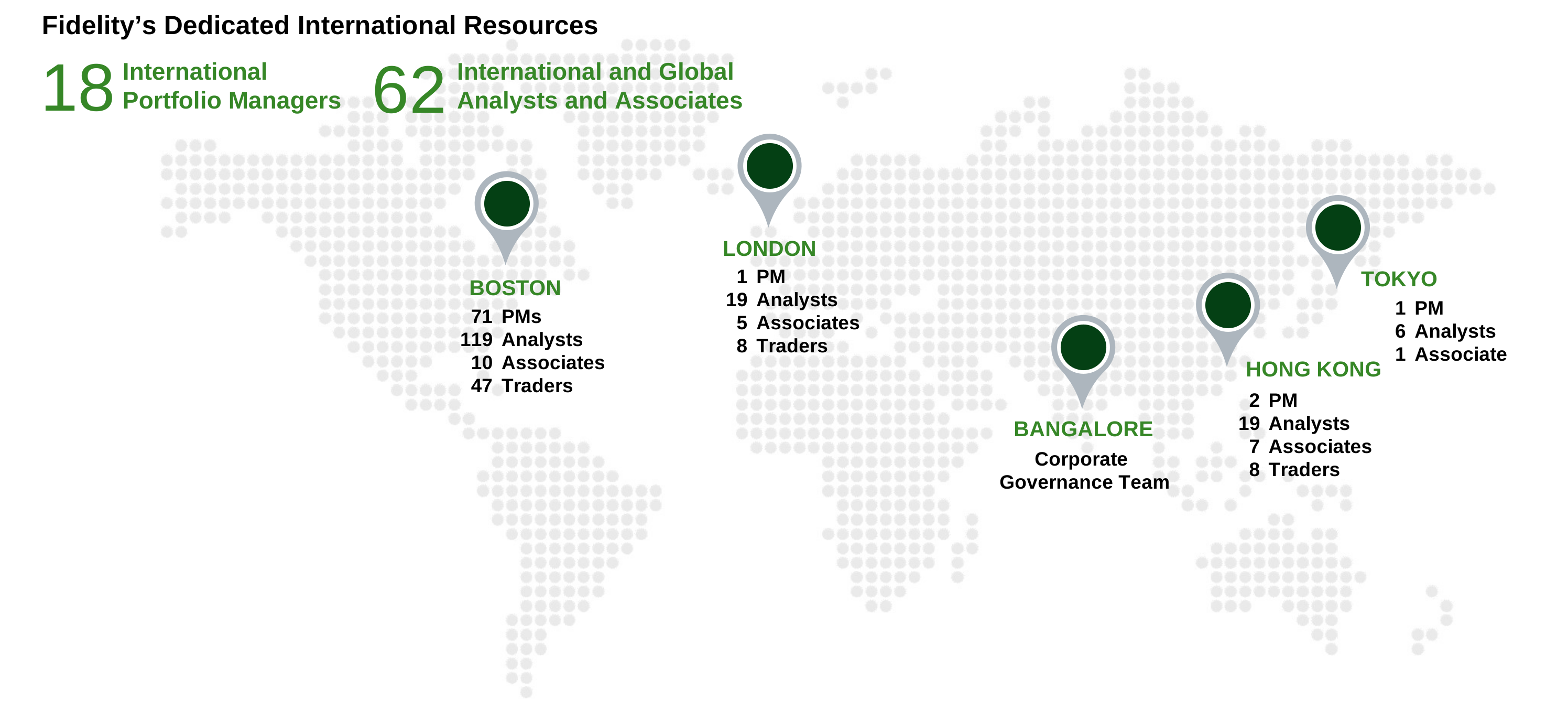
Figures exclude Executive Management, MegaCap Analysts, Technical Analysts, Quantitative Analysts, and Sector Specialists. Analysts and associates primarily classified on their coverage of companies. (Some analysts may also have money management responsibilities and some PMs may post some research.)
Your equity SMA will be managed in an effort to harness the long-term growth potential of stocks while seeking to enhance after-tax returns through the ongoing monitoring and application of tax-smart investing strategies.4 In fact, 94% of our clients investing in SMAs in taxable accounts have had their advisory fees covered by the tax savings provided.5
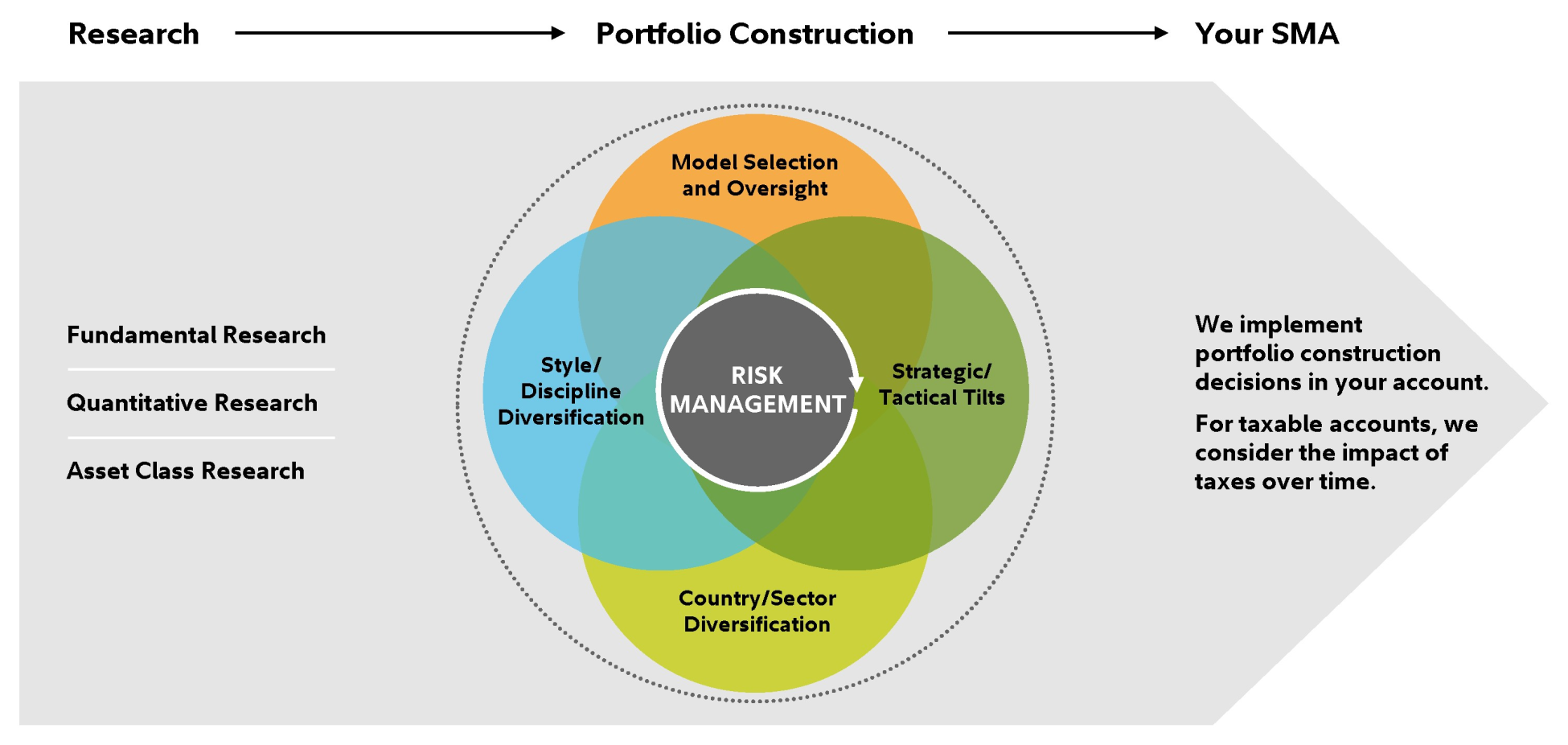
Our disciplined investment process for this strategy is built upon a foundation of rigorous research. In constructing the portfolio, as shown by the various colored circles on the diagram below, we will blend multiple international equity models, modestly tilting the strategy to certain styles throughout the market cycle to help manage risk as well as add value over time. The investment team also provides day-to-day management looking for opportunities to apply tax-smart investing techniques designed to help outperform the benchmark after-taxes in taxable accounts.